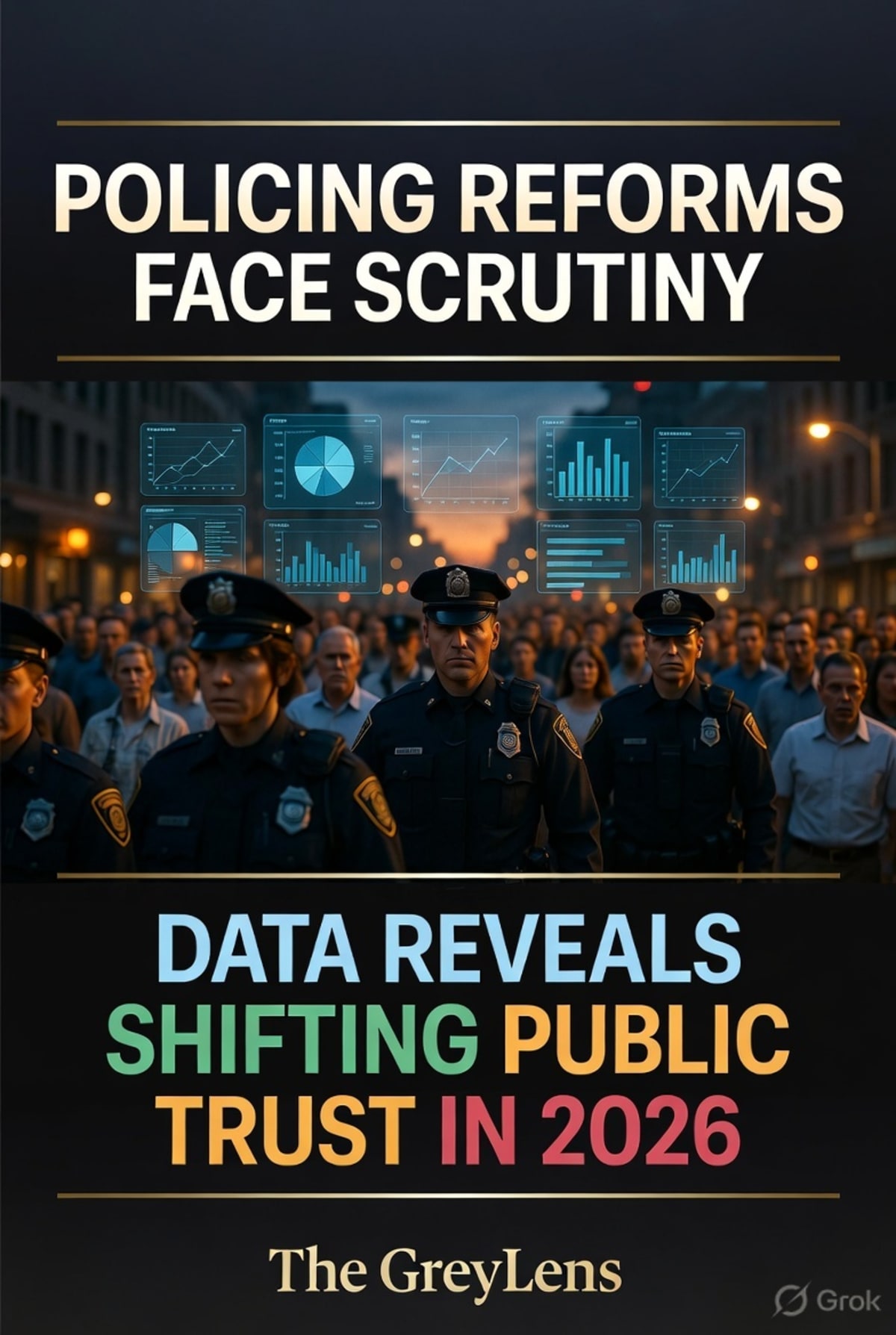
WASHINGTON D.C. – The efficacy of widespread policing reforms enacted over the past several years is facing a critical reassessment as recent data reveals a marked decline in public trust in law enforcement agencies throughout the United States. Released this week, the latest national survey data paints a concerning picture for departments that have invested heavily in new training protocols, accountability measures, and community engagement initiatives. The findings suggest that despite these efforts, a significant portion of the American public perceives little to no improvement in police conduct or effectiveness, leading to a waning sense of confidence.
The erosion of trust appears to be multifaceted, with respondents citing lingering concerns over perceived excessive force, inconsistent application of policies, and a lack of transparency in disciplinary actions. While some police departments have reported positive outcomes from specific reform programs, the aggregated national data indicates these successes have not translated into a broad restoration of public faith. This divergence between departmental claims and public perception highlights a critical gap that policymakers and law enforcement leaders must now address.
Data Underscores Community Dissatisfaction
According to the newly released findings, nearly 55% of Americans surveyed expressed low or very low confidence in their local police departments, a 5% increase from the previous year's survey. This trend is particularly pronounced in urban areas and among minority communities, where historical grievances and ongoing incidents continue to fuel skepticism. The data further indicates that while reforms aimed at de-escalation and bias training have been widely implemented, their real-world impact on reducing negative interactions and improving community perceptions remains a subject of intense debate and scrutiny. Several independent analyses of departmental data, while not yet publicly released, are reportedly showing mixed results, with some metrics indicating marginal improvements while others show stagnation or decline.
The Department of Justice has acknowledged the new data, with a spokesperson stating that the findings underscore the need for continued evaluation and adaptation of reform strategies. Federal officials are reportedly in discussions with state and local law enforcement agencies to identify best practices and areas where federal support might be needed to bolster reform efforts. However, critics argue that current federal oversight mechanisms are insufficient to drive meaningful change at the local level and that more robust accountability measures are necessary.
Reform Fatigue and Shifting Priorities
Beyond the direct impact of reforms, experts suggest that a broader sense of 'reform fatigue' may be setting in, both within law enforcement agencies and the public. After years of intense focus on policing, some communities are shifting their attention to other pressing social issues, while some officers express frustration with what they perceive as a constant barrage of criticism and a lack of support for their challenging work. This has, in turn, created an environment where even well-intentioned reforms can struggle to gain traction or achieve their desired outcomes. The perceived lack of progress is also leading to increased calls for more radical approaches, including significant restructuring of law enforcement responsibilities and funding.
In New York City, for instance, ongoing debates surrounding the effectiveness of its recent policing initiatives have intensified, with community advocacy groups demanding greater accountability from the NYPD. Similar discussions are echoing in cities like Chicago and Los Angeles, where residents are questioning whether the significant resources allocated to reforms are yielding commensurate improvements in safety and trust. The data suggests that the narrative around policing is becoming increasingly complex, moving beyond simple calls for reform to a more nuanced discussion about the fundamental role and structure of policing in American society.
Looking ahead, the coming months will likely see increased pressure on federal, state, and local governments to demonstrate tangible progress in rebuilding public trust. The effectiveness of current reform models will be under a microscope, potentially leading to the adoption of more innovative or even drastic measures. The ongoing dialogue between law enforcement, policymakers, and the communities they serve will be crucial in navigating this challenging period and charting a path toward more equitable and trusted public safety.