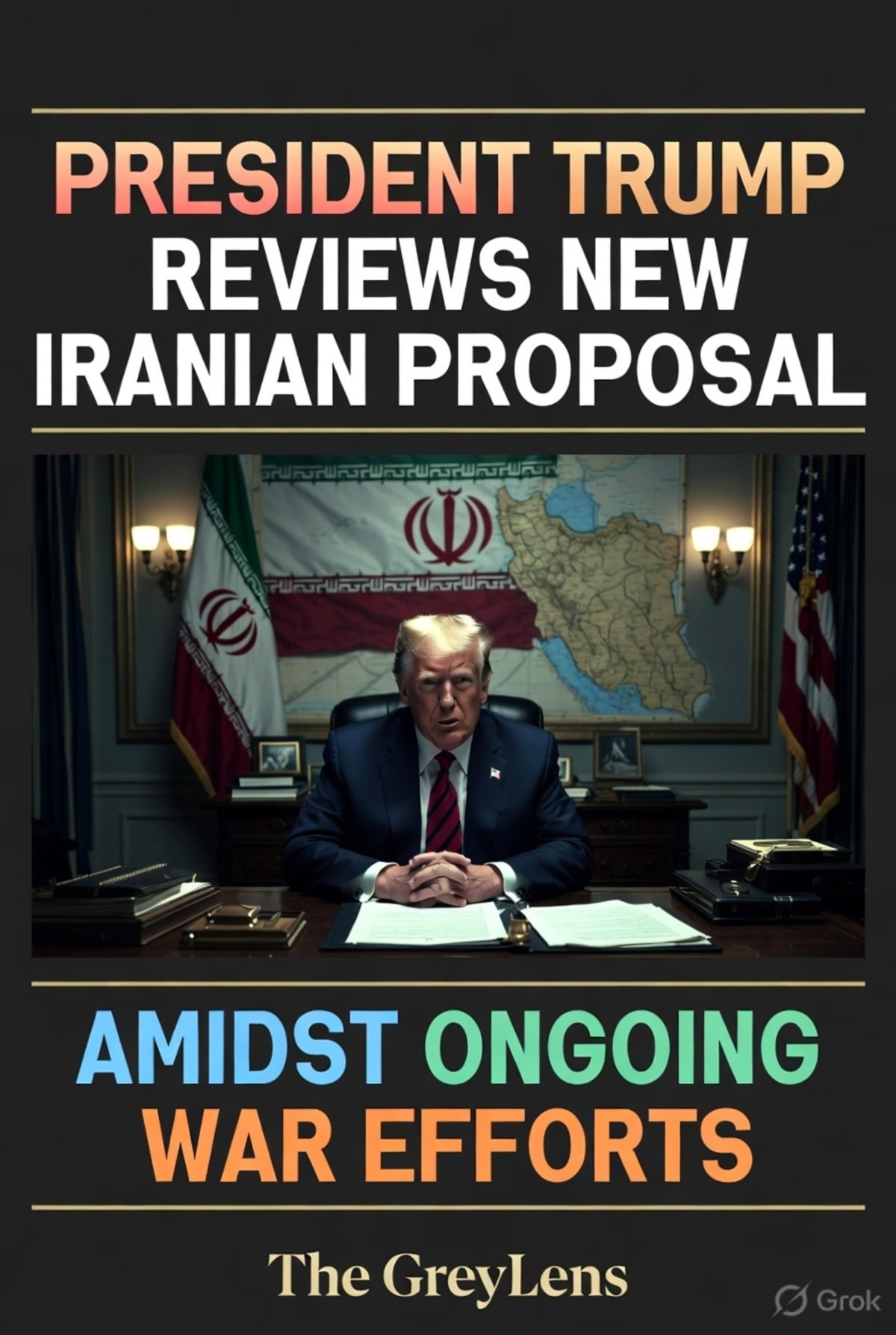
WASHINGTON D.C. – President Donald Trump announced on Saturday that his administration is actively reviewing a new proposal submitted by Iran in an effort to de-escalate and ultimately end the protracted conflict. Speaking to reporters, Trump conveyed a cautious outlook, stating he was "not satisfied" with the terms presented but acknowledged that Iran was seeking a resolution.
“Iran wants to make a deal, but they are asking for things I can't agree to,” President Trump stated, without providing further details on the specific demands that have caused his dissatisfaction. The ongoing negotiations, which have been proceeding via phone after the cancellation of envoys' trips to Pakistan, are said to be continuing. This development comes as a fragile three-week ceasefire between the United States and Iran appears to be holding, offering a glimmer of hope for de-escalation.
Diplomatic Maneuvers and Skepticism
The White House has been tight-lipped regarding the specifics of Iran's proposal, which was reportedly delivered through intermediaries in Pakistan. President Trump's expression of skepticism, however, suggests significant hurdles remain in bridging the gap between the two nations' positions. The administration has previously voiced frustration with Iran's leadership, describing it as fractured, which may complicate the negotiation process. Despite these challenges, the continuation of diplomatic channels signifies a commitment from both sides to explore avenues for peace, even as military posturing and sanctions remain in effect.
Consumer Sentiment and Economic Ripples
The ongoing conflict and its potential impact on global energy markets continue to influence consumer sentiment in the United States. A recent report indicated that year-ahead inflation expectations surged in April, with consumers expressing concerns primarily through shocks to gasoline and other prices. While a brief ceasefire had a modest positive effect on sentiment and gas prices, any significant escalation or breakdown in diplomatic efforts could lead to renewed economic anxieties. The conflict's influence on consumer views is largely tied to its effect on supply constraints and energy prices, suggesting that diplomatic developments alone may not be enough to significantly buoy consumer confidence without tangible economic relief.
The Path Forward: A Fragile Peace or Renewed Hostilities
The coming days will be critical in determining the trajectory of the U.S.-Iran conflict. President Trump's administration faces the delicate task of navigating these complex negotiations while maintaining a strong diplomatic and military stance. The effectiveness of the current ceasefire and the willingness of both parties to compromise will be key factors in whether this new proposal can lead to a lasting resolution or if the region will face a renewed period of hostilities. The international community remains closely watchful, hoping for a de-escalation that can bring stability to a volatile region.