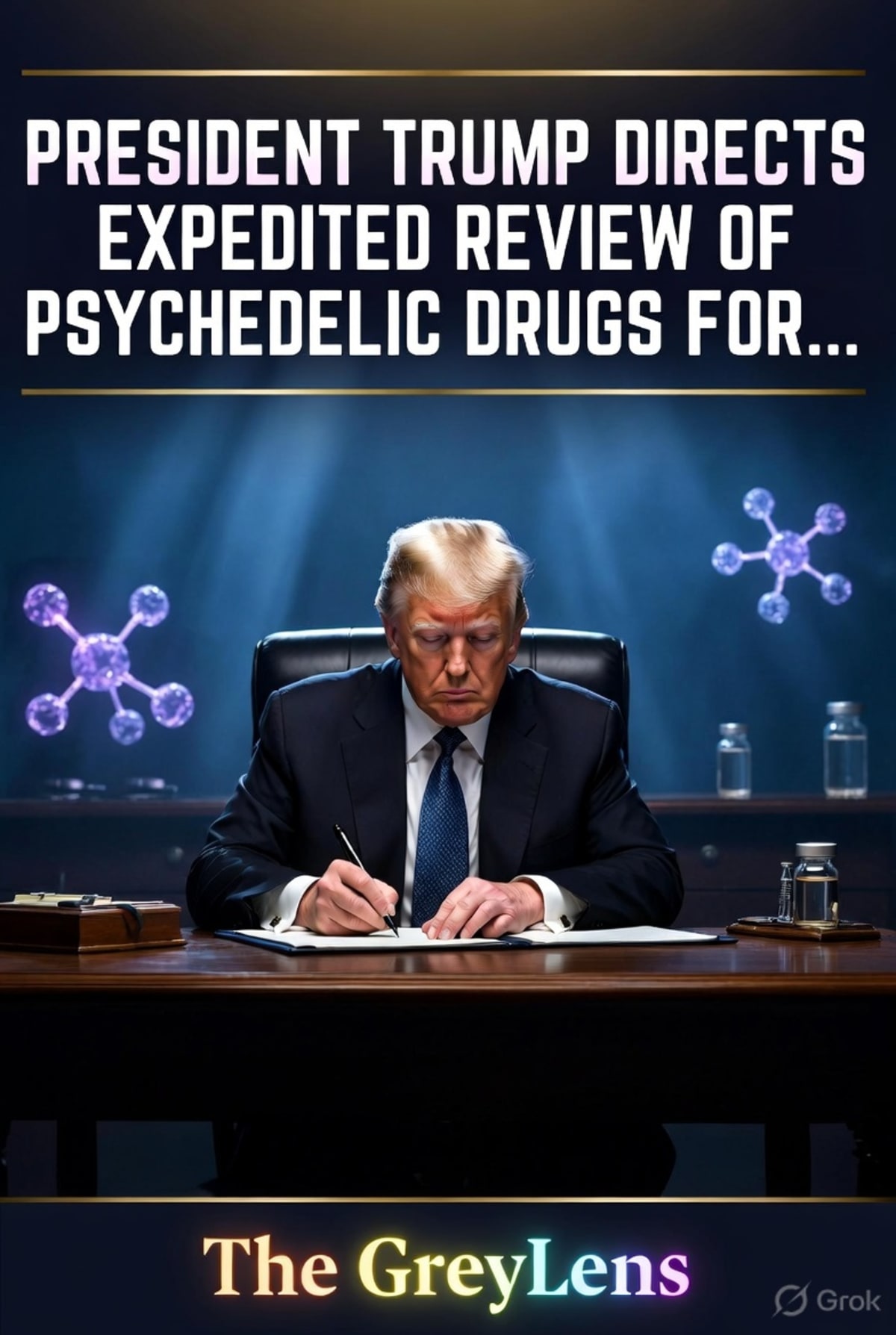
In a significant move for mental health policy, President Donald Trump announced on Saturday, April 18, 2026, that he has signed an executive order to expedite the Food and Drug Administration's (FDA) review of certain psychedelic drugs. The order specifically targets substances like ibogaine, which has garnered attention for its potential therapeutic benefits, especially among U.S. military veterans seeking treatment for post-traumatic stress disorder (PTSD), as reported by Reuters and The Guardian. The reforms are intended to pave the way for these substances, currently classified under the most restrictive categories for illegal and high-risk drugs, to be reclassified following successful clinical trials. This initiative reflects a growing bipartisan interest in exploring alternative treatments for conditions such as severe depression and PTSD, with conservative podcaster Joe Rogan and former Navy SEAL Marcus Luttrell notably present at the White House signing ceremony, according to PBS News. Trump expressed optimism that this accelerated review process could dramatically improve access to potential treatments, stating, “If these turn out to be as good as people are saying, it's going to have a tremendous impact.” The move also follows previous pledges from administration officials, including Health Secretary Robert F. Kennedy Jr., to ease restrictions on psychedelics for medical use. This policy shift is seen as a crucial step for individuals suffering from debilitating symptoms, offering a chance to improve their quality of life, as noted by PBS News. The administration's efforts aim to spur research and development in this area, potentially offering new hope for widespread mental health challenges. While the drugs still face significant safety risks and remain largely illegal, this executive order represents a notable shift in federal policy towards exploring their therapeutic potential. The White House ceremony also saw the presence of other administration officials and allies who have championed the cause, underscoring the multi-faceted support for this policy change. The potential human impact is considerable, offering a new avenue for treatment for those who have not found relief through conventional methods. The executive order is seen as a direct response to advocacy from veteran groups and lawmakers who have highlighted the need for innovative approaches to mental healthcare. This development is part of a broader push by the Trump administration to address mental health issues, with the president framing it as a key component of his health agenda. The long-term implications for medical research and patient care are expected to be substantial, potentially reshaping the landscape of psychiatric treatment in the United States.
General
President Trump Directs Expedited Review of Psychedelic Drugs for Medical Treatment
President Donald Trump has signed an executive order aimed at accelerating the review process for psychedelic drugs, such as ibogaine, for medical research and treatment. This initiative is particularly noted for its potential to aid U.S. military veterans suffering from post-traumatic stress disorder.
Report an error/suggestion: news@thegreylens.com