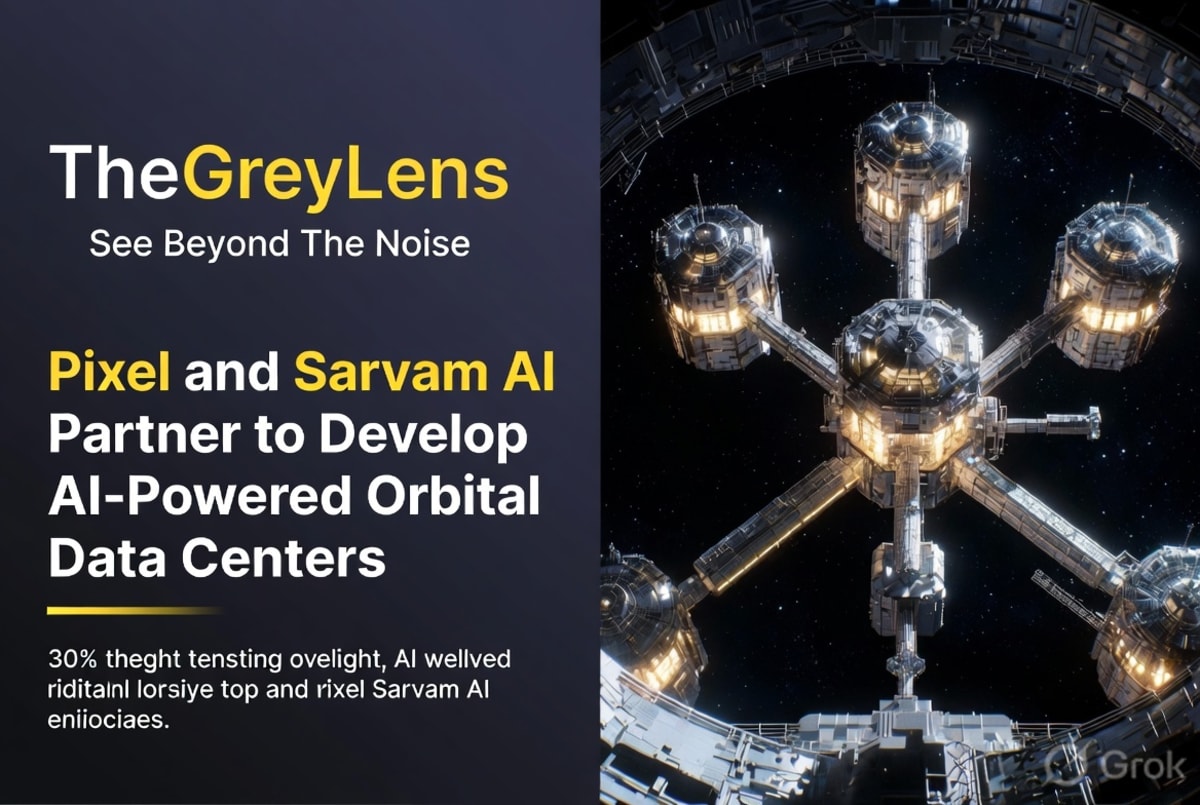
The Indian space startup Pixxel is collaborating with Sarvam AI to develop AI-powered orbital data centers. This groundbreaking initiative aims to process and store vast amounts of data directly in orbit, a significant advancement for space-based computing. The collaboration was announced in May 2026, highlighting a critical breakthrough in the application of artificial intelligence within the burgeoning Indian space sector.
Pioneering Orbital AI Infrastructure
The partnership between Pixxel, a company known for its hyperspectral imaging technology, and Sarvam AI, which specializes in developing foundational generative AI models for Indian languages, marks a pivotal moment for India's space ambitions. This collaboration signifies a move towards "full-stack capabilities" in the Indian space industry, extending beyond just rockets and satellites to encompass AI-led infrastructure in orbit. The development of AI-powered orbital data centers is intended to address the challenges of bandwidth constraints and latency associated with transmitting raw data from space to Earth. By processing data directly on satellites, these centers can enable real-time analysis for time-critical applications, such as satellite imaging and communications, promising to revolutionize how space missions operate.
Transforming Space-Based Data Processing
This initiative by Pixxel and Sarvam AI aligns with a broader trend of integrating artificial intelligence into various aspects of space exploration and utilization. The Indian Space Research Organisation (ISRO) has also been exploring the feasibility of establishing in-orbit AI data centers, recognizing the potential for edge computing in space. Such a development could revolutionize Earth observation missions, allowing for real-time analysis of data like disaster alerts or crop health metrics, thereby optimizing resource allocation. Communication satellites could also benefit from dynamic bandwidth allocation through in-orbit reconfiguration. The development of these orbital AI data centers represents a significant leap in space technology, potentially transforming satellite imaging, communication, and data analysis capabilities. This advancement underscores India's growing prowess in both the AI and space sectors, positioning the nation as a key player in the global space economy.
India's Ascending Role in AI and Space
The collaboration between Pixxel and Sarvam AI is indicative of India's rapidly expanding footprint in both artificial intelligence and space technology. The country is increasingly focusing on developing indigenous capabilities and fostering innovation across these critical sectors. With significant government initiatives like the IndiaAI Mission and a growing private sector investment, India is emerging as a global hub for AI development and space exploration. The development of AI-powered orbital data centers is a testament to this progress, showcasing India's commitment to pushing the boundaries of technological innovation and its ambition to lead in the new space race.
The development of AI-powered orbital data centers by Pixxel and Sarvam AI represents a significant advancement in the field of space technology and artificial intelligence. This collaboration highlights India's increasing capabilities and ambitions in both sectors, positioning the nation at the forefront of innovation. The coming months will likely see further progress and potential for commercialization of these orbital AI solutions, signaling a new era for space-based data processing and analysis.