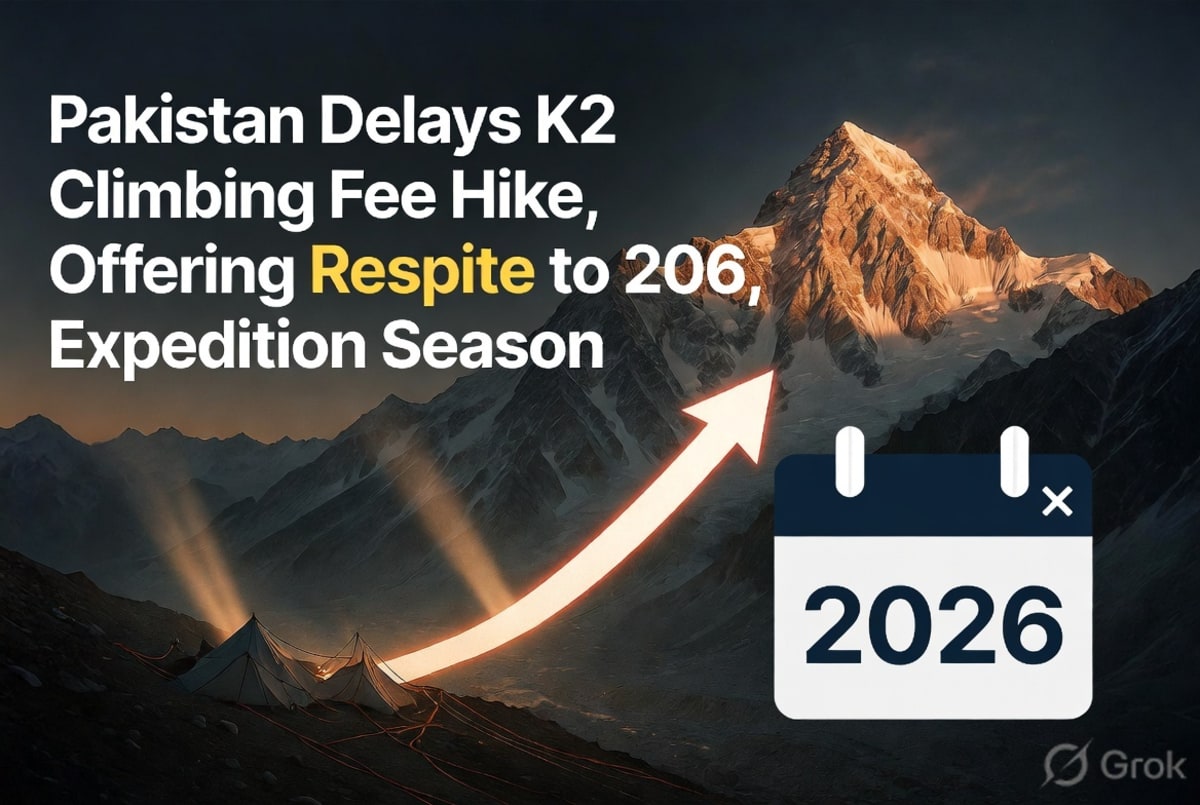
Mountaineers aiming to conquer the formidable K2 in 2026 will benefit from a reprieve as Pakistan has officially delayed a significant increase in climbing fees. The Pakistani government had planned to triple the fees for expeditions to the Karakoram range, with the cost for a K2 summit attempt set to rise to $5,000 per climber. However, following an outcry from tour operators and anticipation from the global mountaineering community, this hike has been postponed until at least 2026.
A Welcome Delay for Aspiring Climbers
The decision to postpone the fee increase is a significant development for aspiring summiteers, including those from India, who are likely planning their expeditions for the upcoming seasons. The Karakoram range, which spans parts of Pakistan, India, China, Afghanistan, and Tajikistan, is home to K2, a mountain renowned for its extreme difficulty and high fatality rate, estimated at over 20%. The delay offers a crucial planning period, allowing potential climbers to finalize their logistics and secure funding without the immediate pressure of the tripled costs. This move is seen as a positive step for adventure tourism in the region, ensuring that the allure of K2 remains accessible to a wider range of serious mountaineers.
K2: The Savage Mountain's Enduring Challenge
K2, standing at 8,611 meters (28,251 ft), is the second-highest peak on Earth and is often referred to as the "Savage Mountain" due to its brutal climbing conditions. Unlike Mount Everest, K2 presents a far steeper and more unpredictable challenge, with weather windows that are notoriously brief and volatile. Its technical routes, including the Abruzzi Spur, involve navigating treacherous ice cliffs, unstable terrain, and the constant threat of rockfall and avalanches. The summit push requires not only exceptional endurance but also advanced technical climbing skills and the ability to make rapid, life-saving decisions in extreme conditions.
The 2026 climbing season for K2 is expected to see determined climbers from around the world converging on the Karakoram. The summer months, particularly July and August, typically offer the most stable weather, though conditions remain highly unpredictable. For many, climbing K2 is the ultimate mountaineering challenge, a test of skill, will, and resilience against one of nature's most unforgiving environments. The mountain's allure lies not just in its height but in the sheer difficulty and danger it presents, attracting those who seek the pinnacle of high-altitude adventure.
Navigating the Future of Karakoram Expeditions
While the fee increase has been postponed, the underlying challenges of climbing K2 remain. Expedition organizers emphasize the need for meticulous planning, advanced mountaineering experience, and robust safety protocols. The remote nature of the Karakoram and the inherent dangers mean that expeditions must be largely self-sufficient, with limited external support available in case of emergencies. The delay in fee increases, however, provides a vital opportunity for both the Pakistani authorities and the international mountaineering community to engage in further dialogue, potentially leading to more sustainable and safety-focused policies for future expeditions. The postponement until at least 2026 allows for continued access and planning for expeditions, ensuring that the spirit of adventure in the Karakoram can thrive while critical discussions about the sport's future take place.