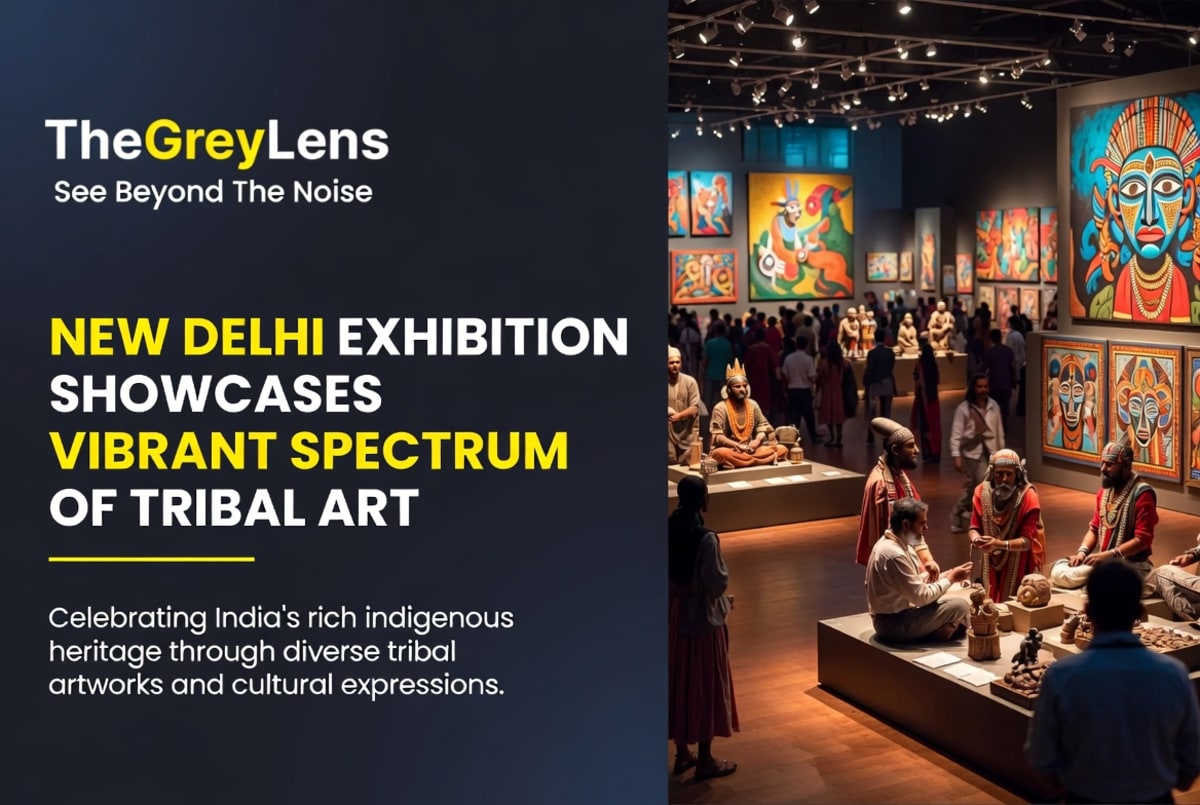
New Delhi, India – The vibrant tapestry of India's indigenous artistic heritage was on full display at the recently concluded Tribes Art Fest 2026 in New Delhi. This 12-day celebration, held at the K.G. Marg's Travancore Palace, brought together a diverse array of tribal artists, contemporary art practitioners, cultural groups, students, and art enthusiasts from across the nation. The festival, a significant initiative by the Ministry of Tribal Affairs in collaboration with FICCI and the National Gallery of Modern Art (NGMA), not only highlighted the aesthetic and cultural richness of tribal art but also underscored its crucial role in empowering tribal communities and ensuring sustainable livelihoods.
A Platform for Cultural Exchange and Economic Empowerment
The Tribes Art Fest 2026 witnessed an enthusiastic turnout, with over 10,000 visitors exploring the exhibition. This strong public interest reflects a growing appreciation for India's diverse tribal art traditions. The festival provided a unique platform for artistic collaboration, cultural exchange, and direct public engagement, showcasing more than 30 distinct tribal art forms and featuring the works of over 70 tribal artists. A remarkable aspect of the event was the direct sales of tribal artworks, which exceeded Rs 1.25 crore, a testament to the growing market for these unique creations and the direct economic benefit to the artists.
Ms. Ranjana Chopra, Secretary of the Ministry of Tribal Affairs, emphasized the festival's success in creating a \"successful experiment\" by integrating an art gallery ecosystem with corporate buyers and institutional collaborations. \"This has truly been a successful experiment,\" Ms. Chopra stated. \"By bringing together an art gallery ecosystem, corporate buyers, and institutional collaborations, we have created a platform that not only showcases tribal art but also directly strengthens the livelihoods of tribal artists.\" She further highlighted the Ministry's commitment to not only infrastructure development but also to focusing on the livelihoods of tribal artists.
Showcasing Diverse Art Forms and Collaborative Spirit
The exhibition featured over 1,000 artworks, offering a comprehensive look at the depth and breadth of tribal artistic expression. Beyond showcasing traditional art forms, the festival actively encouraged collaboration between tribal artists and contemporary art practitioners. This resulted in unique creative expressions that blended traditional knowledge with modern artistic practices, offering fresh perspectives on India's cultural heritage. The event also included hands-on workshops, live art demonstrations, and interactive sessions, allowing visitors to engage closely with the intricacies of tribal art and traditions. Cultural performances by tribal groups from various regions further enriched the festival, presenting traditional music and dance that resonated with the audience.
Mr. Durgadas Uikey, Minister of State for Tribal Affairs, underscored the intrinsic connection between tribal art and the communities' relationship with nature, culture, and tradition. \"Tribal art reflects the deep and intrinsic connection of tribal communities with nature, culture, and tradition,\" he noted. He further elaborated that tribal art forms are more than just visual expressions; they serve as \"living archives\" carrying the knowledge, memories, and traditions of tribal societies. \"Each expression holds meaning, reflecting the artist's emotions, and every line represents a worldview deeply connected with nature and community life,\" he added, highlighting how tribal art encapsulates traditional ecological knowledge, spiritual imagination, and the social narratives of communities.
A Vision for Sustainable Livelihoods and Cultural Preservation
Union Tribal Affairs Minister Jual Oram, who inaugurated the festival, reaffirmed the government's dedication to preserving tribal heritage while simultaneously pursuing structured economic empowerment. He outlined an integrated approach that combines cultural preservation with socio-economic development, citing initiatives like PM JANMAN for Particularly Vulnerable Tribal Groups (PVTGs), DAJGUA for benefit saturation, the expansion of Eklavya Model Residential Schools, and strengthened market linkages through TRIFED. Minister Oram emphasized that platforms like Tribes Art Fest are pivotal in moving beyond symbolic celebrations to create structured market ecosystems. \"Platforms such as Tribes Art Fest move beyond symbolic celebration by creating structured market ecosystems, connecting artists with collectors, galleries, corporates, design institutions and citizens, thereby transforming cultural heritage into sustainable and aspirational livelihoods,\" he stated.
The festival also saw the formal unveiling of the official TAF Catalogue, a curated documentation of participating artists, art traditions, and artworks. The TAF Launch Video, showcasing the vision, scale, and artistic diversity of the festival, was also released. As part of the cultural segment, the Khmih Creative Society from Shillong, Meghalaya, presented an evocative showcase of tribal musical traditions, blending indigenous rhythms and instruments with patriotic and contemporary expressions, earning significant appreciation from the attendees. The event was also graced by dignitaries such as Mr. Gajendra Singh Shekhawat, Union Minister of Culture and Tourism, and Ms. Rekha Gupta, Chief Minister of Delhi, among others. The success of Tribes Art Fest 2026 signals a promising future for tribal art in India, fostering a greater understanding and appreciation of these invaluable cultural assets while ensuring their economic viability for generations to come.