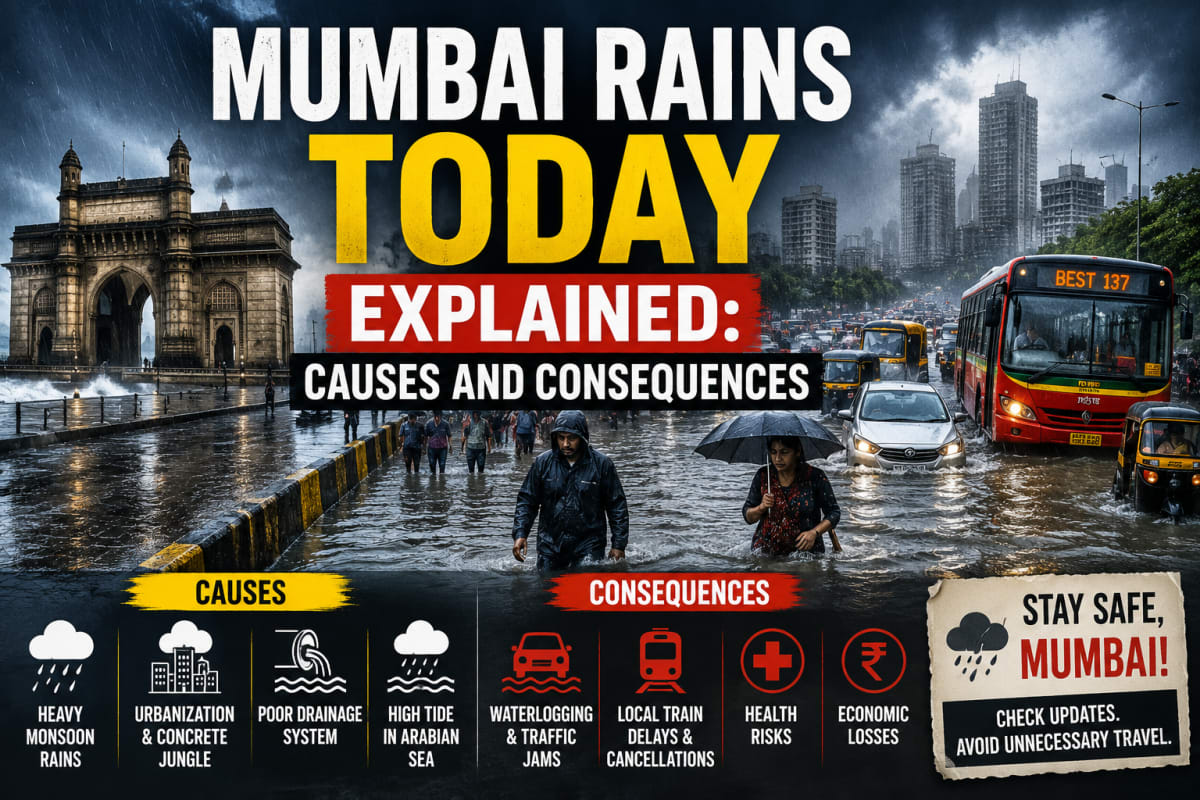
What Exactly Is Mumbai Rains Today Explained:
Mumbai rains today, as a recurring phenomenon, refers to the severe, often disruptive, monsoon downpours that inundate the city, leading to widespread flooding. This isn't just about average rainfall; it's about extreme events that overwhelm the city's capacity to cope. Think of it as the city's annual battle with nature amplified by human factors. It's a complex interplay of meteorological conditions, such as intense low-pressure systems forming over the Arabian Sea, and the city's unique geography as a coastal metropolis built on reclaimed land. The sheer volume of water, often concentrated in short periods, coupled with the city's dense urban fabric and aging drainage infrastructure, creates a perfect storm. Understanding 'Mumbai rains today' means looking beyond the daily weather report and grasping the systemic vulnerabilities that turn a natural event into a crisis, impacting millions and bringing a bustling economic hub to a standstill. It's a yearly reminder of the delicate balance between urban growth and environmental resilience.
How It Actually Works
The mechanics of Mumbai's severe monsoon flooding are a confluence of natural and man-made factors. Meteorologically, the monsoon season (June to September) brings heavy rainfall, but extreme events are often triggered by depressions or cyclonic circulations forming in the Arabian Sea, which then track towards the Maharashtra coast. These systems can dump prodigious amounts of rain in a short span – for instance, on August 29, 2017, Mumbai received over 300 mm of rainfall in a single day, a record at the time. Compounding this is Mumbai's geography: a narrow peninsula with a low-lying coastal plain, much of which is reclaimed land. This makes natural drainage difficult. Historically, Mumbai was a collection of seven islands, and the current urban sprawl has significantly altered natural water flows. The city's drainage system, designed for a smaller population and different rainfall patterns, is now severely overtaxed. Critically, rapid and often unplanned urbanization has led to the construction of buildings and infrastructure on natural floodplains and wetlands, reducing the city's capacity to absorb excess water. Encroachment on natural drains and mangroves, which act as natural buffers, further exacerbates the problem. The sheer volume of concrete and asphalt also increases surface runoff, as less water can percolate into the ground. The result is a situation where even moderate rainfall can lead to significant waterlogging, and extreme events cause widespread, often devastating, flooding.
Why Is This Trending Right Now
The recurrent nature of Mumbai's monsoon flooding means it's always a concern, but specific events elevate it in public discourse. As of early July 2026, the monsoon season is well underway, and early reports suggest rainfall patterns are intensifying in certain regions. News outlets are already highlighting concerns about preparedness, with images and reports of waterlogged streets and disrupted services emerging from preliminary heavy showers in late June. This year, there's a heightened sense of urgency due to recent studies emphasizing the amplified impact of climate change on extreme weather events in coastal megacities like Mumbai. The focus is on whether the city's infrastructure upgrades, including the BRIMSTOWAD (Brihanmumbai Storm Water Disposal System) project, are sufficient to handle the increased intensity of rainfall predicted for this season. Public anxiety is palpable, fueled by memories of past deluges and the economic losses they incurred. The current search trend reflects a collective desire to understand if the situation is improving or deteriorating, and what the immediate future holds as the monsoon peaks in the coming weeks. It's a critical period where preliminary events serve as a stark warning.
The Global Impact
Mumbai's flooding issues are a microcosm of a global challenge, with profound worldwide implications. Coastal cities worldwide, from Jakarta to Miami, face similar threats exacerbated by climate change and rapid urbanization. The economic impact is substantial; Mumbai alone contributes significantly to India's GDP, and even a few days of severe flooding can lead to losses in the hundreds of millions of dollars, disrupting supply chains and impacting industries like finance, IT, and manufacturing. Globally, such events highlight the vulnerability of critical economic hubs. This has led to increased investment in climate adaptation strategies and resilient infrastructure, influencing urban planning policies in cities across Asia, Africa, and Latin America. The insurance industry also feels the ripple effect, with rising premiums and a greater focus on risk assessment for climate-related disasters. Furthermore, the displacement of populations during severe floods, though often localized in Mumbai, contributes to a broader global trend of climate-induced migration. The need for international cooperation on climate action and disaster preparedness becomes increasingly evident as these localized events demonstrate a shared global vulnerability.
What Most People Get Wrong
The most common oversimplification is attributing Mumbai's flooding solely to excessive rainfall. While heavy downpours are the trigger, the real issue lies in the city's diminished capacity to manage that water. People often fail to grasp the scale of urban transformation that has occurred. The extensive reclamation of land has fundamentally altered Mumbai's natural hydrology, shrinking wetlands and mangrove forests that historically absorbed excess water and protected the coastline. Another misconception is that the problem is purely infrastructural – a matter of building bigger drains. While infrastructure upgrades like the BRIMSTOWAD project are crucial, they are often outpaced by the pace of development and the changing climate. The intricate web of natural systems, urban planning failures, and the sheer density of a population exceeding 20 million people is often overlooked. It’s not just about moving water faster; it’s about creating a city that can coexist with its natural environment, a concept that remains largely aspirational for Mumbai.
Mumbai's recurring floods are not merely a meteorological event; they are a stark indictment of decades of unplanned urban expansion and a failure to integrate ecological principles into development. While climate change is undeniably a contributing factor, amplifying rainfall intensity, the city's vulnerability is largely self-inflicted. The ongoing reliance on piecemeal infrastructure solutions, without a fundamental shift towards nature-based approaches and stricter urban planning regulations, guarantees that these crises will persist. Mumbai must prioritize the restoration of its natural water management systems – its mangroves, wetlands, and natural drainage corridors – alongside, not instead of, engineered solutions. The city’s economic significance demands a radical, long-term strategy that treats ecological resilience as a core component of urban development, not an afterthought. Failure to do so will lead to escalating economic losses and social disruption, making Mumbai a cautionary tale for coastal cities globally.
- Recurring severe monsoon flooding
- Interplay of natural and man-made factors
- Impact of urbanization and land reclamation
- Climate change amplification
- Economic and social consequences
- Need for integrated resilience strategies