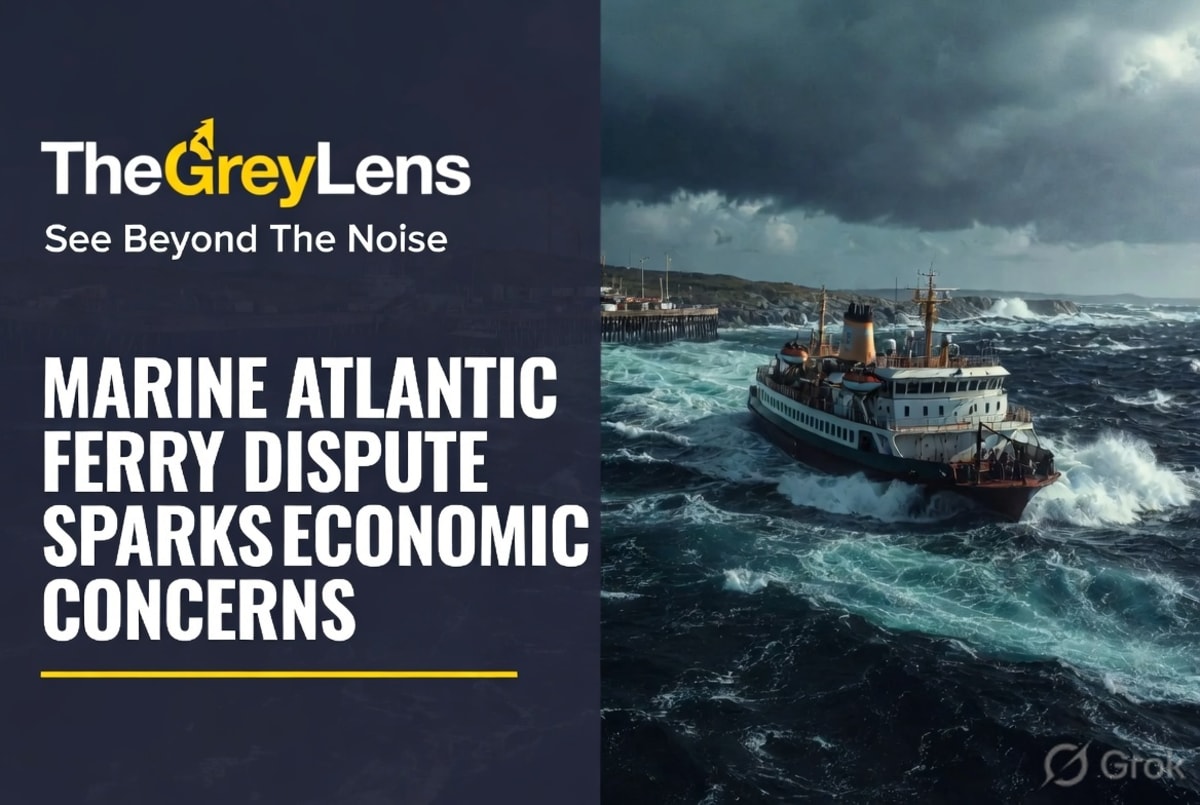
The looming possibility of a labor dispute with Marine Atlantic and its workers is casting a shadow over economic stability in Cape Breton, Nova Scotia. The union representing the ferry workers has formally requested the Canadian Industrial Relations Board to reconsider current ferry fares, a development that has amplified existing concerns about the vital transportation link between Newfoundland and Labrador and the mainland. This situation, reported on June 4, 2026, highlights the delicate balance of operations for a service critical to regional commerce and connectivity.
Union's Appeal and Potential Impact on Fares
The specific details of the union's appeal to the Canadian Industrial Relations Board remain under review, but the core issue revolves around the fairness and sustainability of current ferry fares. For many residents and businesses in Cape Breton and across the Cabot Strait, Marine Atlantic is more than just a ferry service; it is an essential lifeline. Any significant disruption or change in service, particularly one stemming from fare disputes, could have cascading economic consequences. This includes impacts on the cost of goods, the viability of tourism, and the daily commutes of individuals who rely on the ferry. The union's action signals a deep-seated concern that the current fare structure may not adequately reflect the operational costs or the labor conditions of its members, potentially jeopardizing the long-term health of the service.
Economic Repercussions for Cape Breton
Cape Breton's economy is intricately linked to the reliable operation of Marine Atlantic. The ferry service facilitates the movement of goods, supports seasonal tourism, and provides employment opportunities. A prolonged labor dispute or significant changes in service could exacerbate existing economic challenges in the region. Local businesses, from logistics companies to hospitality providers, have expressed apprehension about the potential fallout. The transportation of goods, particularly perishable items and raw materials, could face delays and increased costs. Furthermore, the tourism sector, a significant contributor to the island's economy, relies heavily on seamless travel connections. Uncertainty surrounding the ferry service could deter potential visitors, impacting hotels, restaurants, and local attractions. The news of this potential dispute has already begun to fuel discussions among local chambers of commerce and economic development agencies, who are closely monitoring the situation and exploring contingency plans. The proximity of the potential labor action to the peak summer tourism season in Atlantic Canada adds another layer of urgency to the resolution of this matter.
Broader Implications for Atlantic Canada
While the immediate concerns are centered on Cape Breton, the implications of a Marine Atlantic dispute extend across Atlantic Canada. The ferry is a linchpin in the transportation network for Newfoundland and Labrador, connecting it to the rest of the country. Any disruption could affect supply chains and passenger travel for the entire region. Marine Atlantic's role is particularly crucial during periods of adverse weather that can impact air travel, making the ferry service a vital alternative. The Canadian Industrial Relations Board's decision on the union's appeal will be closely watched by stakeholders throughout the maritime provinces. The outcome could set precedents for labor relations within the transportation sector and influence future fare structures for essential public services. The government, as a key stakeholder in Marine Atlantic, will likely be involved in facilitating dialogue and seeking a resolution that balances the needs of workers, the public, and the financial sustainability of the service. The coming days and weeks will be critical in determining whether this potential labor dispute escalates or if a mutually agreeable solution can be found to ensure the continued, reliable operation of this vital service.
What happens next will depend on the Canadian Industrial Relations Board's response to the union's appeal and the subsequent negotiations between Marine Atlantic management and its employees. The economic well-being of communities on both sides of the Cabot Strait hinges on a swift and equitable resolution to prevent any disruption to this essential ferry service.