Ingenuity in the Face of Desperation
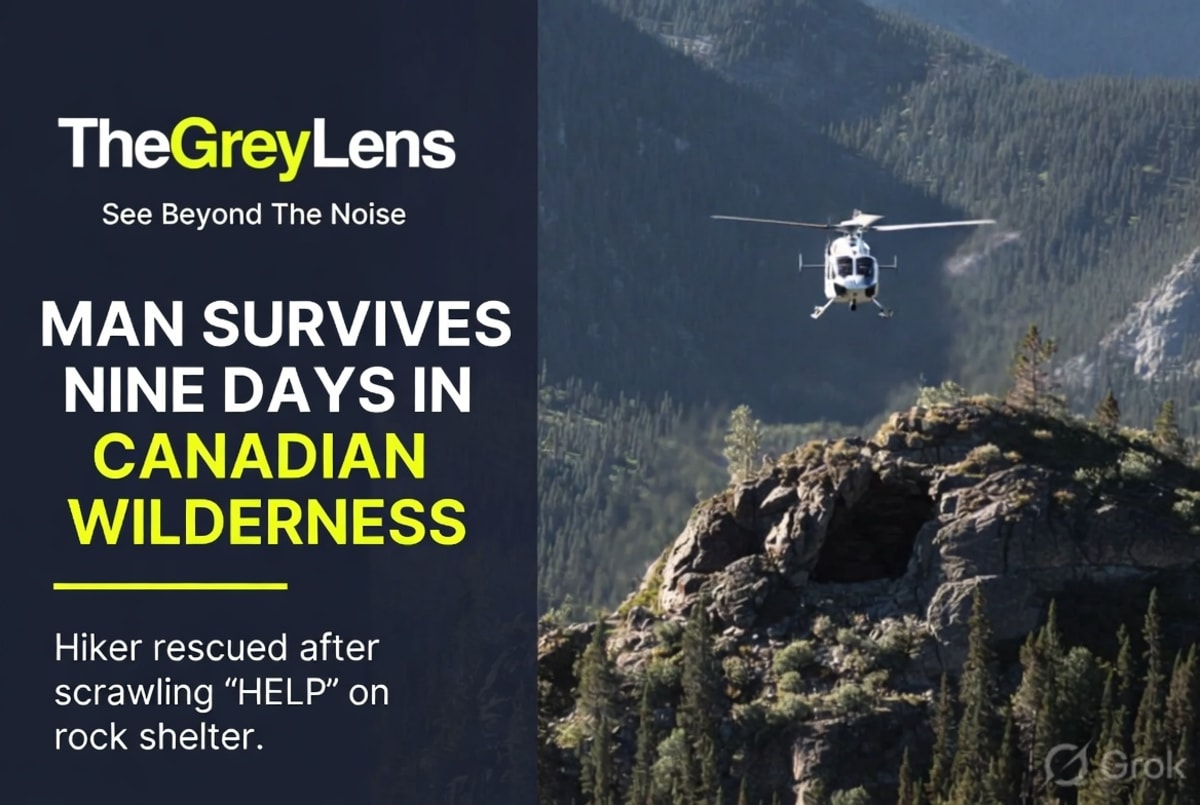
Barber's survival was a testament to his resourcefulness and will to live. Stranded for nine days, he subsisted on pond water and whatever edible plants he could find. To combat the elements, he constructed a makeshift shelter from mud and sticks, leaning it against a large rock. It was on this rock that he scrawled the word "HELP" in mud, a desperate but ultimately effective plea for rescue. This act of ingenuity, coupled with an SOS drawn in the mud, played a crucial role in his eventual discovery. He also stuffed his clothes with grass for insulation, a simple yet vital measure against the cold.
A Needle in a Haystack: The Search Effort
The search for Andrew Barber was a monumental undertaking. Reported missing on July 31, the Williams Lake Royal Canadian Mounted Police, in conjunction with Quesnel Search and Rescue (SAR), initiated an extensive search operation. The vast and remote Cariboo region presented significant challenges, with Staff Sgt. Brad McKinnon of the RCMP describing the search as akin to "looking for a needle in a haystack." The terrain was characterized as "boggy," with numerous rural and wilderness areas that could easily conceal a person. After days of searching from the air and on the ground with no success, a breakthrough came when an RCMP helicopter spotted Barber's abandoned truck. This crucial sighting allowed search teams to narrow their focus. Subsequently, an observer in the helicopter located Barber's makeshift shelter and the distinctive "HELP" sign on the rock, approximately three miles from the vehicle.
Rescuers' Commendations and a Stark Warning
Upon locating Barber on August 8, rescuers found him in a precarious state. He was severely dehydrated and suffering from a leg injury, making it difficult for him to stand. Bob Zimmerman, president and manager of Quesnel SAR, stated that Barber "was having a hard time standing" and expressed that "I don't know that he would have made it another 24 hours without us recovering him." Despite his dire condition, Barber's survival skills, including his knowledge of building shelters and finding water sources, were commended by authorities. However, his ordeal also serves as a stark reminder of the inherent dangers of the wilderness. Zimmerman emphasized the importance of preparedness, urging anyone venturing into the backcountry to carry a device with satellite capability for emergencies. The successful rescue was a collaborative effort involving multiple agencies, including the Royal Canadian Mounted Police, the British Columbia search and rescue organization PEP Air, and BC Emergency Health Services. The Quesnel SAR team expressed their gratitude on social media, stating, "Today's result is why we train, why we respond, and why we never give up."
The story of Andrew Barber's survival is a powerful narrative of human resilience. While he has been released from the hospital after treatment, his experience highlights the critical need for adequate preparation and the invaluable role of search and rescue teams. Future adventurers in Canada's vast wilderness are reminded that while ingenuity can aid survival, reliable communication devices remain paramount for ensuring a safe return.