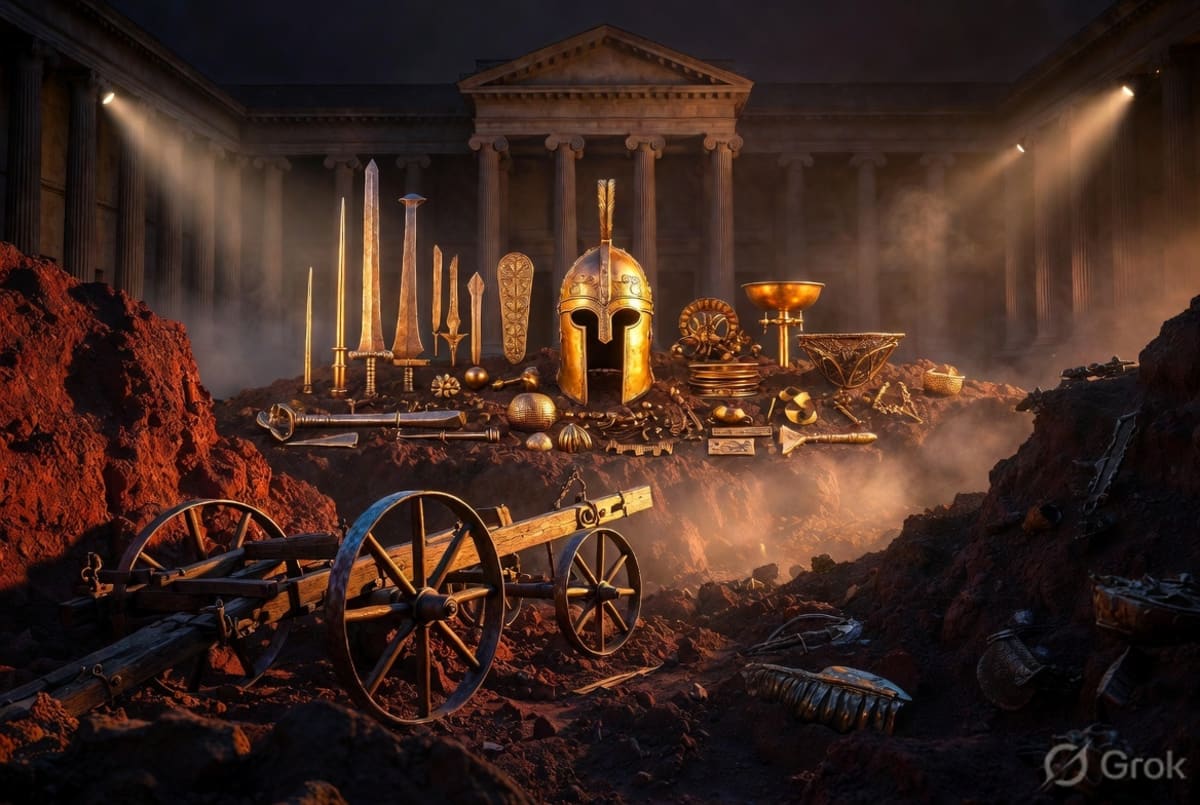
The Yorkshire Museum has opened its doors to "Chariots, Treasure and Power: Secrets of the Melsonby Hoard," a landmark exhibition displaying the largest collection of Iron Age metalwork ever discovered in the United Kingdom. This extensive trove, unearthed five years ago by a metal detectorist in northern England, consists of over 800 iron and copper-alloy artifacts dating back to the first century CE. The exhibition offers a rare glimpse into the lives of Britain's ancient tribes and the sophisticated society that existed just before the Roman invasion.
A Glimpse into Pre-Roman Britain
Among the most remarkable finds are components of four-wheeled horse-drawn wagons, providing the first evidence of such vehicles in Iron Age Britain. The hoard also includes ancient horse bridle bits, a large feasting cauldron, and a distinctive mirror that archaeologists believe signifies female power. The sheer scale and luxury of the objects suggest they belonged to an individual of immense importance, hinting at a complex social hierarchy and significant wealth distribution. The Melsonby Hoard, named after the nearby village, is not only significant for its quantity but also for the quality and variety of its contents, rewriting previous understandings of the era.
Unprecedented Discovery and Public Display
Archaeologists from Durham University led the excavation, which revealed the vast collection after the initial discovery by a metal detectorist. The process of researching and conserving the artifacts has been extensive, with conservators describing the experience as akin to "drinking from a fire hose" due to the sheer volume of objects. A fraction of the hoard is on display, including "the block," a staggering 330-pound mass of fused-together artifacts, presenting a formidable visual testament to the discovery's magnitude. The exhibition aims to bring these ancient secrets to light, allowing the public to engage directly with a pivotal period in British history.
Rewriting History and Future Research
The artifacts on display challenge previous assumptions about the technological and social sophistication of Iron Age Britain. The presence of chariot components and elaborate horse tack indicates advanced craftsmanship and a culture that valued mobility and status. The mirror, in particular, suggests a nuanced understanding of symbolism and personal adornment among the era's elite. While the precise reasons for the hoard's deposition remain a mystery, with no human remains found nearby to suggest it was a grave good, theories point towards possible disposal during a commemorative feast. The exhibition not only showcases these historical treasures but also underscores the ongoing potential for new discoveries and the continuous evolution of our understanding of the past. The exhibition is scheduled to run through the summer of 2027, offering ample opportunity for visitors to explore this extraordinary piece of British heritage.