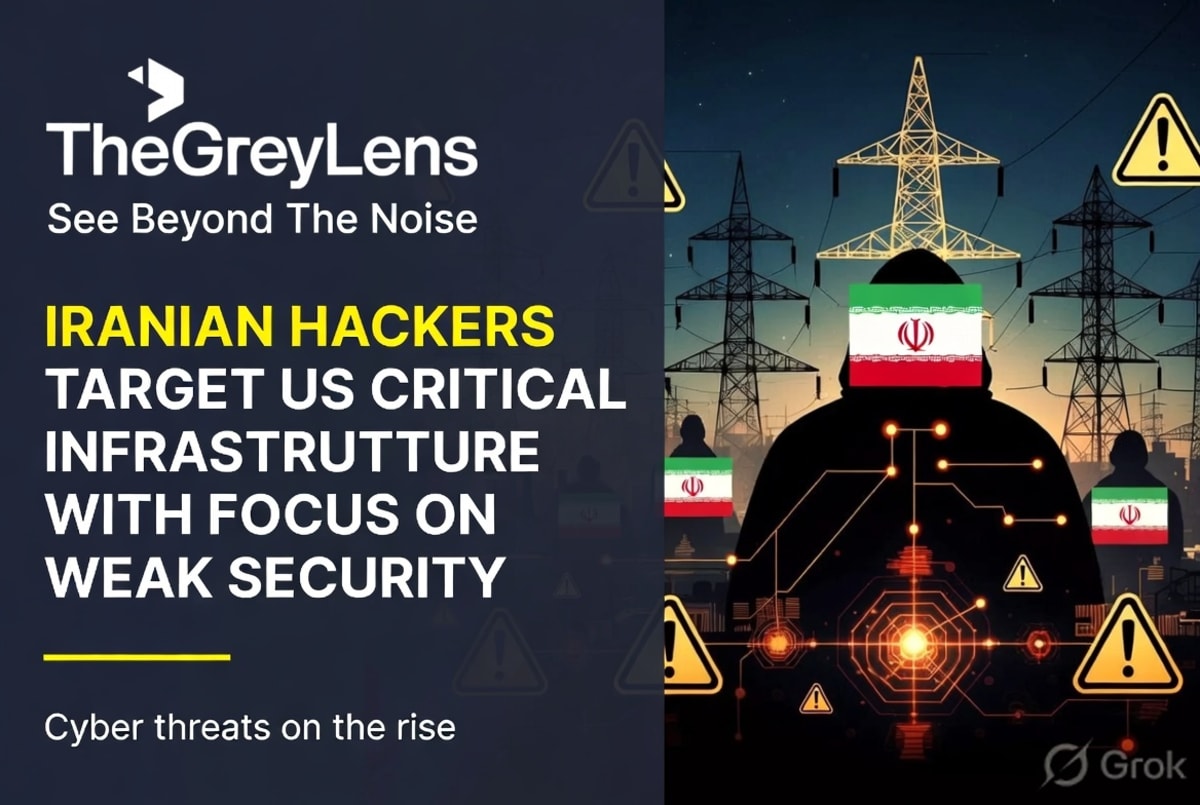
Iranian-aligned cyber actors are intensifying their focus on United States critical infrastructure, exploiting basic cybersecurity gaps and exposed industrial environments, according to a recent policy analysis. The sophisticated tactics employed by these groups highlight a persistent threat landscape where weak authentication and inadequate network segmentation create significant vulnerabilities.
Exploitation of Exposed Industrial Control Systems
The analysis, published by the Foundation for Defense of Democracies (FDD), reveals that attackers have successfully accessed operational technology (OT) infrastructure in multiple U.S. states. A prominent example cited involves gas station tank gauge systems that were left exposed online with either default or no password protection. This lax security allowed intruders to manipulate display data, creating a facade of operational activity without altering actual fuel levels. Such intrusions underscore a broader pattern of Iran-linked groups probing publicly accessible industrial control systems (ICS) where authentication and segmentation are weak, paving the way for potential disruptions.
Broader Campaign Against Essential Services
These intrusions are not isolated incidents but are part of a sustained campaign targeting sectors crucial to national security and public well-being, including energy, water, and other essential services. The Cybersecurity and Infrastructure Security Agency (CISA) has repeatedly warned about Iran-aligned efforts to exploit internet-facing programmable logic controllers and supervisory control systems. While some reports suggest that Iran may sometimes overstate the impact of its cyber operations, the consistent targeting of U.S. critical infrastructure by these state-sponsored actors remains a significant concern. The FDD report emphasizes that strengthening defenses at the device and configuration level is now paramount, given the uneven cybersecurity maturity across America's distributed infrastructure.
Escalating Threats and Future Concerns
The FDD's findings align with broader trends in cybersecurity, including a rise in state-backed ransomware activity and an increasing focus on operational technology (OT) security. Cybersecurity experts are calling for a shift towards cyber-physical resilience, moving beyond traditional perimeter-centric security to protect the integrity of industrial processes themselves. This evolving threat environment necessitates a proactive approach, with a focus on recovery readiness and production continuity. As cyber sovereignty becomes a more defined concept, critical infrastructure operators are expected to implement stronger, more resilient supply chains built on trust and accountability to counter these persistent and evolving threats.