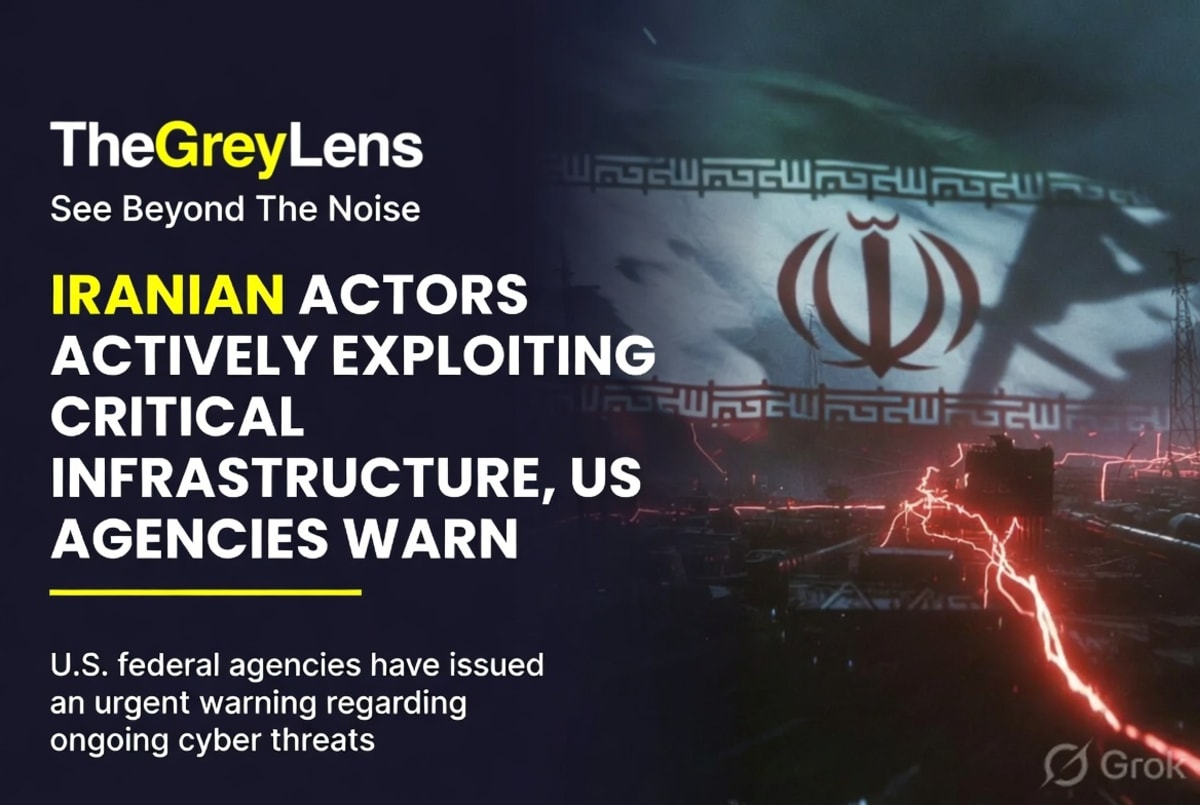
The United States is facing an escalating threat from Iranian-affiliated cyber actors who are actively exploiting vulnerabilities in operational technology (OT) across critical infrastructure sectors, according to a joint warning issued by multiple federal agencies. The FBI, Cybersecurity and Infrastructure Security Agency (CISA), and the National Security Agency (NSA), along with other government bodies, have alerted U.S. organizations to the ongoing cyber exploitation of internet-connected OT devices, specifically highlighting the targeting of programmable logic controllers (PLCs).
Iranian Actors Target US Critical Infrastructure
Federal agencies, including the FBI, CISA, and NSA, have issued urgent warnings about ongoing cyber exploitation targeting internet-connected operational technology (OT) devices across various U.S. critical infrastructure sectors. These attacks, linked to Iranian-affiliated cyber actors, specifically involve the exploitation of programmable logic controllers (PLCs), including those manufactured by Rockwell Automation/Allen-Bradley. The threat actors are actively exploiting these devices, which are crucial for the operation of power grids, water systems, and other essential services. The FBI and its partners are emphasizing the need for immediate action to remediate vulnerabilities and reduce the attack surface for these critical systems. The exploitation of OT devices by nation-state actors poses a significant risk of disruption to essential services, with potential cascading effects on national security and public safety.
Escalating Threats to Manufacturing and Financial Sectors
The manufacturing and financial services sectors remain prime targets for cybercriminals. Reports indicate a high volume of ransomware incidents in these industries, with some instances exceeding data breach counts. Leading ransomware strains continue to drive the bulk of these attacks, highlighting the persistent threat of data encryption and extortion. The FBI's 2026 Annual Threat Assessment previously identified cyberspace as a primary arena for conflict, with state-sponsored actors and ransomware groups posing a continuous threat to critical infrastructure at scale. Hacker groups linked to China, Russia, Iran, and North Korea are frequently implicated in these sophisticated operations, blending espionage, disruption, and influence into coordinated campaigns. The FBI has been releasing advisories with indicators of compromise and technical details for various malware strains and attack techniques to help organizations bolster their defenses against these pervasive threats.
The Evolving Threat Landscape and Mitigation Strategies
The cybersecurity threat landscape is constantly evolving, with attackers leveraging new techniques, including AI, to develop more sophisticated and persistent threats. This has led to an increased risk of disrupted operations, compromised data, and erosion of customer trust for organizations. The FBI and other agencies are continuously working to disseminate information on emerging threats and provide mitigation guidance. This includes advisories on reducing the attack surface for end-of-support edge devices, understanding the risks posed by residential proxy networks, and identifying tactics, techniques, and procedures associated with specific malware. Organizations are urged to maintain a strong foundation of industry best practices, implement robust incident response preparedness, and ensure continuous monitoring of their networks to stay ahead of these dynamic threats. The ongoing focus on state-sponsored activity and sophisticated ransomware attacks underscores the critical need for enhanced vigilance and proactive cybersecurity measures across all sectors.