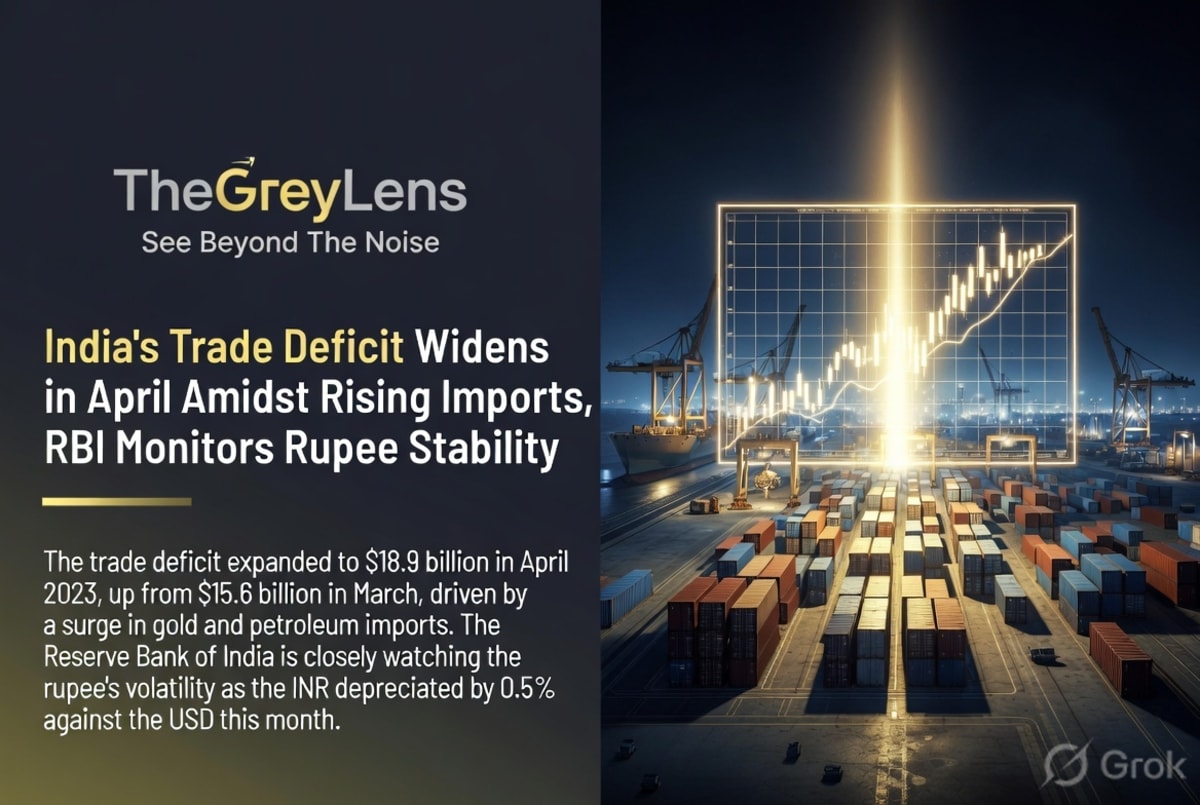
India's trade deficit experienced a substantial widening in April 2026, escalating to \$28.38 billion from \$21 billion in March. This increase, primarily fueled by a significant rise in imports of crude oil and gold, has placed considerable pressure on the nation's external balance. The latest figures, released in May 2026, indicate a deterioration in the core deficit (excluding oil and gold) to \$13 billion, up from \$9 billion, with notable shortfalls across chemicals, electronics, ores, and agriculture sectors.
Import Surge and Export Fragility
The widening deficit underscores a challenging trade environment for India. While imports have surged, driven by elevated global crude oil prices and supply-side disruptions exacerbated by geopolitical tensions in West Asia, the export outlook remains fragile. Despite a recent hike in bullion import duties aimed at providing some near-term relief, the overall deficit continues to grow. Notably, the deficit in electronics imports has reached an all-time high, contributing significantly to the widening gap. The Reserve Bank of India (RBI) has acknowledged these trade pressures, stating in its May 2026 Bulletin that the merchandise trade deficit widened in April over March, primarily due to the rising import bill for crude oil and gold. The deficit also saw a marginal increase compared to April 2025, mainly due to higher imports of electronic goods, gold, and machinery.
RBI's Balancing Act: Rupee Stability and Economic Growth
The persistent trade deficit and the consequent pressure on the Indian rupee have prompted the RBI to explore a range of measures to stabilize the currency. Discussions within the central bank, including Governor Sanjay Malhotra, have focused on options such as an interest rate hike, increased currency swaps, and raising dollar liquidity from overseas investors. The rupee had recently touched a fresh low of nearly 97 to a dollar.
While the next scheduled monetary policy decision is on June 5, 2026, the RBI has previously made out-of-cycle adjustments. The central bank is considering measures that mirror those taken during the 2013 taper tantrum, including potential deposit schemes for non-resident Indians, which could draw an estimated \$50 billion. Additionally, the RBI has been actively managing liquidity, with a \$5 billion swap auction announced recently to bolster dollar reserves.
Despite these pressures, the Indian economy has demonstrated resilience. The RBI's May 2026 Bulletin highlighted that the domestic economy remained resilient in April, supported by strong industrial activity, steady core inflation, and healthy agriculture conditions. However, the central bank also pointed to several external and domestic risks that could affect future growth and inflation. The IMF projects India's real GDP growth at 6.5% for 2026, with consumer prices expected to rise by 4.7%. The World Bank forecasts growth at 6.6% for fiscal year 2027, though it notes headwinds from the Middle East conflict.
Looking Ahead: Policy Vigilance and Economic Outlook
The coming months will be crucial for India's economic trajectory. The RBI's policy decisions will be closely scrutinized for their effectiveness in managing the rupee's stability without stifling economic growth. The central bank's April 2026 monetary policy review had already acknowledged the impact of the West Asian crisis on India's growth and inflation, maintaining a neutral stance with the repo rate unchanged at 5.25%. With the trade deficit showing a widening trend and global uncertainties persisting, policymakers will need to navigate a complex landscape to ensure sustained economic progress.