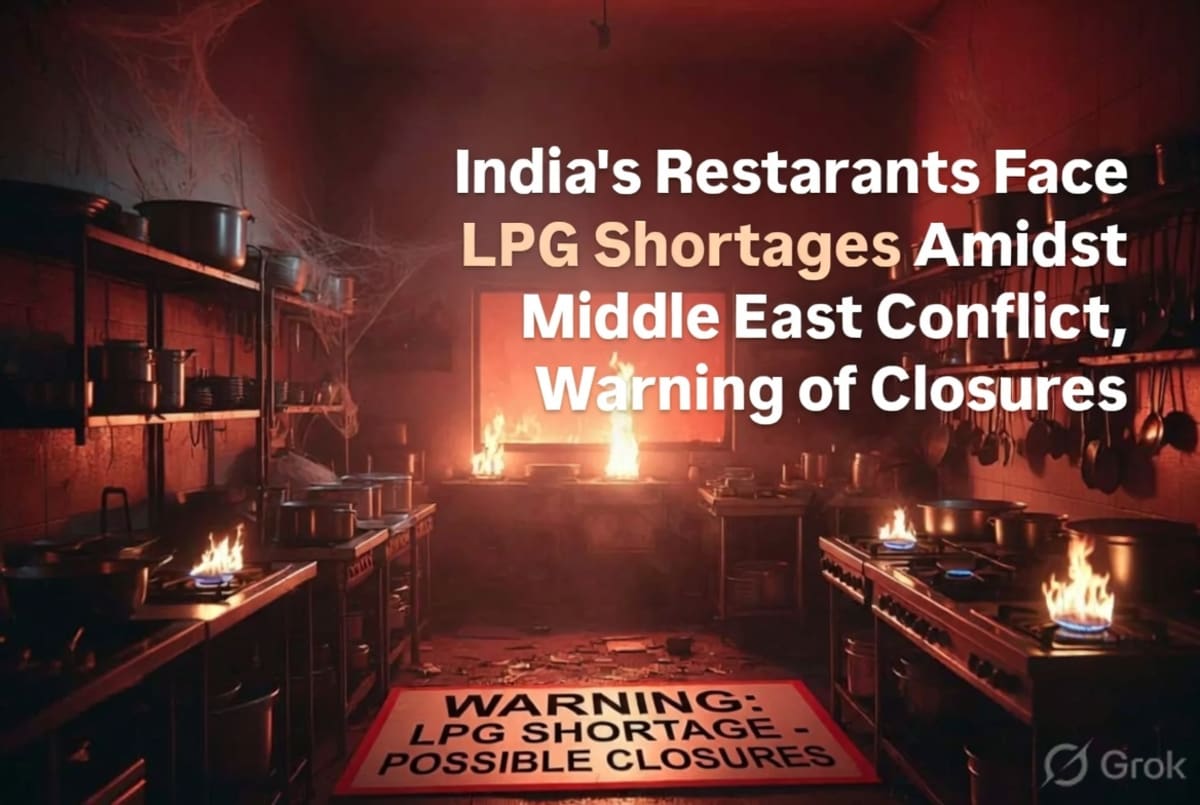
Restaurants across India are facing an escalating crisis due to disruptions in Liquefied Petroleum Gas (LPG) supplies, a critical component for their operations. The ongoing conflict in the Middle East has significantly impacted import routes, leading to a drastic reduction in commercial LPG availability. Industry bodies have issued stark warnings, indicating that a prolonged shortage could force a \"catastrophic closure of majority of restaurants.\"
Supply Chain Disruptions and Industry Impact
The Ministry of Petroleum in India has implemented tighter controls on natural and cooking gas supplies, prioritizing domestic consumption and household needs. This directive, issued on Tuesday, has meant that supplies to other sectors, including the restaurant industry, are being curtailed. According to the National Restaurant Association of India, LPG suppliers have already signaled that deliveries to eateries will be halted. This has created an operational strain across various restaurant formats, particularly impacting smaller establishments that may only have a few days' worth of stock remaining. Larger establishments, while having slightly more reserves, are also concerned about the long-term implications.
Calls for Government Intervention and Menu Adjustments
Industry representatives have described the situation as \"dire.\" PC Rao, head of a hotel industry association in Bengaluru, stated that many smaller establishments have only one to two days of gas stock left, while larger ones have approximately ten days. In response to the scarcity, restaurants are already considering menu adjustments and restrictions to manage their available resources. The restaurant industry is predominantly dependent on commercial LPG, and any further disruption is viewed as potentially devastating.
Broader Economic and Geopolitical Context
India, being a major buyer of Liquefied Natural Gas (LNG) and Liquefied Petroleum Gas (LPG), heavily relies on Middle Eastern imports. The conflict in the Middle East has disrupted shipments through critical maritime routes like the Strait of Hormuz. The government's order aims to ensure equitable distribution and continued availability for priority sectors, but it has inadvertently created a challenging environment for the food service industry. While the government is focusing on ensuring household energy needs are met, the ripple effect on businesses like restaurants highlights the interconnectedness of global geopolitical events and local economic stability. The situation underscores the vulnerability of India's energy supply chain and the need for robust contingency planning to mitigate the impact of international crises on domestic industries. The coming days will be crucial for the Indian restaurant sector as they navigate these unprecedented supply challenges.