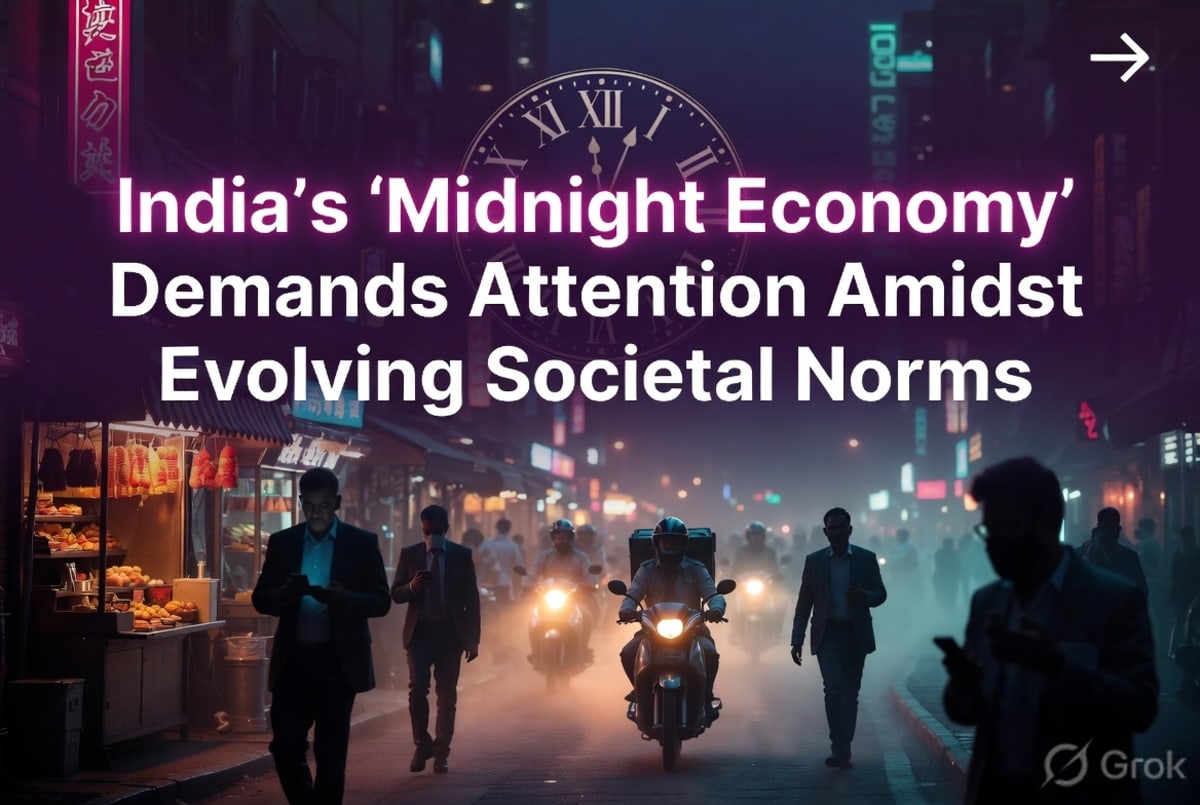
The Unseen Hours of Commerce
In an editorial published on May 12, 2026, The Times of India brings to light a fascinating and increasingly significant aspect of the Indian economy: the 'midnight economy.' This burgeoning sector, characterized by economic activities that occur during late-night and early-morning hours, is no longer a fringe phenomenon but a reflection of evolving societal norms and technological advancements. The editorial argues that this shift necessitates a deeper understanding and a more proactive approach from policymakers and businesses alike. As more individuals engage in work, consumption, and services during these unconventional hours, the traditional economic calendar, dictated by daylight and standard business operations, appears increasingly outdated.
The piece points to a variety of factors contributing to this trend, including the proliferation of the gig economy, the 24/7 nature of digital services, and changing lifestyle preferences. From late-night delivery services and online retail to remote work and nocturnal entertainment options, a substantial portion of economic transactions and labor are now occurring when the rest of the country is seemingly asleep. The Times of India emphasizes that this is not merely about a few isolated businesses; it represents a fundamental alteration in how a segment of the population interacts with the economy, driven by convenience, necessity, and the blurring lines between work and leisure.
Societal Shifts and Economic Repercussions
The editorial posits that the rise of the 'midnight economy' is intrinsically linked to broader societal shifts. The increasing urbanization, the demand for instant gratification, and the flexibility offered by modern work arrangements all contribute to a populace that is less bound by conventional time constraints. This phenomenon also raises important questions about labor rights, worker welfare, and the provision of essential services during off-peak hours. For instance, the editorial subtly probes whether the workers in this sector are adequately protected and compensated, considering the often-demanding nature of nocturnal employment.
Furthermore, the piece delves into the potential economic repercussions. While the 'midnight economy' offers new avenues for growth and employment, it also presents challenges related to regulation, taxation, and infrastructure. The editorial suggests that a lack of formal recognition and structured policy frameworks could lead to exploitation and an uneven playing field. It calls for a more nuanced approach that acknowledges the realities of this evolving economic landscape, rather than attempting to force it into pre-existing, time-bound structures. The Times of India stresses that understanding the dynamics of this nocturnal commerce is crucial for comprehensive economic planning and inclusive growth.
A Call for Policy and Business Adaptation
Ultimately, the editorial serves as a clarion call for adaptation. It urges both government bodies and private enterprises to acknowledge and respond to the realities of the 'midnight economy.' This may involve re-evaluating existing labor laws, exploring new models for urban planning and public services, and developing innovative business strategies that cater to the needs of a 24-hour society. The Times of India concludes by emphasizing that ignoring this growing segment of economic activity would be a missed opportunity and potentially detrimental to long-term development. Proactive engagement and thoughtful policy adjustments are essential to harness the potential of India's 'midnight economy' while ensuring equitable outcomes for all stakeholders.