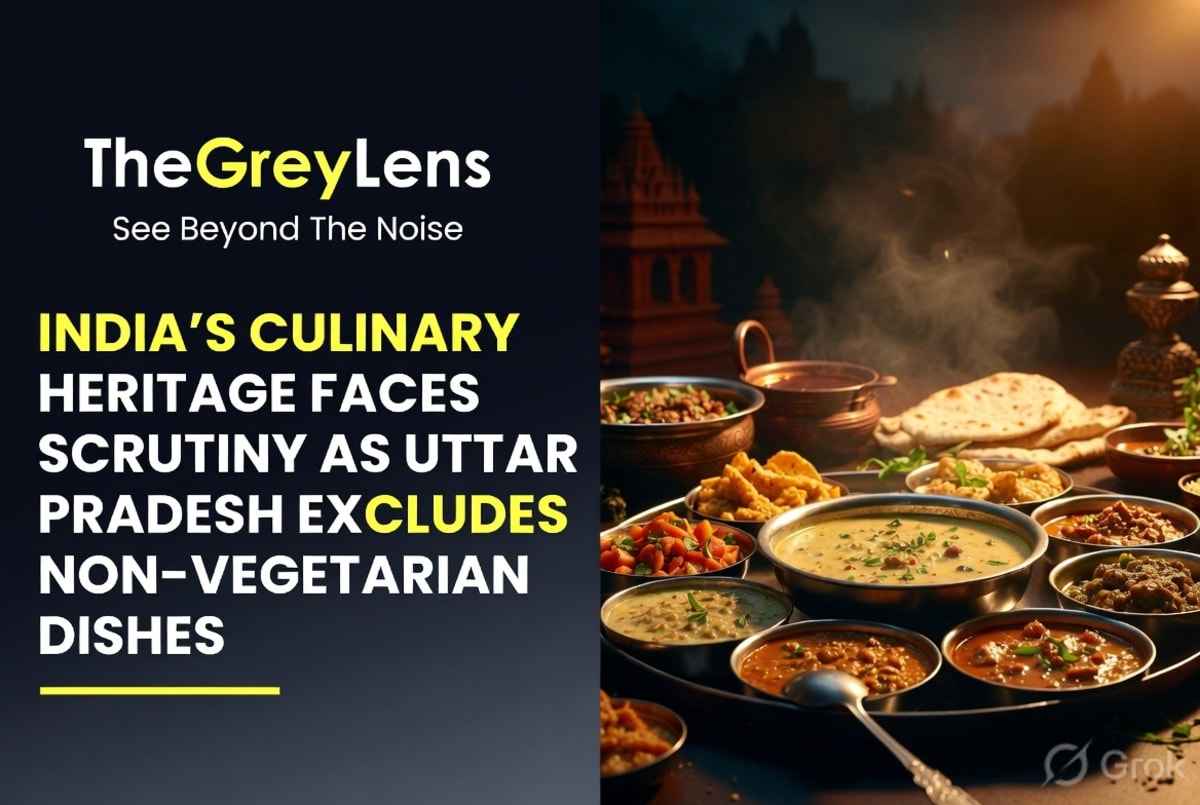
In a move that has ignited a fierce debate over cultural representation and culinary identity, the Uttar Pradesh government's 'One District, One Cuisine' (ODOC) scheme has come under heavy criticism for its exclusive focus on vegetarian dishes. The scheme, which aims to map 208 dishes across the state's 75 districts, has omitted all meat-based preparations, a decision that critics argue is a deliberate attempt to marginalize the state's historically rich and diverse food traditions, particularly its renowned non-vegetarian Awadhi cuisine.
UNESCO Recognition Contrasts with Government's Culinary Exclusion
The controversy gains significant weight considering that just months prior, the state capital, Lucknow, was celebrated by UNESCO as a Creative City of Gastronomy. This prestigious recognition explicitly acknowledged Lucknow's 'Ganga-Jamuni' culinary culture – a centuries-old fusion of Persian, Muslim, and Indic influences. Iconic dishes such as the Galouti kebab, dum biryani, and nihari were highlighted as emblematic of this unique gastronomic heritage. However, despite this international acknowledgment of its meat-centric culinary legacy, the ODOC scheme has failed to include a single one of these celebrated dishes, leading to accusations that the government is selectively rewriting the state's food narrative.
Accusations of Cultural Erasure and Communal Divide
Critics contend that the exclusion of dishes like Lucknow's Tunday and Galouti kebabs, Awadhi biryani, and Rampur's mutton korma is not an oversight but a calculated move to erase the Muslim and syncretic heritage that has long defined Uttar Pradesh's culinary identity. This decision is seen by many as a state-sanctioned rewriting of history along communal lines, aiming to promote a singular, homogenous culinary image at the expense of a vibrant, multicultural past. The scheme's focus on vegetarian fare, while promoting regional specialties, has inadvertently sidelined the very dishes that have brought international acclaim to Uttar Pradesh's food scene.
Broader Implications for India's Food Landscape
The debate extends beyond Uttar Pradesh, touching upon broader trends in India's evolving food industry. While there is a growing consumer interest in health-focused menus, regional flavors, and sustainable dining practices, as highlighted by recent trend reports, the ODOC controversy raises questions about how cultural heritage is preserved and promoted. Concurrently, rising fuel prices are expected to increase restaurant costs, potentially impacting menu prices across the country, and food regulators like FSSAI are continually updating standards to ensure food safety. Despite these economic and regulatory shifts, the cultural significance of food and its role in shaping identity remains a potent and often contentious issue within India's diverse culinary landscape.