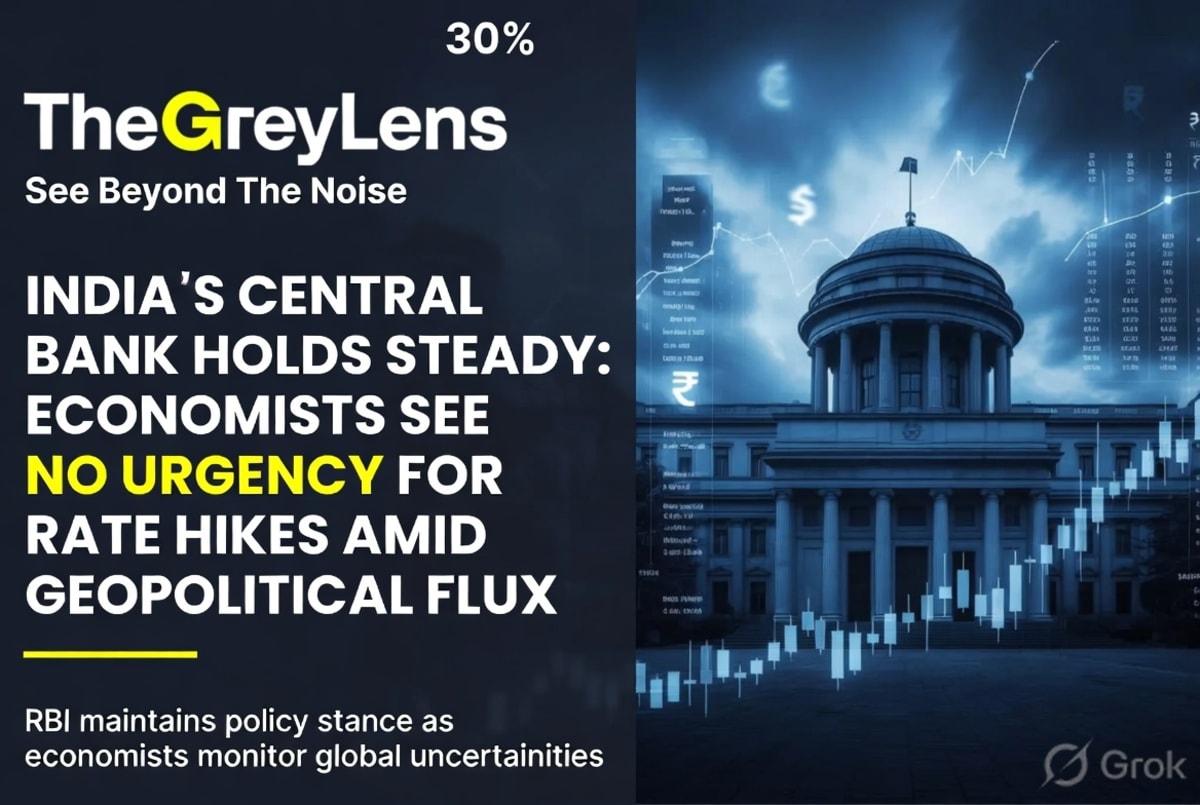
New Delhi – Economists across India are signaling that the Reserve Bank of India's (RBI) monetary policy committee is unlikely to rush into tightening interest rates in the immediate future. This cautious outlook stems from the increasingly complex and fast-evolving geopolitical situation, which is prompting the central bank to adopt a measured approach. The prevailing sentiment suggests that the RBI will continue its 'wait-and-watch' strategy, closely monitoring global developments and their potential impact on India's economic stability.
Inflationary Pressures and RBI's Stance
While inflation in India is anticipated to rise, with projections indicating an increase to approximately 3.9% year-on-year for April from 3.4% in the previous month, economists do not foresee this alone triggering an urgent policy shift. Radhika Rao, Senior Economist and Executive Director at DBS Bank, noted that this figure edges closer to the RBI's target range midpoint. However, she also highlighted that food inflation is expected to climb towards 4.5%, driven by the prices of perishables, cereals, and edible oils, further exacerbated by unseasonal rains in certain regions. Core inflation, on the other hand, is predicted to remain stable at around 3.4%, bolstered by a decrease in precious metal prices. Transport inflation, influenced by aviation turbine fuel prices and services in the hospitality sector, is also expected to see an uptick. Despite these inflationary signals, RBI Governor Sanjay Malhotra has previously indicated that the central bank is closely monitoring the fallout from the West Asia conflict and is not inclined to make firm commitments on future policy rate movements. This suggests a delicate balancing act between managing inflation and supporting economic growth.
Impact of Global Events and Economic Outlook
The geopolitical situation, particularly the conflict in West Asia, continues to be a significant factor influencing the RBI's policy considerations. The central bank has acknowledged the potential adverse impacts on growth due to elevated energy prices, increased international freight and insurance costs, and supply chain disruptions. These factors could constrain the availability of key inputs for downstream sectors, thereby impairing economic growth. Furthermore, market participants will be closely observing developments related to El Niño and its potential impact on the monsoon season, which is crucial for India's agricultural output and overall economic health. The rise in imported costs due to elevated commodity prices and a weaker rupee is also expected to be reflected in the Wholesale Price Index (WPI), which had already outpaced retail inflation in March and is projected to continue its upward trend in April. In its last monetary policy meeting in April, the RBI had kept the repo rate unchanged at 5.25% with a neutral stance, a decision that was appreciated by industry bodies for its calibrated approach towards macroeconomic stability and sustained growth momentum.
Stability in Lending Rates and Market Share Dynamics
The Reserve Bank of India's decision to maintain the repo rate at 5.25% has fostered a stable interest rate environment, particularly for home loans. This stability has enabled public sector banks (PSUs) to significantly increase their market share in home loans, reaching approximately 52% by September 2026. PSUs have demonstrated robust growth in their home loan portfolios, outpacing private banks and securing a substantial portion of disbursements. Home loan interest rates from PSUs are currently competitive, with some offering rates as low as 7.10%. Factors such as a strong credit score, loan tenure, and processing charges continue to play a crucial role in determining the final interest rates for borrowers. While PSUs are gaining ground, Housing Finance Companies (HFCs) are focusing on high-growth segments like affordable housing. The overall lending landscape remains dynamic, with banks and HFCs vying for market share amidst a steady interest rate regime.