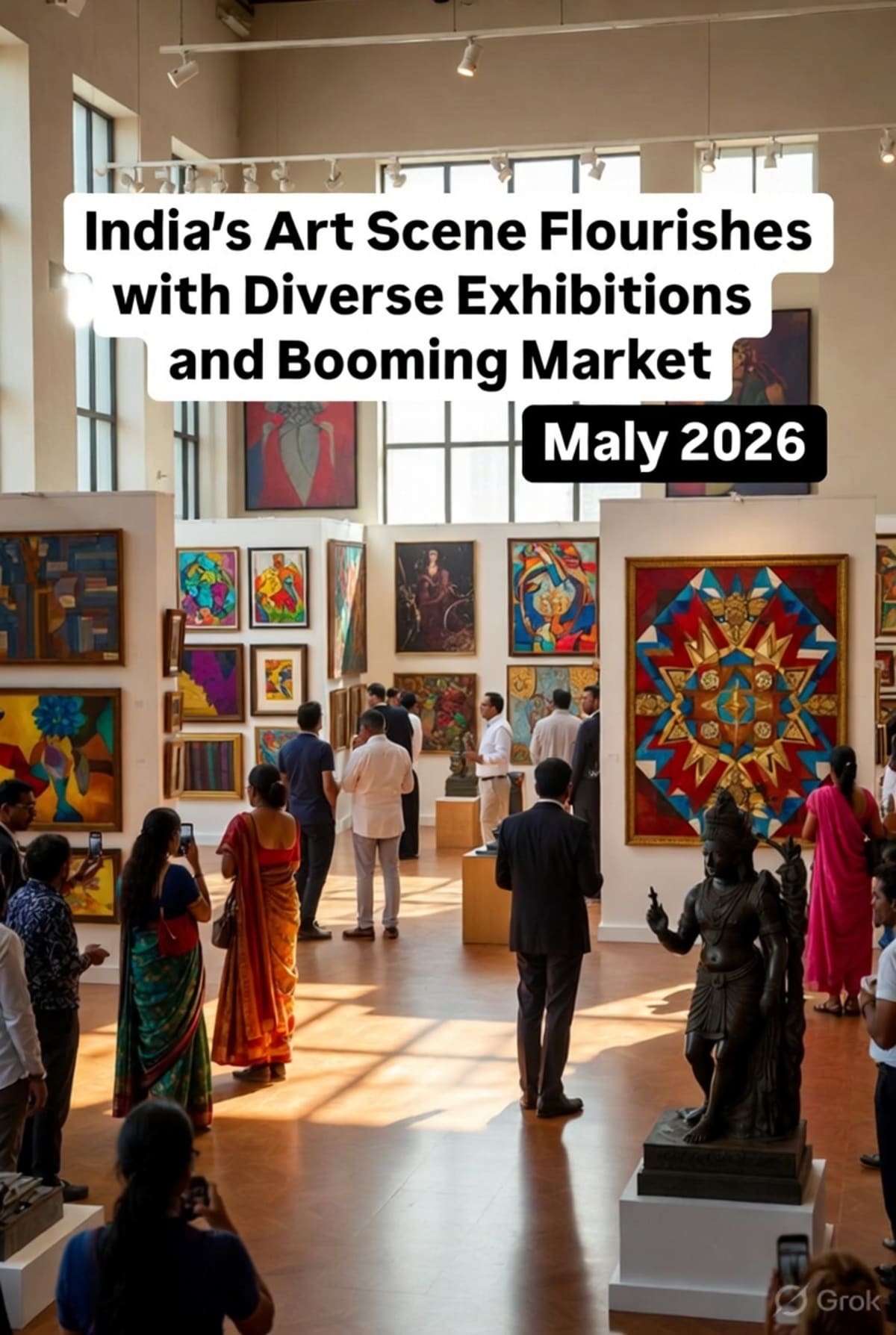
The Indian art scene is currently experiencing a dynamic period, marked by a proliferation of diverse exhibitions and a robust, expanding market. As of late May 2026, galleries and cultural institutions nationwide are showcasing a wide spectrum of artistic expressions, from the historical to the avant-garde, attracting both seasoned collectors and a new generation of art enthusiasts. This surge in activity is occurring against a backdrop of a surprisingly resilient Indian art market, which is showing significant growth even as international markets exhibit caution.
A Spectrum of Artistic Expression
Across India, a variety of exhibitions are drawing attention. In New Delhi, the Thapar Gallery is hosting a retrospective of the modernist master A. A. Raiba in an exhibition titled \"A Unilateral Eclectic.\" This showcase delves into Raiba's distinctive visual language, shaped by a confluence of artistic traditions, and highlights his significant role in the Indian modern art movement. Concurrently, Gallery Dotwalk in New Delhi is presenting \"The Architecture Of The Void: Lines On A Postcolonial Skeleton,\" an exhibition that merges architectural study with political meditation, exploring the lingering structures of colonialism through space, form, and absence. This exhibition interrogates how urban landscapes and institutional frameworks continue to bear the traces of postcolonial tension. Another significant exhibition, \"Silent Stories,\" featuring the work of Sri Lankan artist Shanaka Kulathunga, is on display at Bikaner House. This solo presentation delves into themes of memory, displacement, and the quieter emotional tensions of everyday life, utilizing a blend of realism and surreal visual language. The exhibition runs until May 28th, offering a contemplative viewing experience.
In Mumbai, Chemould Prescott Road continues its commitment to experimental contemporary practices with \"In the Telling,\" a group exhibition that centers on narrative-making and fragmented memory. Artists working across painting, sculpture, and mixed media explore how stories evolve through perception, documentation, and lived experience, a theme particularly relevant in contemporary art discussions. Meanwhile, LATITUDE 28 in New Delhi is showcasing \"EDGE,\" an exhibition by Suhani Jain, which examines how time can be structured, accumulated, and held within the surface through sustained acts of making. This exhibition opened on May 17th and will be on view until June 7th.
Furthermore, the Raja Ravi Varma Heritage Foundation has launched a major exhibition in Bengaluru titled \"What India Learned to See: From Battala to the Ravi Varma Press and Beyond.\" This landmark exhibition scrutinizes the pivotal role of printmaking in shaping India's modern visual culture, featuring rare oleographs, lithographs, and printed ephemera that illustrate how mass-produced images popularized and standardized representations of Indian mythology across regions. This exhibition is open to the public for a month, offering a deep dive into the evolution of visual imagination in modern India.
The Booming Indian Art Market
Parallel to the vibrant exhibition scene, India's art market is experiencing unprecedented growth in 2026. While global art markets are navigating a period of cautiousness, with collectors delaying purchases and galleries tightening budgets, India's market is expanding, experimenting, and actively welcoming a new demographic of buyers. By early 2026, the art market in India is valued at approximately INR 5,500 to 6,000 crore annually, a figure that encompasses auctions, galleries, art fairs, and online platforms. This represents consistent year-on-year growth, a stark contrast to contractions seen in major Western markets.
Several factors are contributing to this bullish trend. Economic confidence within India is a primary driver, directly influencing cultural spending. When individuals feel financially secure, they tend to invest in assets that reflect their identity, legacy, and personal values, with art being a significant category. The India Art Fair, now in its 17th edition, has become a major barometer of this market strength, featuring over 135 exhibitors in its February 2026 iteration, marking its largest showing to date. Galleries like Vadehra Art Gallery reported substantial sales, with approximately 80 percent of their booth selling by the end of the first day, with prices ranging from USD 6,000 to USD 600,000. Acquisitions were made by prominent institutions such as the Kiran Nadar Museum of Art.
Moreover, the rise of digital platforms and online exhibitions has expanded the reach and accessibility of Indian art, fostering trust and engagement among a wider audience. Events like Art Mumbai and the Mumbai Gallery Weekend further solidify the country's position as a significant art hub, showcasing both established and emerging South Asian talent. The market's resilience is not solely driven by hype; rather, it is fueled by a growing appreciation for art as a medium of cultural expression and a reflection of life and identity. This deeper connection between art and its audience ensures a healthy and sustainable market.
Cultural Exchange and Global Presence
India's engagement with the global art community is also intensifying. The nation made a significant return to the prestigious Venice Biennale in 2026 with its pavilion titled \"Geographies of Distance: Remembering Home.\" This exhibition, at the 61st International Art Exhibition, explores themes of memory and belonging in a rapidly changing world. The participation, spearheaded by the Ministry of Culture, underscores India's commitment to showcasing its rich cultural heritage on an international stage and strengthening cultural diplomacy. Officials expressed a strong sentiment of return and a commitment to sustained presence in global art events, highlighting India's evolving cultural narrative.
Furthermore, a major exhibition celebrating the legendary Indian artist Amrita Sher-Gil opened in the Netherlands at the Drents Museum. This exhibition, featuring rare works on loan from the National Gallery of Modern Art in New Delhi, marks Sher-Gil's paintings' return to Europe after nearly two decades and coincides with Prime Minister Narendra Modi's visit to the Netherlands, emphasizing the growing cultural and artistic ties between the two nations. The exhibition is seen as a vital moment for strengthening people-to-people connections and celebrating India's modern art legacy globally.
Looking ahead, the art calendar for the remainder of 2026 remains packed with significant events. The Kochi Muziris Biennale, which began in late 2025, continues to be a major draw, as does the India Art Fair. These platforms, alongside numerous gallery exhibitions and emerging online initiatives, suggest a continued trajectory of growth and innovation for the Indian art sector. The market's strength, coupled with a diverse array of artistic showcases, indicates a bright and dynamic future for art in India, solidifying its position on the global cultural map.