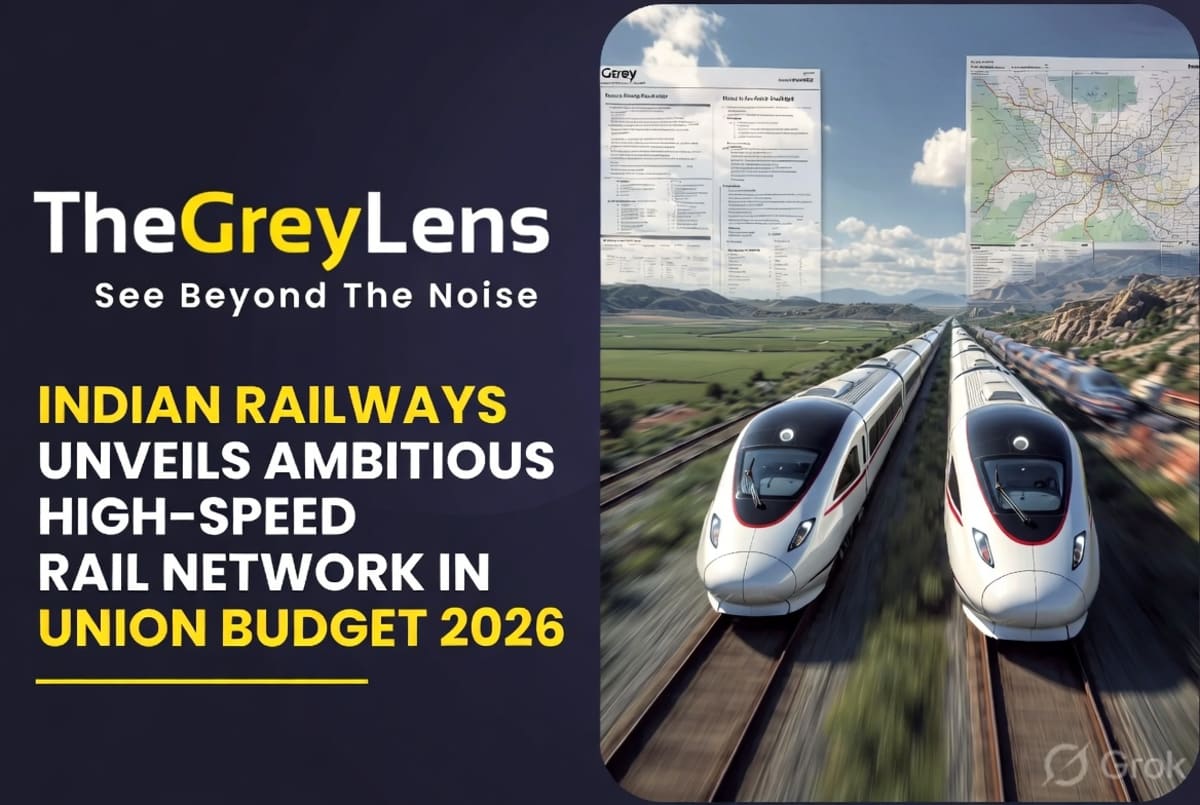
Transformative High-Speed Corridors to Reshape Travel
The Indian Railways is set to undergo a major transformation with the introduction of seven high-speed rail corridors, a centerpiece of the Union Budget 2026. This ambitious undertaking, allocated a substantial Rs 2,780 billion for the sector, aims to modernize services, increase travel speeds, and improve safety across the nation's rail network. The initiative is designed not only to reduce travel time but also to strengthen economic linkages between key cities, positioning these corridors as crucial "growth connectors."
The proposed corridors will link major metropolitan areas and economic hubs, including Mumbai–Pune, Pune–Hyderabad, Hyderabad–Bengaluru, Hyderabad–Chennai, Chennai–Bengaluru, Delhi–Varanasi, and Varanasi–Siliguri. These routes are envisioned to facilitate the movement of people and goods, thereby supporting business travel, tourism, and logistics. The development is expected to significantly ease congestion on existing routes and promote environmentally sustainable transportation. With a total length of approximately 4,000 km, these projects are anticipated to attract investments of around ₹16 lakh crore, marking a significant step towards modernizing India's railway infrastructure.
Budgetary Allocation and Economic Impact
The Union Budget 2026 has earmarked the highest-ever outlay for Indian Railways, demonstrating a strong commitment to its modernization and expansion. Beyond the high-speed corridors, the budgetary package will also fund new railway lines, gauge conversion, track doubling, and upgrades to traffic facilities and rolling stock. The ministry secured capital expenditure support exceeding Rs 2,930 billion to finance these infrastructure projects, aiming to accelerate project delivery and enhance capacity on busy routes.
Railway Minister Ashwini Vaishnaw highlighted that the five South Indian states being interconnected by these new corridors will serve as significant growth multipliers for the region. The government's focus extends beyond speed and connectivity; safety has been identified as a paramount priority. Plans include upgrading signaling systems, redeveloping stations, and introducing better rolling stock as part of a comprehensive modernization drive. Enhanced digital systems are also being implemented to improve punctuality, passenger information, and asset management, ultimately boosting operational efficiency across the network.
Boosting Tourism and Regional Development
These infrastructure developments are intrinsically linked to the government's broader vision for boosting tourism and regional development. By drastically cutting travel times, such as reducing the journey between Chennai and Bengaluru to just 1.5 hours, and Bengaluru to Hyderabad to 2 hours, the high-speed rail network aims to make domestic travel more accessible and appealing. This improved connectivity is expected to encourage more people to explore different parts of the country, thereby stimulating local economies and promoting cultural exchange.
The Union Budget 2026 also includes provisions for developing thematic tourism trails, including mountain trails, eco-nature trails, turtle trails, and birdwatching trails across various states. These initiatives, coupled with the enhancement of archaeological sites and the creation of a national digital repository for destinations, are designed to enrich the travel experience and promote sustainable tourism practices. The reduction in Tax Collected at Source (TCS) on overseas tour packages to a flat 2% also makes international travel more affordable for Indian citizens, potentially boosting outbound tourism.
The future of travel in India is poised for a significant upgrade, with the high-speed rail network and the government's focused tourism initiatives set to redefine connectivity, drive economic growth, and enhance the overall travel experience for both domestic and international visitors.