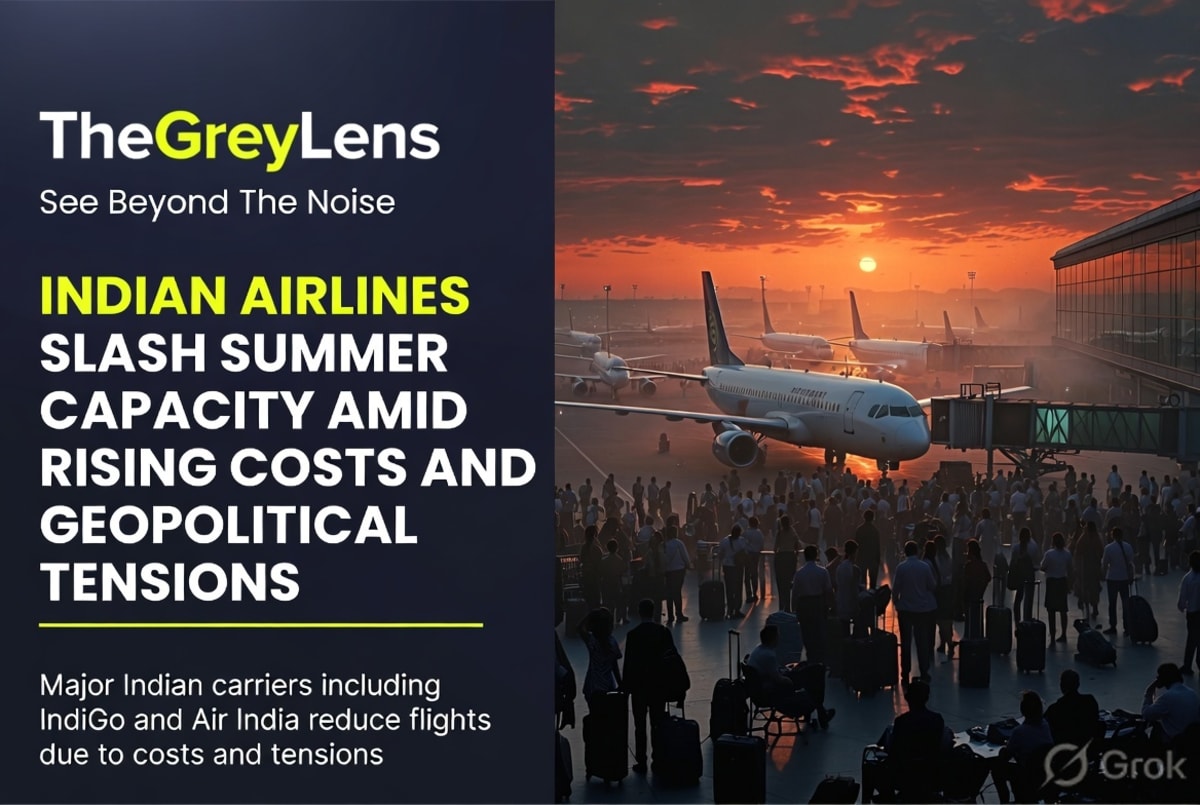
New Delhi – Indian airlines are bracing for a challenging summer travel season as carriers like IndiGo and Air India announce substantial reductions in flight schedules. The decision to trim capacity, affecting both domestic and international routes, stems from a confluence of factors including soaring fuel costs, airspace restrictions, and broader geopolitical instability.
Airlines Grapple with Escalating Operational Costs
The primary driver behind the capacity cuts is the significant increase in operational expenses. Aviation Turbine Fuel (ATF) prices have reached record highs, directly impacting airlines' profitability. Geopolitical tensions have also contributed to longer flight times due to airspace disruptions, further increasing fuel burn and operating costs. IndiGo, India's largest low-cost carrier, has indicated plans to reduce domestic capacity growth and has already begun trimming its international network. This includes temporary suspensions on six international routes – Langkawi, Krabi, Ho Chi Minh City, Hong Kong, Shanghai, and Siem Reap – from July to September. Additionally, IndiGo will discontinue its Manchester service from August 31 and return one of its leased Boeing 787-9 aircraft.
Air India is also implementing significant operational rationalization, reducing its international operations by 27% and domestic flights by up to 22% between June and August. These adjustments are aimed at improving network stability and minimizing last-minute disruptions for passengers. Despite these cuts, both carriers affirm their commitment to maintaining a substantial number of flights, with IndiGo continuing over 1,800 international flights weekly and Air India operating more than 1,200 international flights monthly.
Impact on Summer Travel and Airfares
The collective capacity reductions by major airlines are poised to create a classic supply-demand imbalance during the peak summer travel period. With fewer available seats and sustained passenger demand, airfares are expected to rise across numerous routes. Industry reports suggest that this tightening of seat availability could lead to a more challenging pricing environment for travelers and tour operators alike. For travel agencies and corporate travel managers, the coming months will likely necessitate careful planning to navigate the increased costs and potential for disruptions.
The broader aviation industry is not immune to these pressures. Global airlines, including Lufthansa, KLM, Emirates, and Norse Atlantic Airways, have also been forced to cut services or suspend routes due to similar economic and geopolitical challenges. Analysts note that airlines are now prioritizing operational stability over aggressive expansion, a shift from previous growth-focused strategies. This disciplined consolidation aims to protect core networks and schedule integrity, ensuring a more predictable travel experience amidst global uncertainties.
Budgetary Measures and Future Outlook
While the immediate outlook for summer travel is marked by capacity constraints and rising costs, the Indian government's Union Budget 2026-27 has introduced measures aimed at bolstering the broader travel and tourism sector. A significant reduction in Tax Collected at Source (TCS) on overseas tour packages to a flat 2% is intended to make international travel more affordable for Indian citizens. Furthermore, substantial investments in infrastructure, including the development of seven high-speed rail corridors and the enhancement of airport connectivity, are projected to boost domestic tourism and improve overall travel experiences in the long term.
The government has also allocated significant capital expenditure for Indian Railways, with plans to introduce new Amrit Bharat trains aimed at enhancing amenities for budget travelers. The expansion of Vande Bharat services, including sleeper variants, is also part of the strategy to modernize rail travel. These initiatives, coupled with a focus on skill development for the tourism workforce, including the training of 10,000 tourist guides, aim to create a more robust and resilient tourism ecosystem. However, the immediate impact of these long-term infrastructural and policy changes on the current summer travel season remains to be seen, as airlines continue to navigate the complex challenges of rising operational costs and a volatile global landscape. The coming months will likely test the adaptability of the Indian aviation sector as it balances immediate cost pressures with long-term growth strategies.