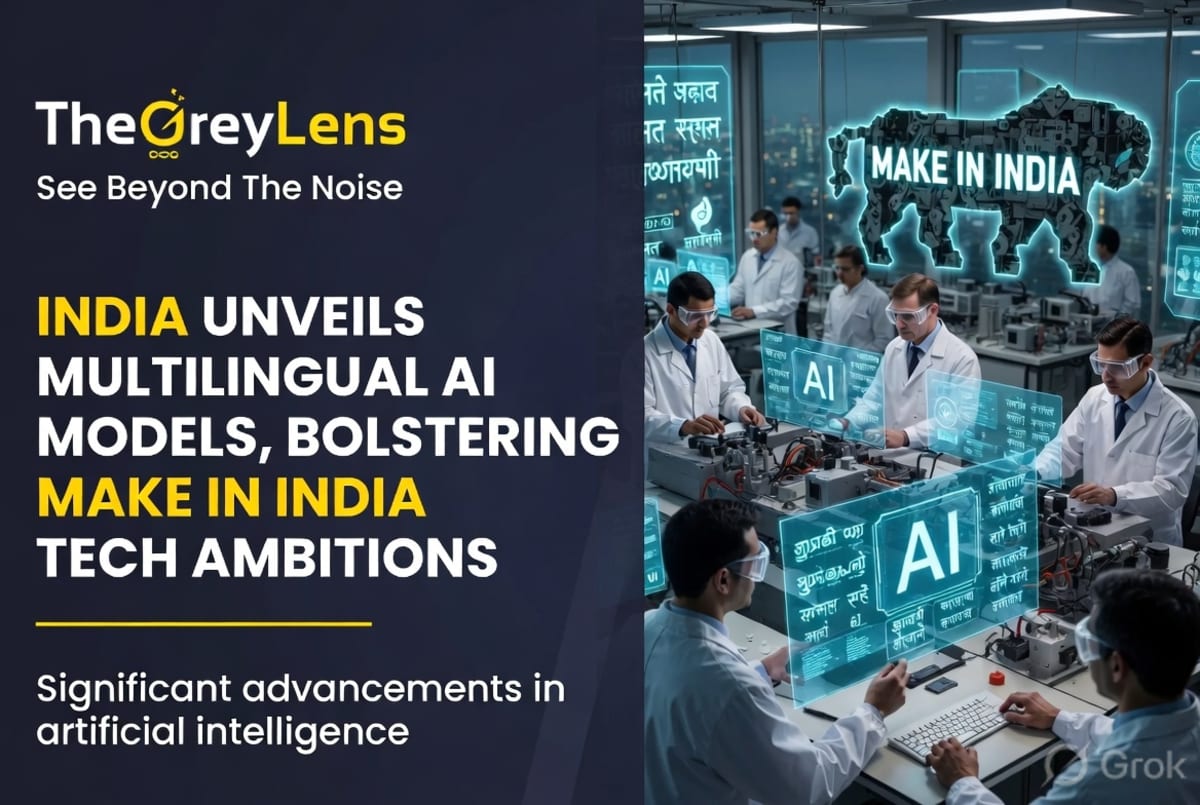
New Delhi – India is rapidly solidifying its position as a key player in the global artificial intelligence arena with the recent debut of several sophisticated, homegrown AI models. These advancements, largely presented at the India AI Impact Summit 2026, underscore the nation's commitment to developing sovereign AI capabilities and tailoring technology to its unique linguistic and cultural needs.
Multilingual Models Take Center Stage
Among the most notable developments is the launch of new foundational AI models by companies like Sarvam AI and BharatGen. Sarvam AI, a Bengaluru-based startup, has introduced sophisticated large language models (LLMs) designed to operate seamlessly across 22 Indian languages. This focus on multilingualism is a strategic move to bridge the digital divide and make AI accessible to a broader population that may not be proficient in English. Prime Minister Narendra Modi has lauded these 'Made in India' innovations, emphasizing the importance of AI that is developed and deployed within the country, aligning with the government's "Make in India" vision.
BharatGen, a government-backed consortium incubated by IIT Bombay, has also unveiled its Param2 AI model. This 17-billion parameter model is specifically engineered to understand and generate content in 22 Indian languages, further demonstrating India's drive for linguistic inclusivity in AI development. The development of these sovereign models is seen as crucial for reducing dependence on foreign AI platforms and ensuring that AI systems respect local regulations and data privacy concerns.
Advancing "Physical AI" and Sector-Specific Applications
The AI landscape in India is also witnessing a significant shift towards "physical AI," moving beyond chatbots and content generation to AI systems embedded in machines that can interact with the real world. This includes applications in autonomous vehicles, robotics, and industrial automation. Companies are increasingly investing in AI solutions for manufacturing, logistics, and agriculture, aiming to enhance efficiency, reduce waste, and improve safety. For instance, industrial groups like Reliance Industries and Tata Steel are deploying AI-powered systems for operational improvements. The focus is on AI applications that can deliver tangible cost savings and productivity gains in the immediate term.
In the healthcare sector, AI continues to be a critical enabler of innovation. Conferences like the Uttar Pradesh AI & Health Innovation Conference 2026 have highlighted the potential of AI to strengthen healthcare systems, improve disease management, and enhance data-driven decision-making. Initiatives are underway to build integrated and scalable healthcare systems through collaborations between healthcare institutions, technology ecosystems, and research organizations. The use of AI in analyzing thermal imaging for early cancer detection and AI-powered chatbots for preliminary symptom assessment are examples of how the technology is being integrated to address the country's healthcare challenges.
Government Support and Future Outlook
The Indian government's commitment to fostering a robust AI ecosystem is evident through initiatives like the IndiaAI Mission, which provides substantial funding and resources, including access to GPUs, for AI startups and research. This mission aims to build a national AI compute infrastructure and accelerate the development of homegrown AI solutions. The projected growth of India's AI market, from an estimated $7.63 billion to $131.31 billion by 2032, underscores the significant economic potential of these advancements.
While India aims for a leadership role in AI, analysts suggest that achieving a "DeepSeek moment"—a rapid boom in high-performance, low-cost chatbots similar to what China experienced—may take time. However, the focus on custom AI tools tailored for the Indian market is expected to yield substantial benefits for the nation's vast population. The ongoing development and deployment of these advanced AI models signify a critical inflection point, positioning India not just as a consumer but as a significant creator and innovator in the global AI landscape.