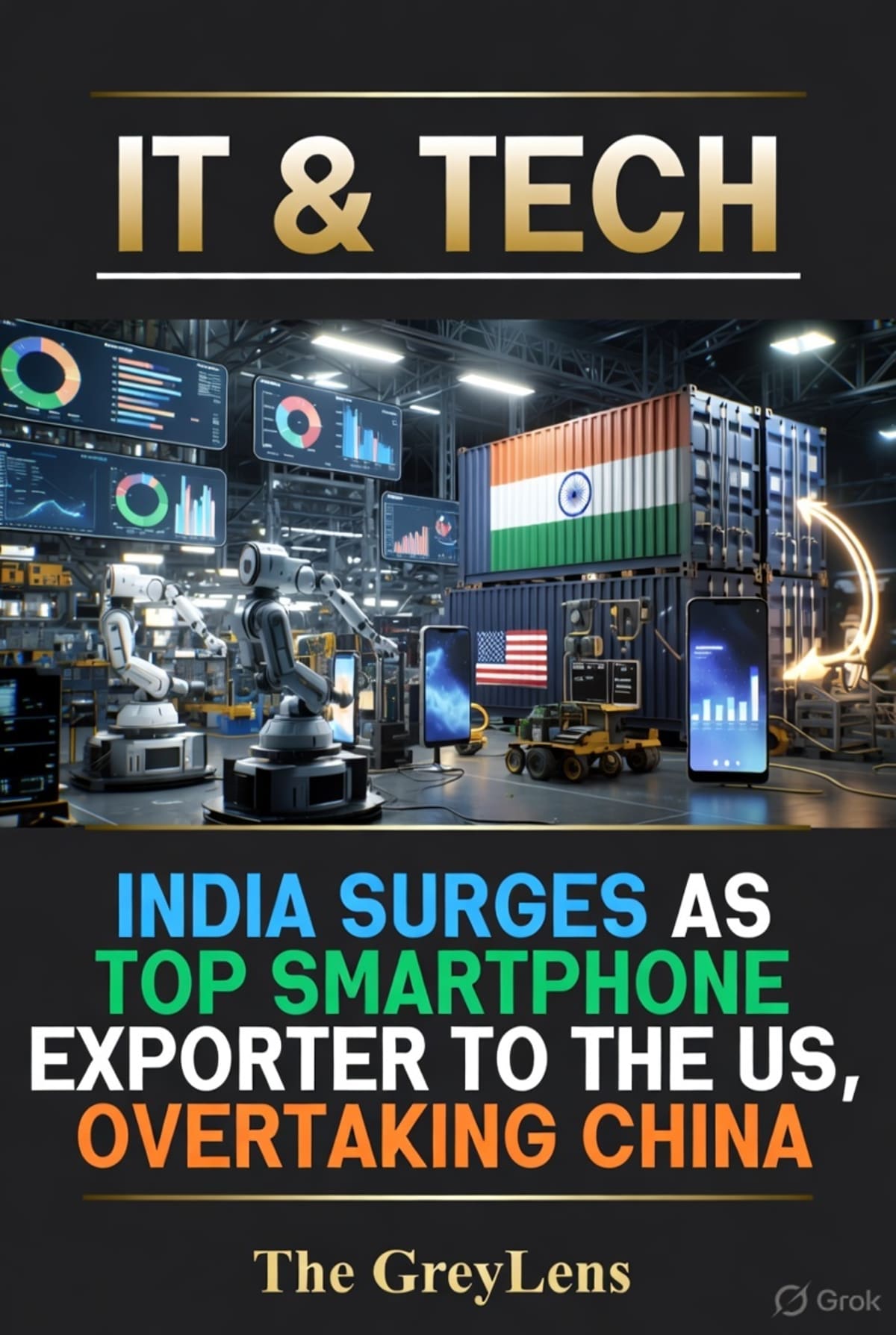
The global technology landscape is undergoing a dramatic transformation, with India now surpassing China as the top smartphone exporter to the United States. This remarkable ascent has seen India capture a substantial 44% market share in the U.S. market, translating to an impressive $30 billion in exports. This development signifies a profound global supply chain recalibration, underscoring India's rapidly expanding manufacturing prowess.
From Assembly to Export Dominance: A Decade of Transformation
A decade ago, India was largely an import-dependent nation for mobile devices, with a mere two mobile factories operating across the subcontinent. Today, the scenario is vastly different. India now boasts over 300 manufacturing units and produces a staggering 99.2% of all mobile phones sold within the country. This meteoric rise in domestic production has propelled smartphones to become India's largest export category by value, outranking traditional heavyweights like processed diamonds and diesel fuel.
The country's mobile production value has seen an exponential increase, soaring from approximately ₹18,900 crore in 2014 to over ₹4.22 lakh crore by 2024. This phenomenal growth is largely attributed to the 'Make in India' initiative, a government program designed to boost domestic manufacturing and attract foreign investment. The initiative has successfully transitioned India from a passive consumer market to a formidable global manufacturing hub.
Apple's Significant Bet on Indian Manufacturing
Global tech giants have recognized India's burgeoning manufacturing capabilities, with Apple being a prominent example. Apple alone exported over ₹1.1 lakh crore worth of iPhones from India in 2024. This strategic move by Apple highlights the increasing reliance of major international brands on Indian manufacturing facilities for their flagship products. The production of both premium smartphones and budget-friendly Android devices is now significantly concentrated in Indian manufacturing centers like Bengaluru, Noida, and Chennai.
The evolution of India's mobile industry can be broadly categorized into three phases: assembly, deep manufacturing, and export dominance. Initially, India focused on importing components and assembling devices locally. This was followed by a phase of deep manufacturing, where the government's Production Linked Incentive (PLI) scheme played a crucial role in incentivizing companies to build local infrastructure and produce complex components natively, including camera modules, display assemblies, and lithium-ion cells. This has culminated in the current phase of export dominance, where India is not only meeting its domestic demand but also becoming a key player in the global export market.
Challenging China's Long-Standing Grip
For a considerable period, China held an almost unshakeable dominance in the global electronics manufacturing market. However, India is now actively challenging this hegemony. While China currently holds approximately 67% of the global mobile phone production share, India has aggressively secured a 12% share, firmly establishing itself as the world's second-largest producer. This shift is not merely a statistical change; it represents a fundamental realigning of global tech supply chains.
This manufacturing boom has also had a significant impact on job creation, generating over 1.2 million direct and indirect jobs across the country. India has undeniably claimed its position as an electronics heavyweight, moving from the periphery to the forefront of global manufacturing leadership.