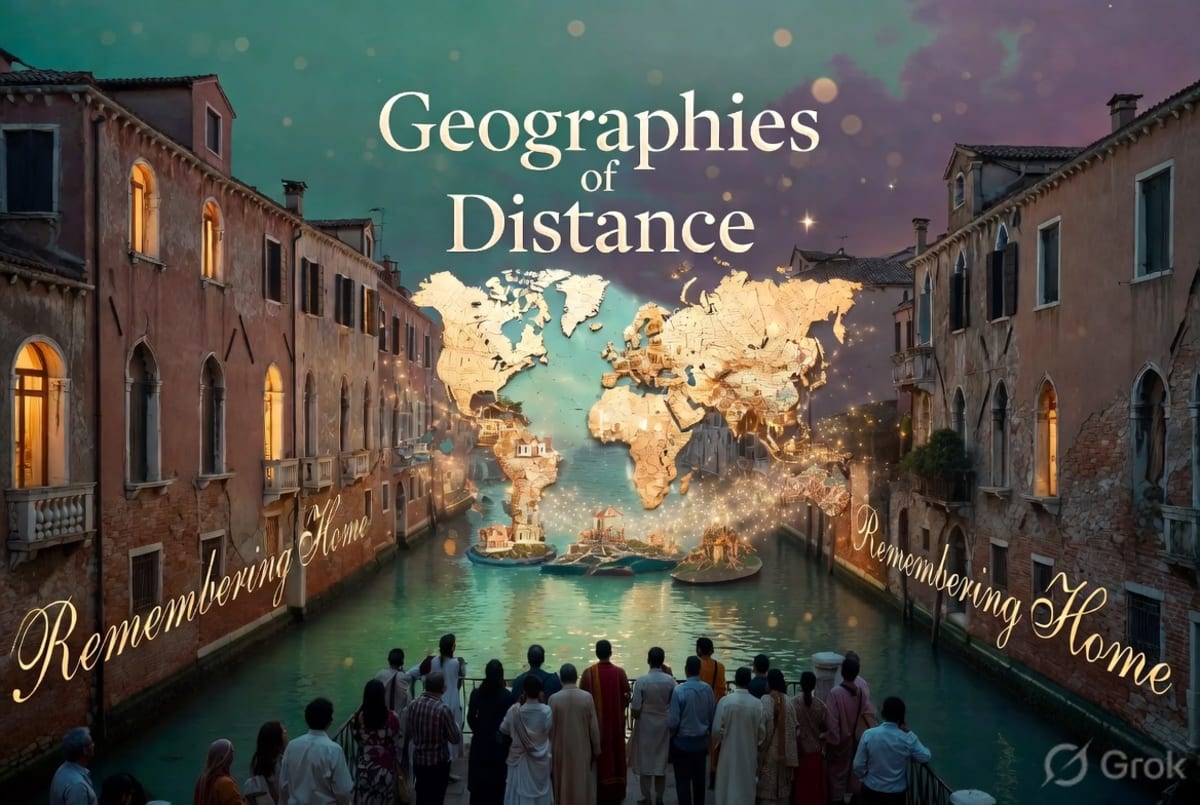
Venice, Italy – India has officially marked its return to the prestigious 61st International Art Exhibition – La Biennale di Venezia, with the unveiling of its national pavilion, "Geographies of Distance: Remembering Home." This marks India's first participation in seven years, drawing significant international attention to its contemporary art scene. The exhibition, which opened to the public on May 9, 2026, delves into profound themes of memory, migration, identity, and belonging in an era of rapid global change. The pavilion is a testament to a collaborative spirit, presented by the Ministry of Culture in partnership with the Nita Mukesh Ambani Cultural Centre (NMACC) and Serendipity Arts.
A Collective Voice of Contemporary Indian Art
Curated by Amin Jaffer, the exhibition showcases the diverse practices of five leading contemporary Indian artists: Alwar Balasubramaniam, Ranjani Shettar, Sumakshi Singh, Skarma Sonam Tashi, and Asim Waqif. This collective presentation is noteworthy, as national pavilions typically feature only one or two artists. The artists, hailing from different regions of India, have created large-scale installations that respond to Jaffer's curatorial prompt, "geographies of distance: remembering home." Their works are unified by materials deeply rooted in Indian civilization, including clay, thread, bamboo, papier-mache, and hand-formed natural structures, all of which respond to the Biennale's overarching theme, "In Minor Keys."
Sumakshi Singh's "Permanent Address" is a life-sized reconstruction of her demolished family home, meticulously crafted from embroidered thread, offering a poignant reflection on displacement and memory. Ranjani Shettar's "Under the Same Sky" features suspended sculptural forms inspired by botanical elements and natural growth, evoking a sense of place and connection to the environment. Asim Waqif's "Chaal" is an installation constructed from bamboo that reflects the dynamic and evolving landscapes of contemporary Indian cities.
Highlighting Himalayan Heritage and Sustainable Practices
Among the evocative presences within the pavilion, the work of Skarma Sonam Tashi brings the Himalayan region of Ladakh into international focus. Tashi's contribution highlights the fragile ecology, spiritual traditions, and sustainable way of life that have characterized Ladakh for centuries. This focus aligns with the broader curatorial mood of the 2026 Biennale, which explores themes of migration, ecology, and collective memory. The India Pavilion ultimately succeeds in presenting contemporary Indian art not as a singular identity but as a conversation between regions, materials, and lived experiences. By connecting Ladakh's ecological realities with broader concerns around sustainability and cultural memory, the pavilion positions India within urgent global discussions while remaining rooted in local narratives and artistic traditions.
The exhibition, inaugurated on May 6 by Union Culture and Tourism Minister Gajendra Singh Shekhawat, in the presence of Pietrangelo Buttafuoco, President of La Biennale di Venezia, and Vivek Aggarwal, Culture Secretary, along with Nita M. Ambani and Isha Ambani, underscores India's growing influence and confidence on the global art stage. The presence of prominent figures from the Indian art and cultural sphere, including Abeer Vivek Abrol, further emphasizes the significance of India's participation.
A Global Stage for Indian Artistry
Beyond the Venice Biennale, Indian art is gaining broader international recognition. Reports from London indicate strong bidding on Indian paintings at recent auctions, with a particular surge in interest from new Indian buyers. This trend signals a maturing market and a growing appreciation for both traditional and contemporary Indian art forms. The successful return of the India Pavilion to Venice, coupled with robust activity in the global art market, signifies a vibrant and expanding presence for Indian artists and their narratives on the world stage. The exhibition at the Venice Biennale is set to run for several months, offering a substantial platform for these diverse artistic expressions.