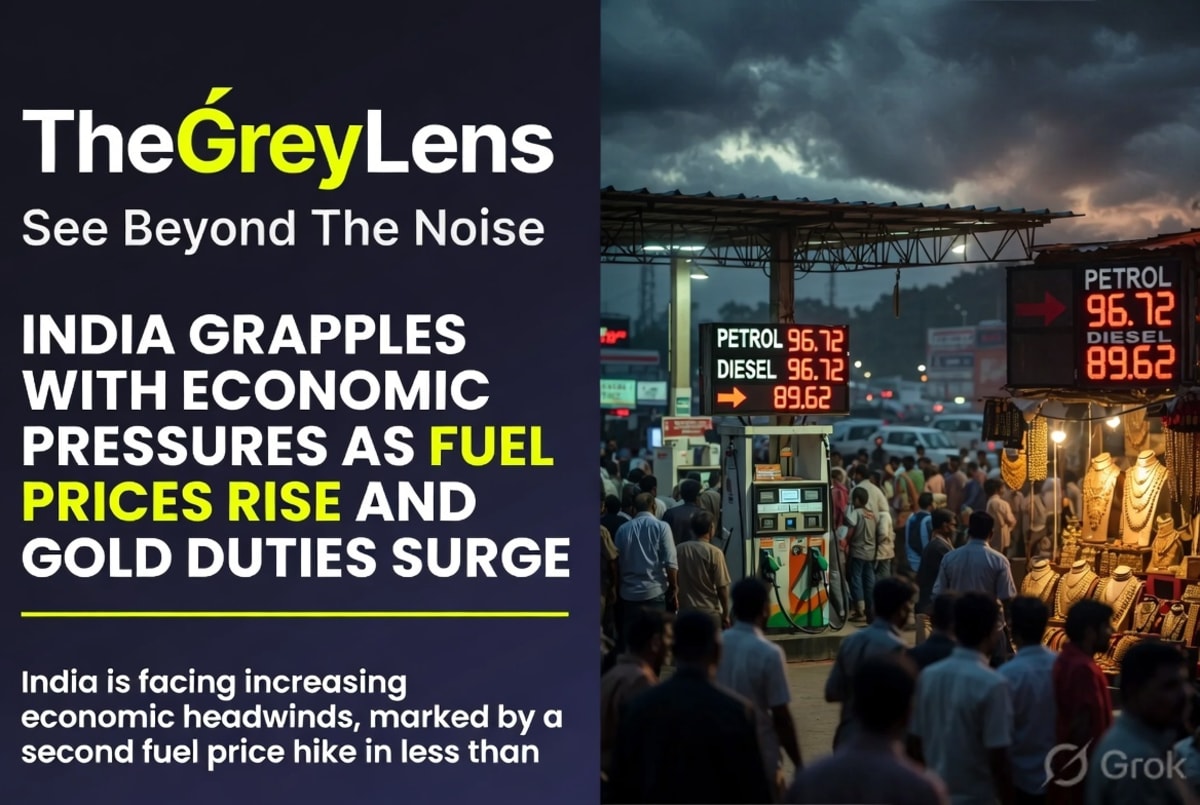
India's economic landscape is currently navigating a challenging period, underscored by a recent surge in fuel prices and a substantial increase in import duties on gold and silver. Retail prices for petrol and diesel have seen another hike, with increases of up to 90 paise per litre across major cities. This marks the second such upward revision in less than a week, signaling the government's efforts to offset losses stemming from higher international crude oil prices. The current geopolitical climate in West Asia, with escalating tensions impacting global energy markets, is a primary driver behind these price adjustments.
Gold Austerity Amidst Economic Urgency
In a significant policy shift, India has more than doubled import duties on gold and silver, raising them from 6% to 15%. This move, implemented on May 13, 2026, is a direct response to the nation's widening trade deficit and concerns over its current account deficit, which could potentially exceed 2% of GDP if left unchecked. The depreciation of the rupee, which has hit record lows against the dollar, further exacerbates these economic vulnerabilities. Prime Minister Narendra Modi had earlier made a rare public appeal, urging citizens to postpone gold purchases for at least a year, framing such restraint as a patriotic act to safeguard the country's foreign exchange reserves. Gold, deeply embedded in Indian culture for weddings, festivals, and as a store of value, represents a significant import concern alongside crude oil.
Economic Vulnerabilities and Policy Responses
India, the world's second-largest consumer of gold, imported approximately $72 billion worth of the metal in the financial year ending March 2026. While import volumes have seen some moderation, the value has climbed sharply due to high global prices. This, coupled with the cost of crude oil imports, has placed considerable pressure on the nation's external accounts. The government's dual strategy of appealing for austerity and implementing a sharp duty hike on gold aims to curb bullion demand and ease the current account deficit. Analysts are closely watching the market's reaction and whether these measures will avert the need for more drastic actions, such as capital controls. While India's economy has shown resilience through diversified exports and strong domestic demand, its dependence on imported energy and cultural affinity for gold leave it exposed to global shocks.
Broader Economic and Political Landscape
The economic pressures are occurring amidst a broader geopolitical context, with escalating tensions in West Asia impacting global markets. Drone attacks targeting facilities in the UAE have heightened concerns, leading to a slump in Indian stock markets. On the political front, Prime Minister Modi's ongoing European tour aims to strengthen economic and security cooperation, with discussions focusing on trade agreements, semiconductors, and defense. However, concerns over political polarization and minority rights in India have surfaced during these diplomatic engagements. The nation's economic outlook, while robust in many aspects, remains sensitive to global commodity cycles and geopolitical instability. The coming weeks will be crucial in assessing the effectiveness of these policy interventions and their impact on India's economic stability.