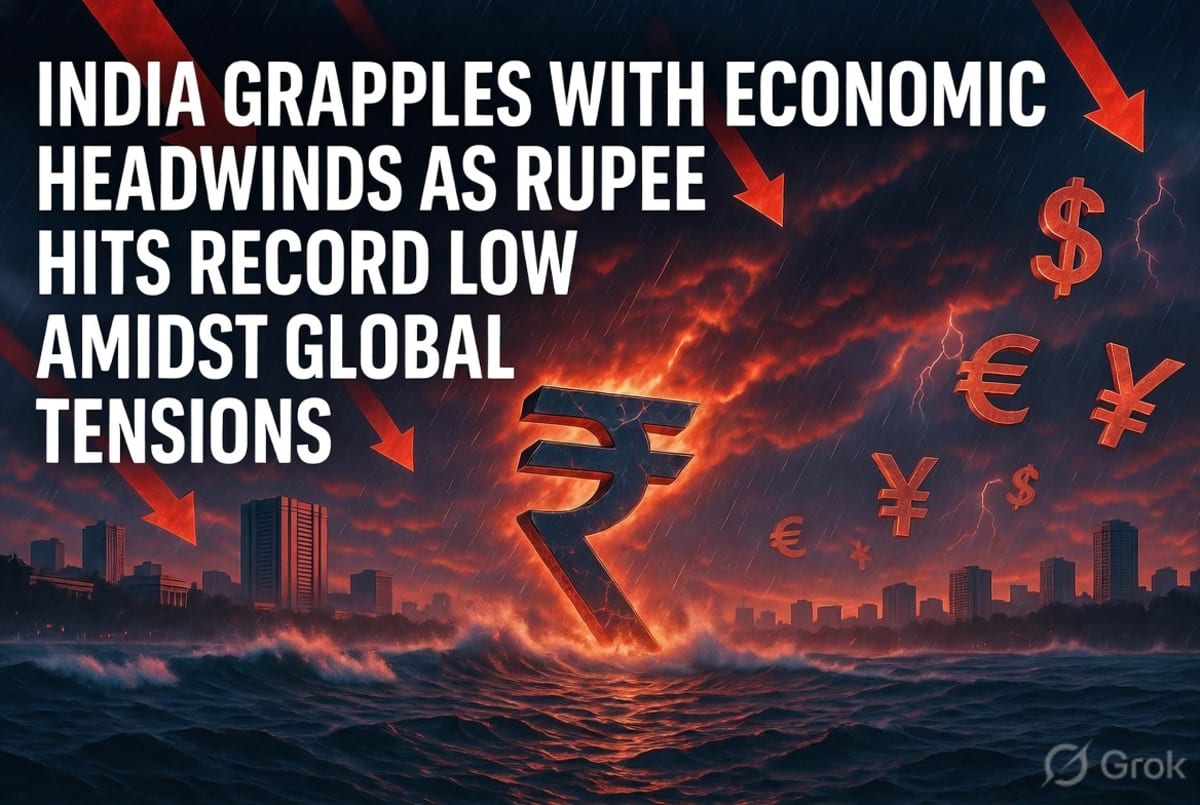
India's economic stability is under strain as the national currency, the Rupee, has touched a historic low against the US Dollar, signaling growing concerns over the country's external sector and foreign exchange reserves. The currency's sharp decline is largely attributed to escalating global crude oil prices, exacerbated by ongoing geopolitical tensions, and sustained outflows of foreign institutional investment (FII).
The Rupee weakened to 95.7450 per dollar on Wednesday, surpassing its previous record low, according to reports. This depreciation has intensified pressure on India's economy, which is already navigating a challenging global landscape. Economists have consequently revised India's growth forecasts downwards and raised inflation projections, primarily due to the persistent high energy costs.
Government Interventions to Stabilize the Rupee
In response to the escalating economic pressures, the Indian government has initiated several measures aimed at conserving foreign exchange reserves and supporting the rupee. Prime Minister Narendra Modi has urged citizens to reduce non-essential spending on gold and petroleum, emphasizing the need to manage falling forex reserves and curb imported inflation. Furthermore, the government has increased import duties on gold and silver from 6% to 15%, incorporating a 10% basic customs tariff and a 5% agriculture infrastructure and development levy. This move is intended to modestly reduce gold imports, thereby easing pressure on foreign exchange reserves and offering some support to the rupee.
Analysts suggest that while these measures aim to mitigate the impact, the rupee's trajectory remains vulnerable to external factors. The ongoing geopolitical conflicts and the surge in crude oil prices continue to weigh heavily on India's economy. The Reserve Bank of India (RBI) has also been intervening regularly in the market to stabilize the currency, employing regulatory measures to support the rupee.
Broader Economic Landscape and Future Outlook
Beyond currency pressures, India's economic landscape is marked by other significant developments. Food inflation has reached 4.2%, primarily driven by sharp price increases in tomatoes and coconuts. Analysts caution that erratic weather patterns and forecasts of a deficient monsoon could further exacerbate food price pressures in the coming months.
In an effort to boost domestic production, the government has reduced royalty rates on crude and natural gas, a move expected to benefit companies like ONGC, OIL, and Vedanta by improving their margins.
However, global headwinds and tightening domestic monetary conditions have led Moody's Investors Service to lower its growth projection for India to 6% for the current fiscal year. The Securities and Exchange Board of India (SEBI) is also considering easing restrictions on certain agricultural derivatives to enhance market liquidity and aid the farming sector in managing price risks.
The situation underscores the delicate balance India must maintain between managing immediate economic challenges and pursuing long-term growth strategies. The effectiveness of current interventions in stabilizing the rupee and overall economic health will be closely watched in the coming months, especially in light of continued global uncertainties. The nation's economic security hinges on its ability to navigate these complex pressures through strategic policy decisions and resilient economic management.