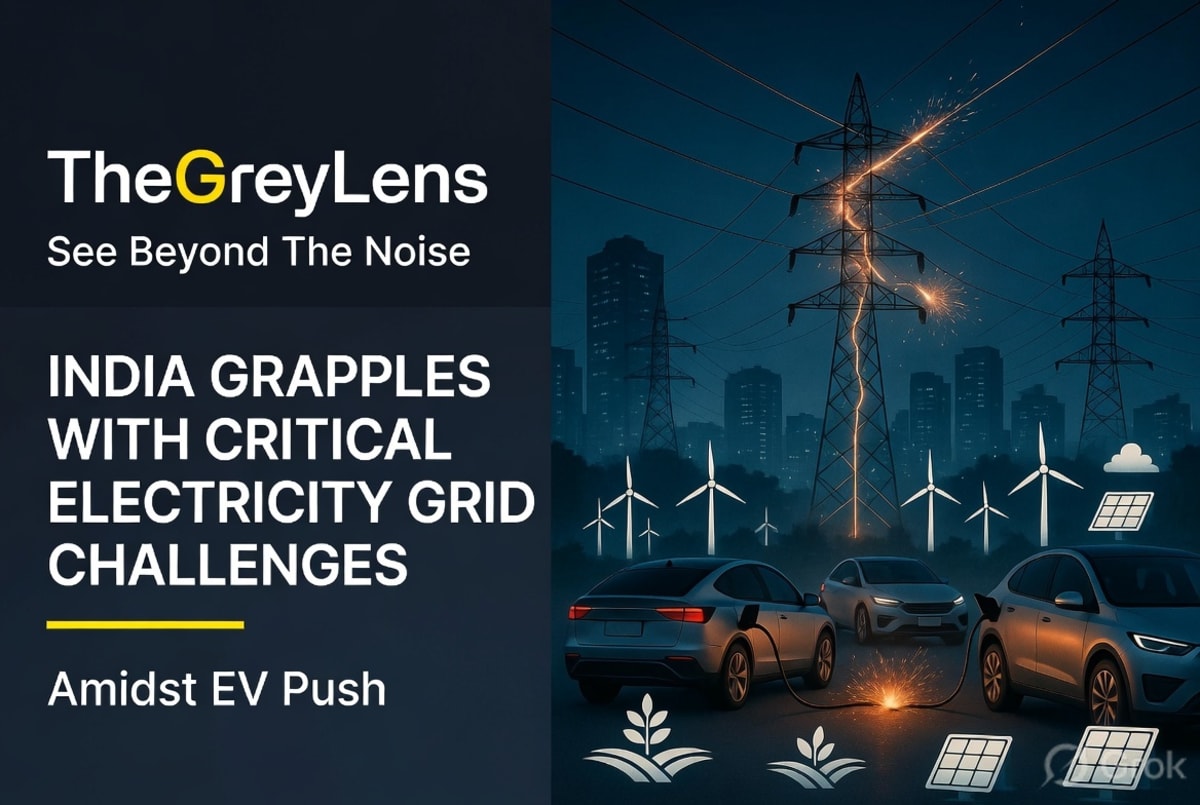
India is on an accelerated path to electrify its transportation sector, with ambitious targets for electric vehicle (EV) penetration. However, a critical underlying challenge looms large: the nation's electricity grid is not yet adequately prepared to handle the immense demand that widespread EV adoption, especially for freight transport, will generate. This pressing issue has become a focal point in recent discussions regarding India's energy transition and industrial strategy.
The Looming Grid Strain
While the electrification of two-wheelers and passenger cars is progressing, the true test lies in electrifying heavy goods vehicles (HGVs). India's fleet of approximately 420 million registered vehicles includes around 6.26 million HGVs. Fully electrifying this segment alone would necessitate an estimated 450–565 TWh of electricity annually, a staggering figure that highlights the scale of the challenge. Current government schemes like FAME (Faster Adoption and Manufacturing of Electric Vehicles) have supported EV adoption, but the foundational infrastructure—the power grid—requires substantial upgrades to meet this surge in demand.
A Need for Strategic Grid Modernization
Experts emphasize that the focus must shift from merely promoting EV sales to ensuring the grid's capacity and reliability. The Revamped Distribution Sector Scheme (RDSS) aims to improve the financial health and reduce losses of electricity distribution companies (DISCOMs). However, many DISCOMs are reportedly not financially equipped for the massive grid upgrades required for EV-scale integration. The development of a powerful and reliable electricity grid capable of supporting large-scale transport demand, particularly from freight transportation, is paramount. This involves not only increasing power generation but also ensuring efficient distribution and management of that power.
Policy and Investment Imperatives
Discussions around financing mechanisms for electric buses and trucks have intensified, with the Ministry of Heavy Industries convening high-level meetings with banks and transport operators. Measures such as credit guarantee schemes to de-risk lending and interest subvention mechanisms to reduce borrowing costs for private sector buyers are being considered. The government's broader industrial strategy, which includes identifying nearly 100 products to reduce import dependence and promoting a "Made in India" branding framework, also underscores the importance of a resilient and capable domestic manufacturing ecosystem, which includes the energy sector. The commitment to energy security, reduced dependence on fossil fuels, and a sustainable future necessitates proactive investment and policy formulation to address the grid's limitations head-on.