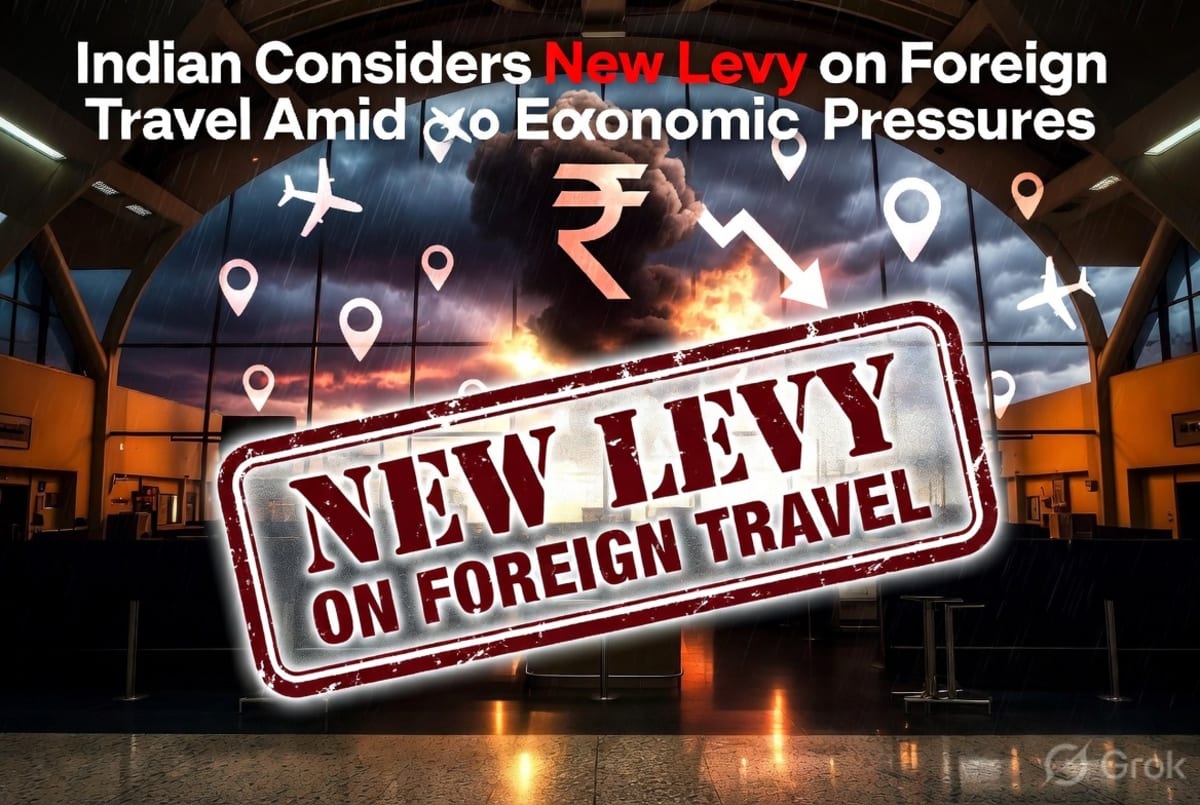
New Delhi – The Indian government is actively exploring the possibility of imposing a temporary tax, cess, or surcharge on foreign travel as a measure to mitigate economic pressures exacerbated by the escalating West Asian conflict. Sources indicate that this proposal is being discussed at the highest levels of government, though a final decision has not yet been reached.
Shifting Policy Landscape for Outbound Travel
This potential levy marks a significant departure from recent policy directions. Earlier in the year, the Union Budget 2026-27 had aimed to make international travel more accessible and affordable for Indian citizens. A key announcement in the budget was the reduction of the Tax Collected at Source (TCS) on overseas tour packages from previous rates of up to 20% to a more uniform 2%. This move was intended to stimulate outbound tourism and provide financial relief to travelers. The current consideration of a new levy appears to be a direct response to emergent economic challenges, particularly the impact of rising crude oil prices and broader import cost increases linked to geopolitical instability.
Economic Underpinnings of the Proposed Levy
The primary driver behind the contemplation of this new tax on foreign travel is the need to address the economic fallout from the West Asian crisis. Increased costs for crucial commodities like crude oil directly impact India's import bill. By potentially taxing outbound travel, the government aims to generate revenue that could help offset these rising expenses. Furthermore, there have been calls from various quarters, including suggestions from Prime Minister Modi for citizens to voluntarily curtail unnecessary foreign travel to aid in trimming the nation's import bill. This proposed levy, if implemented, would formalize such a measure, albeit temporarily, and channel the collected funds directly to the central government.
The economic rationale is further underscored by the recent depreciation of the Indian Rupee, which has touched record lows against the US Dollar. A weaker rupee inherently makes imports more expensive and outbound travel costlier for Indian consumers. While the earlier TCS reduction aimed to ease the burden of booking international trips, a new surcharge could counteract that benefit, particularly for those planning extensive foreign travel. The government's strategy appears to be a balancing act, seeking to manage external economic shocks while also supporting domestic economic stability.
Broader Implications for Travelers and Tourism
If enacted, the temporary levy could have a considerable impact on the travel plans of many Indians. While the specifics of the tax rate and its duration are yet to be finalized, any additional cost on foreign travel would necessitate a re-evaluation of budgets for those planning international vacations. This comes at a time when the tourism sector was beginning to show signs of robust recovery, with initiatives like the expansion of high-speed rail corridors and the development of new tourism trails aimed at boosting domestic and international travel within India. The government's focus on enhancing domestic tourism infrastructure, as seen in the Union Budget 2026-27, might also be viewed in light of potential headwinds for outbound travel.
The situation remains fluid, with no definitive timeline for a decision. However, the ongoing discussions highlight the government's proactive approach to navigating complex economic conditions. The outcome of these deliberations will be closely watched by the travel industry and consumers alike, as it could reshape the landscape of international travel from India in the near future. The government's decision will likely hinge on a careful assessment of economic necessities versus the potential impact on consumer sentiment and the burgeoning tourism sector.