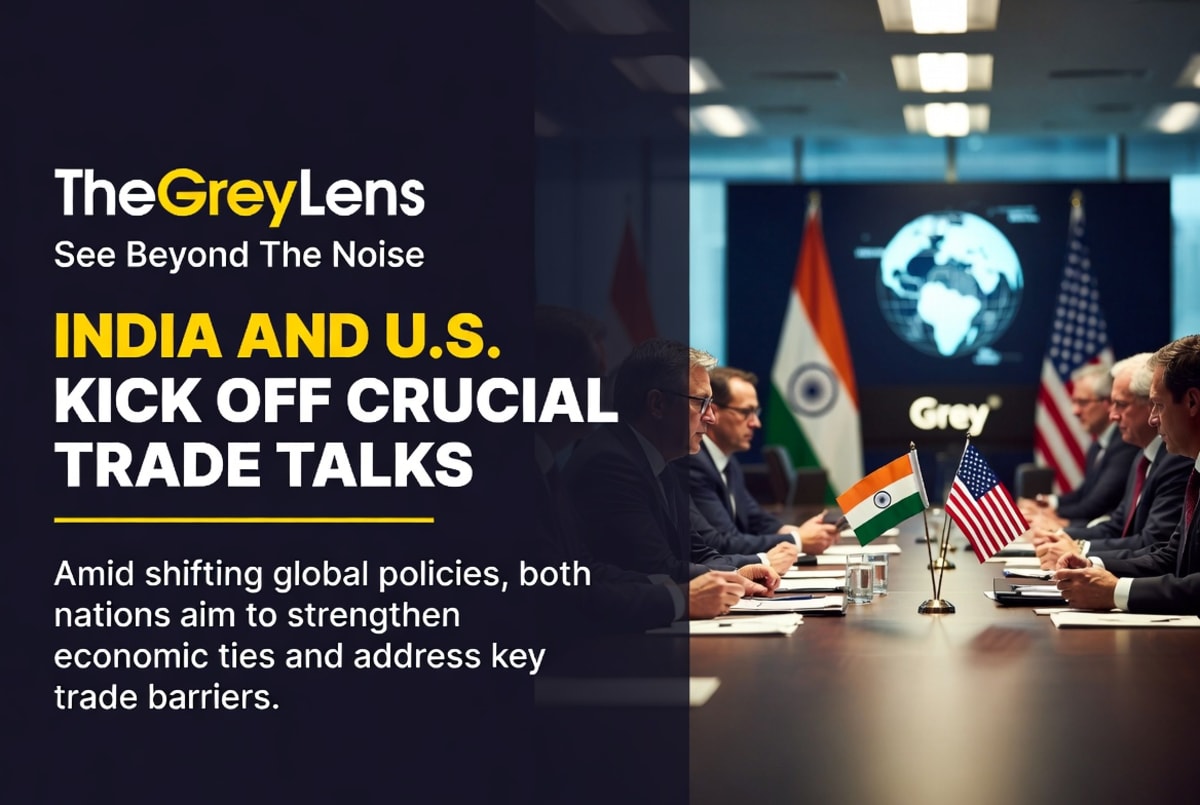
New Delhi is abuzz with high-stakes negotiations as top trade officials from India and the United States commence a critical four-day discussion on June 1, 2026. The primary objective of these talks is to finalize the intricate details of a proposed interim trade agreement, a move seen as a significant step in bolstering bilateral economic ties amid a period of considerable flux in global trade policies. The urgency surrounding these negotiations is amplified by the impending implementation of a new U.S. tariff architecture, set to replace existing reciprocal tariffs.
Navigating a New Tariff Landscape
The United States delegation, led by chief negotiator Brendan Lynch, is meeting with their Indian counterparts, headed by Darpan Jain, Additional Secretary in the Department of Commerce. Sources indicate that a new set of tariffs under Section 301 is slated to take effect on July 24, 2026, replacing the reciprocal tariffs that were previously announced by former President Donald Trump and subsequently deemed illegal by the U.S. Supreme Court in February 2026. This shift necessitates a swift finalization of the interim agreement to provide clarity and stability for businesses operating between the two nations. Months of trade tensions between New Delhi and Washington had previously resulted in steep 50% tariffs on Indian goods, leading to an outflow of investments. While these tariffs were reduced to 18% in February 2026 as part of a broader Bilateral Trade Agreement (BTA) framework, the negotiations for a comprehensive deal have been challenging, with officials citing "unconventional U.S. demands." The current flat 10% tariff, imposed across the board by the U.S. administration following the Supreme Court ruling, presents a complex backdrop for these discussions, with some Indian officials preferring this scenario over signing a deal that might impinge on sovereign decisions regarding oil purchases and sensitive agricultural items.
Economic Underpinnings and Market Confidence
The backdrop for these trade talks is marked by India's resilient economic performance, even amidst global headwinds. Recent data indicates that India's merchandise exports reached $43.56 billion in April 2026, marking a significant increase from the previous year. Overall exports, combining merchandise and services, were estimated at $80.80 billion in April 2026, reflecting a positive growth of 13.59 percent compared to April 2025. This performance, despite geopolitical tensions and the impact of the West Asia conflict, underscores the underlying strength of the Indian economy. However, the depreciation of the domestic currency, which has breached the Rs 95 per dollar level, has been exacerbated by the energy shock following the war in the Gulf. New Delhi is keen to secure certainty on the U.S. trade deal to restore investor confidence, which has been affected by currency pressures and a slowdown in Foreign Direct Investment (FDI) inflows. While gross FDI inflows saw a record high of $94.53 billion in 2025-26, the net figure remained modest at $7.65 billion.
Broader Trade Dynamics and Future Outlook
These negotiations also occur within a broader context of India's evolving trade relationships and economic strategy. India has recently seen its economic growth forecast for FY26 revised upwards by international bodies like the IMF and World Bank, underscoring its position as a leading global economy. The World Bank, for instance, projects India's growth at 6.6% for FY2026-27, driven by strong domestic demand, resilient exports, and the positive impact of Free Trade Agreements (FTAs) with countries like the UK and the EU. Discussions are also underway with other nations, including Oman, for Comprehensive Economic Partnership Agreements (CEPAs), aiming to enhance trade resilience and export growth. Furthermore, India is actively exploring new resource avenues, such as securing rare earth minerals from Myanmar, a move that could diversify its supply chains and reduce reliance on China. The Reserve Bank of India (RBI), in its annual report, has projected a robust economic growth of 6.9% for 2026-27, despite global challenges, highlighting India's strong fundamentals and a stable policy environment. The RBI also warned of global inflation risks, projected at 4.4% for 2026, and potential market volatility due to ongoing geopolitical tensions, particularly the West Asia conflict. The outcome of the India-U.S. trade talks is therefore keenly anticipated, as it will not only shape the bilateral economic relationship but also influence India's broader trade strategy and its navigation of a complex and dynamic global economic environment.