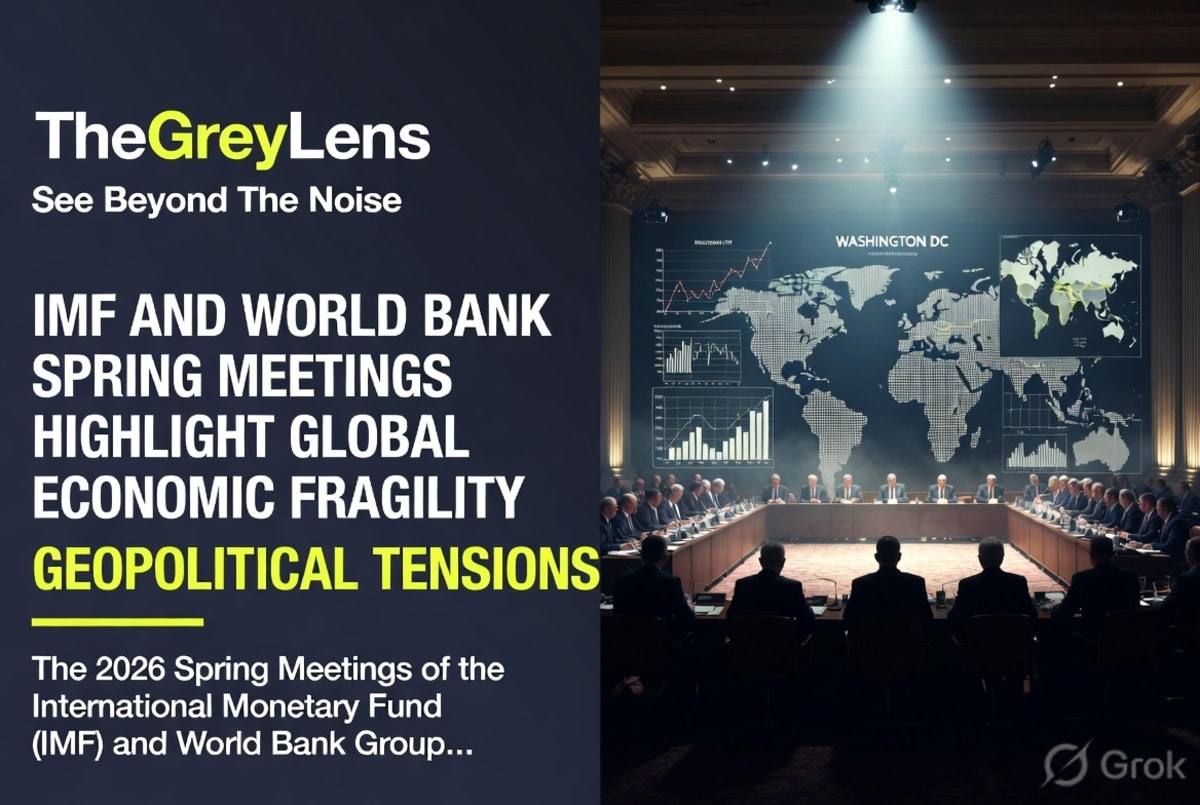
Global economic leaders convened in Washington D.C. for the 2026 Spring Meetings of the International Monetary Fund (IMF) and World Bank Group, a critical forum for assessing the global economic landscape. The meetings, which took place from April 13 to April 18, were overshadowed by significant geopolitical instability, particularly the ongoing conflict affecting key oil supply routes, which has led to considerable volatility in energy markets and a revised, more cautious outlook for global growth.
Revised Growth Forecasts Amidst Supply Shocks
Participants at the Spring Meetings expressed growing concern over the global economic outlook. Initially, the IMF had projected global growth at 3.3 percent for 2026. However, deepening energy price and supply shocks, exacerbated by attacks on shipping, led to a reassessment. The global economy was seen as drifting towards a more adverse growth scenario of just 2.5 percent. The IMF's World Economic Outlook indicated that a prolonged conflict could potentially push the global economy into a recession, highlighting the fragile nature of the current recovery. This downward revision underscored the interconnectedness of geopolitical events and their direct impact on economic stability worldwide.
Financial Lifeline for Developing Nations
In response to the economic fallout from the escalating global instability, the IMF and World Bank pledged a combined US$150 billion in new financing assistance. This substantial commitment is earmarked for developing countries that have been disproportionately affected by the massive energy price shock. The institutions also celebrated a re-engagement with Venezuela's acting government after a seven-year hiatus. However, amidst these commitments, a warning was issued to countries against hoarding oil and implementing overly broad, untargeted fuel price subsidies, emphasizing the need for prudent fiscal management even in times of crisis.
Geopolitical Tensions and Policy Challenges
The meetings also served as a platform for finance ministers and central bankers to voice frustration regarding their limited ability to mitigate the economic consequences of geopolitical events. The conflict's impact on the Strait of Hormuz, a vital shipping chokepoint, has created severe commodity-supply shocks with cascading effects on energy costs, debt servicing, and food prices globally. While tentative optimism arose from the possibility of the Strait reopening, this sentiment quickly faded with subsequent attacks on shipping. Officials, particularly from Europe, reportedly conveyed a strong message to the U.S. regarding the need for action to reopen the vital shipping lanes, underscoring the global reliance on coordinated responses to such crises.
The 2026 Trade Policy Agenda, released earlier in the year by the U.S. Trade Representative, also formed part of the backdrop, with discussions touching upon trade policy shifts and their impact on global economic resilience. The agenda emphasizes an "America First" approach, focusing on reciprocal trade agreements, supply chain security, and managing trade with China. However, the broader discussions at the Spring Meetings highlighted the challenges of navigating a global economic order increasingly influenced by geopolitical realignments and the limitations of national policies in addressing systemic global shocks. The ongoing review of the U.S.-Mexico-Canada Agreement (USMCA) was also noted as a point of attention within the U.S. trade policy discourse. The IMF and World Bank's role in maintaining global financial stability and supporting economic development in such a turbulent environment remains a central focus, with continued emphasis on the need for robust fiscal buffers and structural reforms to navigate future uncertainties.