Selecting the right business structure is one of the most critical early decisions for any entrepreneur in India. The choice you make will influence your liability, taxation, ability to raise funds, compliance burden, and long-term scalability. With India’s startup ecosystem continuing to thrive in 2026, making an informed decision on how to choose startup business structure India can mean the difference between smooth growth and costly setbacks.
This comprehensive guide outlines the major business structures available, key decision-making factors, and a practical step-by-step process to help founders choose wisely.
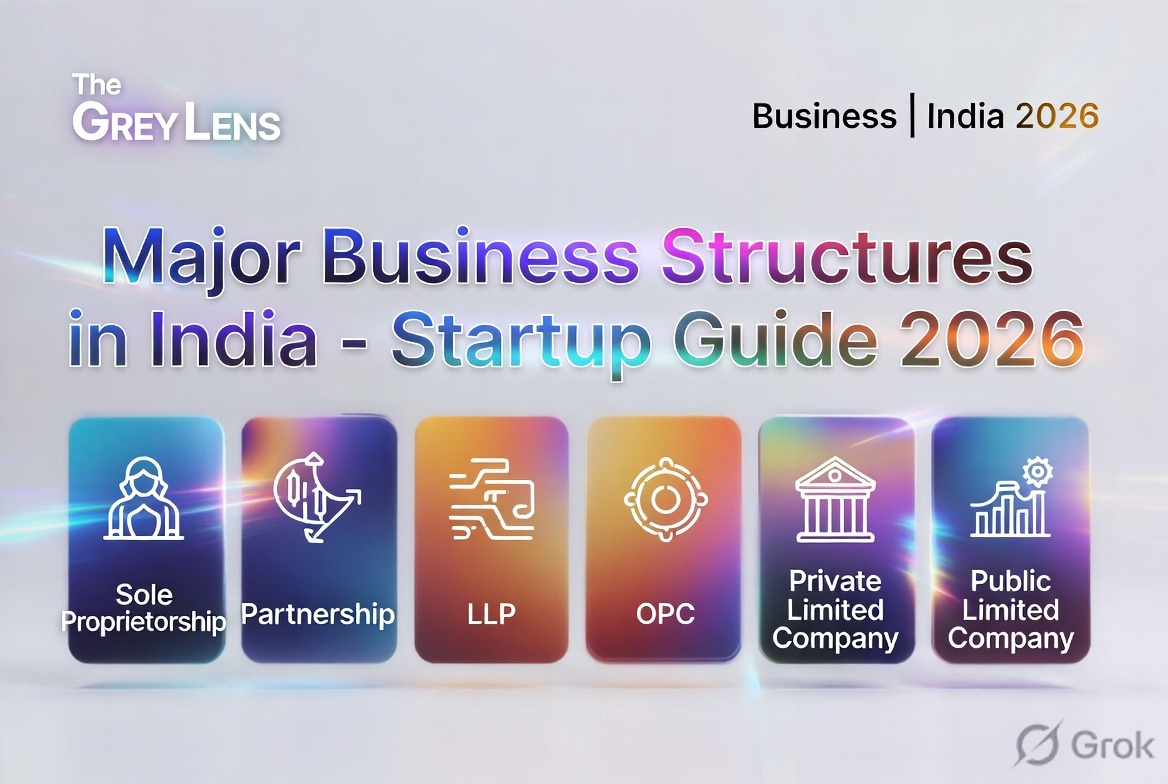
Understanding the Main Business Structures in India
India offers several legal formats for startups, each designed for different scales and ambitions:
1. Sole Proprietorship
The simplest and most common structure for small, individual-led businesses. There is no separation between the owner and the business — profits are taxed as personal income.
Advantages: Easy setup, minimal compliance, full control.
Disadvantages: Unlimited personal liability, difficulty in raising external capital, limited credibility with investors.
2. Partnership Firm
Formed by two or more people who agree to share profits and losses. Registration with the Registrar of Firms is optional but advisable.
Advantages: Simple to form, shared resources.
Disadvantages: Unlimited liability for all partners, potential for disputes, not ideal for large-scale funding.
3. Limited Liability Partnership (LLP)
A hybrid structure that combines the flexibility of a partnership with the limited liability of a company. Governed by the LLP Act, 2008.
Advantages: Partners enjoy limited liability, flexible management, moderate compliance.
Disadvantages: Cannot raise equity capital easily, less preferred by venture capitalists compared to private limited companies.
4. One Person Company (OPC)
Introduced in 2013, an OPC allows a single individual to form a company with limited liability. It is treated as a private limited company with simpler rules.
Advantages: Limited liability, corporate status, easier banking and contracts.
Disadvantages: Can have only one shareholder, mandatory conversion to private limited once turnover crosses ₹2 crore or paid-up capital exceeds ₹50 lakh.
5. Private Limited Company
The most preferred structure for serious startups, especially those seeking external funding.
Advantages: Limited liability, separate legal entity, easy equity fundraising, high credibility, perpetual succession.
Disadvantages: Higher compliance requirements, mandatory board meetings, annual filings with MCA, and stricter governance norms.
6. Public Limited Company
Rarely chosen by early-stage startups. Suitable only for large businesses planning IPOs.
Advantages: Can raise capital from the public.
Disadvantages: Very high compliance and regulatory burden.
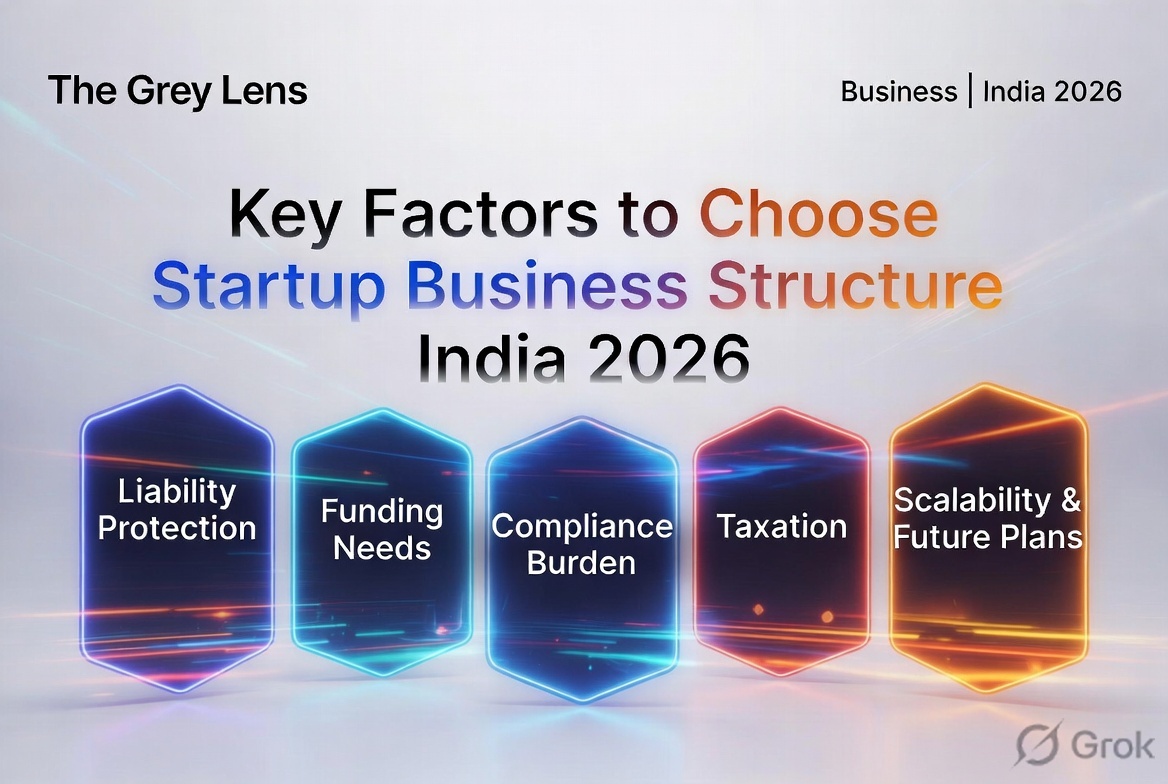
Key Factors to Consider While Choosing Your Structure
Making the right choice requires evaluating several important aspects:
• Liability Protection
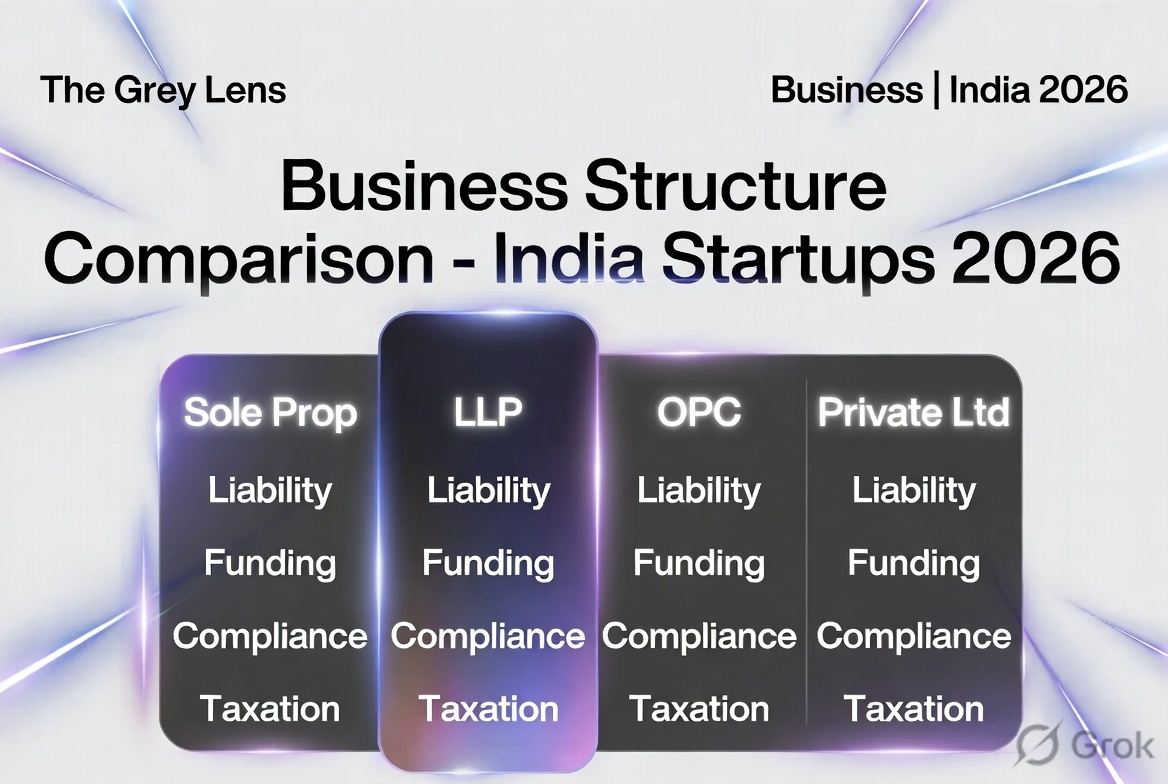
If you want to safeguard your personal assets (house, savings, etc.), opt for LLP, OPC, or Private Limited Company. Sole proprietorships and traditional partnerships expose personal wealth to business risks.
• Funding Requirements
Venture capitalists, angel investors, and foreign investors strongly prefer Private Limited Companies because of clear shareholding patterns, corporate governance, and ease of equity dilution. LLPs and sole proprietorships often face hurdles during due diligence.
• Tax Implications
Startups recognised by DPIIT can avail tax holidays under Section 80-IAC.
• Compliance Burden
Sole proprietorships require the least paperwork. Private Limited Companies must file annual returns (AOC-4, MGT-7), maintain statutory registers, conduct board meetings, and appoint auditors once thresholds are crossed.
• Scalability & Future Plans
Planning for multiple funding rounds, international expansion, or an eventual IPO? Start with a Private Limited Company. It offers the strongest foundation for growth.
• Industry-Specific Needs
Certain sectors (fintech, insurance, e-commerce) may require specific structures due to regulatory norms.
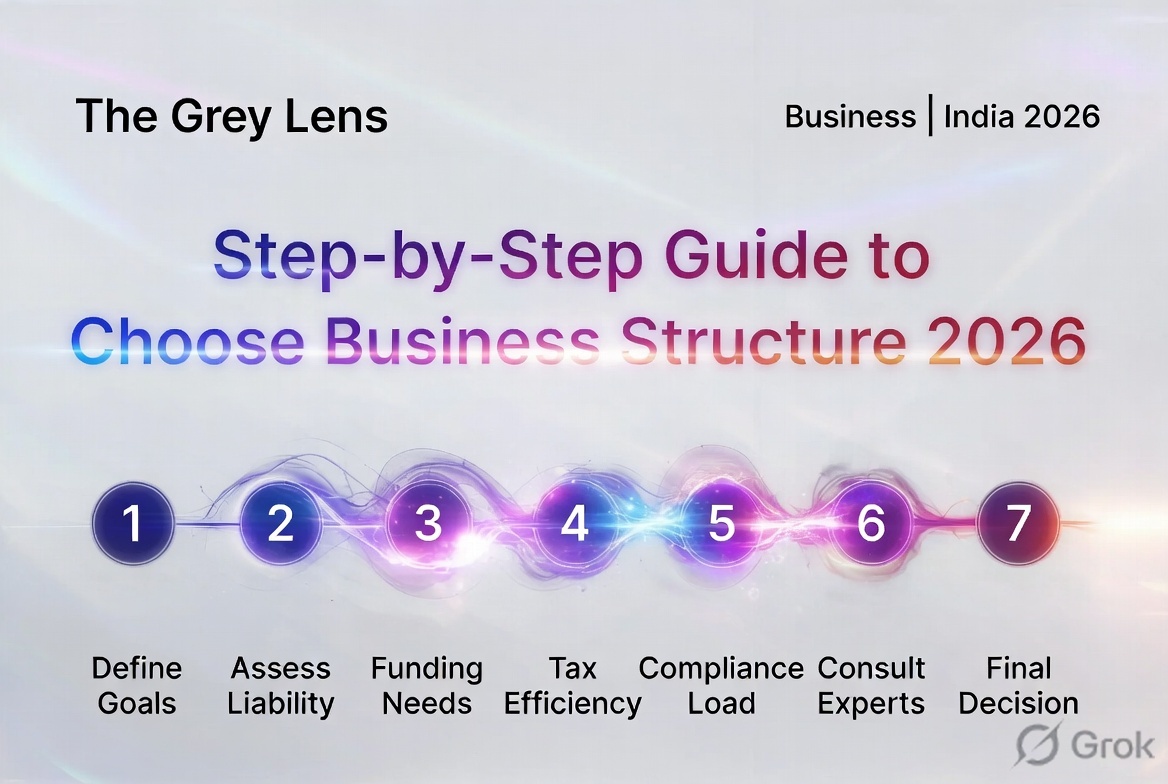
Step-by-Step Process to Choose Your Startup Structure
Clearly outline your vision — Are you starting small and local, or aiming for rapid national/international scaling?
Bootstrap or self-funded? → Sole Proprietorship/LLP may suffice.
Seeking angel/VC funding? → Private Limited Company is strongly recommended.
Comfortable with personal liability? → Consider simpler structures.
Prefer protection? → Choose LLP or Private Limited.
Consult a chartered accountant to understand the most tax-efficient option for your projected revenue and expenses.
Be realistic about the time and cost of ongoing filings and governance.
Engage a company secretary, lawyer, or CA specialising in startups. Many offer initial consultations at reasonable rates. Platforms like MCA21 and Startup India also provide useful resources.
Once decided, complete incorporation via the SPICe+ form on the MCA portal. Obtain PAN, TAN, GST registration, and open a current bank account.
Can You Change Your Business Structure Later?
Yes. Conversions are possible — for example, Sole Proprietorship to Private Limited, or LLP to Private Limited. However, the process involves costs, documentation, and potential tax implications. It is always better to choose the right structure from the beginning.
Final Recommendation for 2026
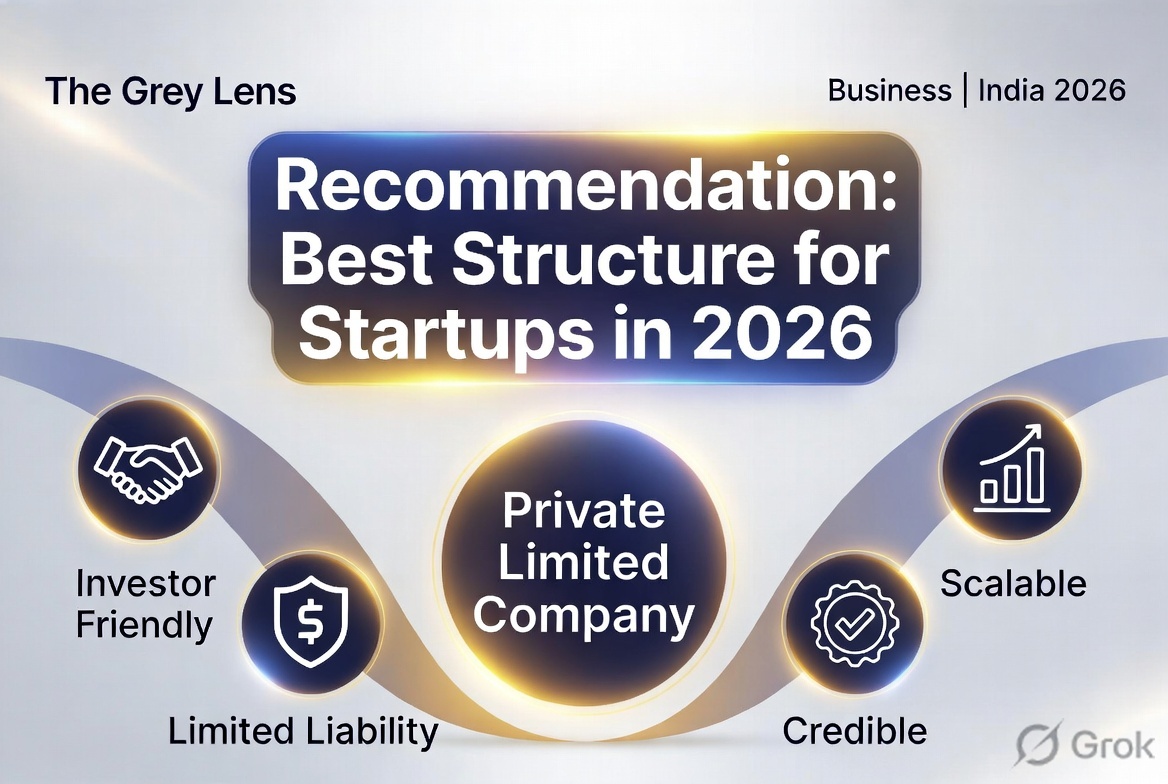
For most technology, SaaS, e-commerce, and innovation-driven startups in 2026, a Private Limited Company remains the gold standard. It offers the best balance of credibility, investor appeal, and growth potential.
Solo founders with low-risk, service-based businesses may begin with an OPC or LLP and convert later. Traditional retail or small trading businesses can comfortably operate as Sole Proprietorships.
Choosing the right startup business structure in India is not just a legal formality — it is a strategic decision that shapes your company’s future. Take time to evaluate your needs carefully, seek expert advice, and build on a solid foundation.
This article is for informational purposes only and does not constitute legal or financial advice. Founders are strongly recommended to consult qualified professionals for advice tailored to their specific situation.