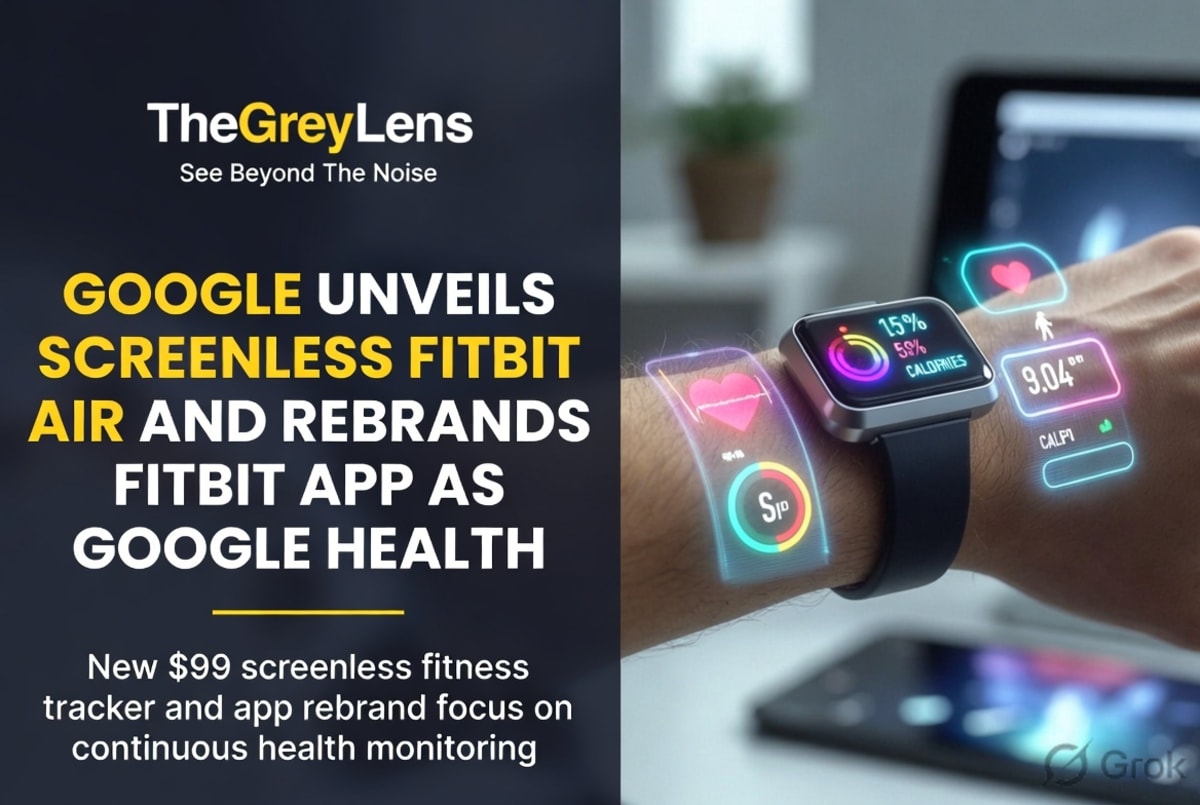
Mountain View, CA – Google officially entered a new phase of its wearable and health technology strategy on May 7, 2026, with the unveiling of the Fitbit Air, a screenless fitness tracker, and the rebranding of its popular Fitbit app to Google Health. The new wearable is positioned as an accessible and unobtrusive device for comprehensive health and wellness tracking, aiming to simplify the user experience in a crowded market. Priced at $99, the Fitbit Air is designed to be worn 24/7, focusing on collecting physiological data that feeds into Google's increasingly sophisticated AI-driven health insights.
A Streamlined Approach to Wellness Tracking
The Fitbit Air distinguishes itself with its screenless design, a deliberate choice by Google to minimize distractions and promote continuous wear. The device features a modular sensor pod that can be detached and swapped between different bands, emphasizing comfort and versatility. This approach targets users who find current smartwatches and fitness trackers too complex, bulky, or expensive. According to Rishi Chandra, Google's vice president of health and home, the Air is intended for individuals seeking a straightforward way to monitor their well-being. The device automatically detects activities and tracks key metrics such as steps, distance, calories burned, heart rate variability, and sleep patterns. A new Sleep Score feature, powered by an advanced machine learning model, is reported to be 15% more accurate than previous Fitbit sleep tracking. The device also includes irregular heart rhythm notifications and alerts for high and low heart rates, leveraging its optical heart rate sensor, blood oxygen sensors, and skin temperature sensor.
Google Health App: A Unified Hub for Your Data
Complementing the Fitbit Air, Google has transformed the existing Fitbit app into the Google Health app. This rebranding signifies a broader ambition to create a central hub for all health and wellness data. The new app will consolidate information from Fitbit devices, Pixel Watch, Health Connect, and even data from Apple Health, aiming to provide users with a holistic view of their health. The Google Health app will feature a redesigned interface with four main sections: Today, Fitness, Sleep, and Health, allowing for customizable dashboards to prioritize the metrics most important to users. A key integration is the Google Health Coach, an AI-powered trainer that has been in Public Preview and will now exit beta on May 19, 2026. Built using Gemini models, this coach offers personalized guidance based on user goals, routines, and health metrics, acting as a virtual fitness trainer, sleep advisor, and wellness assistant. Premium plans for the Google Health Coach are priced at $9.99 per month or $99 per year.
Market Positioning and Future Outlook
The launch of the Fitbit Air positions Google as a more direct competitor to brands like Whoop, which also focuses on continuous physiological monitoring without a display. The $99 price point makes it a significantly more accessible option compared to some of its high-end competitors. The ability to pair both a Fitbit Air and a Pixel Watch simultaneously within the Google Health app also offers a unique proposition for users invested in Google's ecosystem. The device, available for pre-order and expected to ship by May 26, 2026, represents Google's commitment to leveraging AI and connected devices to empower users in managing their health proactively. The company's strategy appears to be shifting from basic fitness tracking towards a more integrated and intelligent approach to personal wellness, with the Fitbit Air and the enhanced Google Health app serving as cornerstones of this evolution.
Looking ahead, Google's continued integration of AI into its health offerings, coupled with the accessibility of new hardware like the Fitbit Air, suggests a significant push to capture a larger share of the rapidly growing digital health and wearable technology market. The success of these new products will likely hinge on their ability to deliver tangible, personalized insights that genuinely improve users' daily lives.