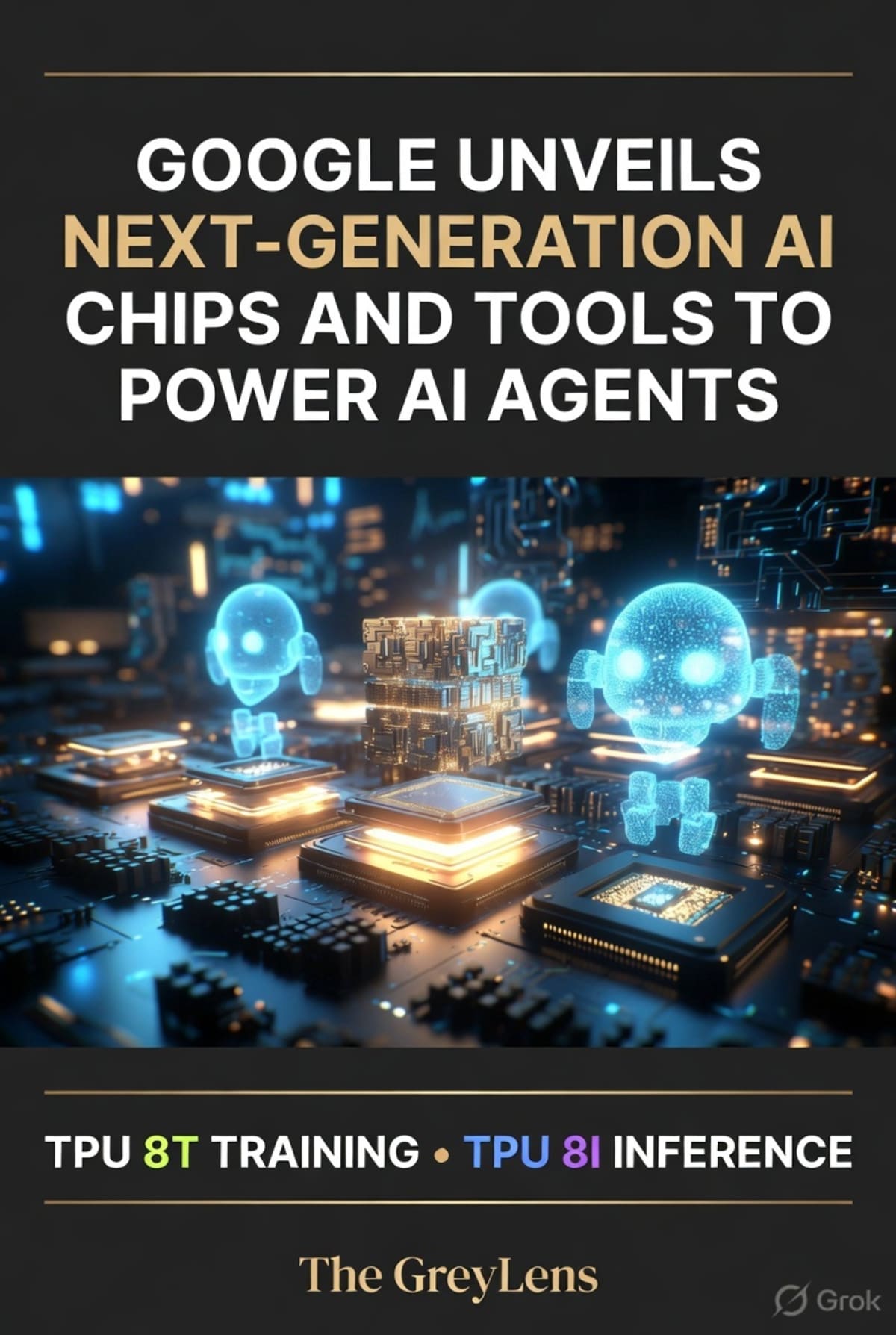
LAS VEGAS – Google Cloud has unveiled its latest advancements in artificial intelligence infrastructure, introducing the eighth generation of its Tensor Processing Units (TPUs) and a comprehensive set of tools for the development and deployment of AI agents. This announcement, made at the Google Cloud Next event, signals a significant step in Google's ongoing strategy to provide powerful and efficient hardware and software for the rapidly evolving AI landscape. The new TPUs are engineered to handle the most demanding AI workloads, with the TPU 8t variant optimized for training large language models and the TPU 8i designed for the crucial stage of AI inference, where AI models are used to make predictions or decisions. According to Google, this dual-chip approach aims to offer enhanced performance and efficiency for AI development and deployment.
The tech giant also introduced a significant financial commitment, announcing a US$750 million fund aimed at bolstering its partner ecosystem to accelerate the adoption of agentic AI. This initiative seeks to support partners in identifying AI value, prototyping AI solutions, building and deploying AI agents, and upskilling their workforces. Global consulting firms, systems integrators, software partners, and channel partners will be eligible to access these funds, which will also provide embedded Google engineers to assist with complex projects. This move underscores Google Cloud's strategy to foster a robust ecosystem that drives enterprise AI transformation.
Furthermore, Google Cloud showcased updates across its Workspace suite, envisioning a future where AI agents dramatically reshape daily work routines. The company also highlighted its continued efforts to develop its own AI chips, positioning itself as a key player in reducing reliance on third-party hardware and taking greater control over its AI infrastructure. This comprehensive push, from advanced hardware to partner enablement and software integration, illustrates Google's commitment to leading the charge in the era of AI agents and intelligent automation. The company stated that AI systems built on these new chips will be generally available later this year, with Google continuing to offer services based on Nvidia chips for customers who prefer them.