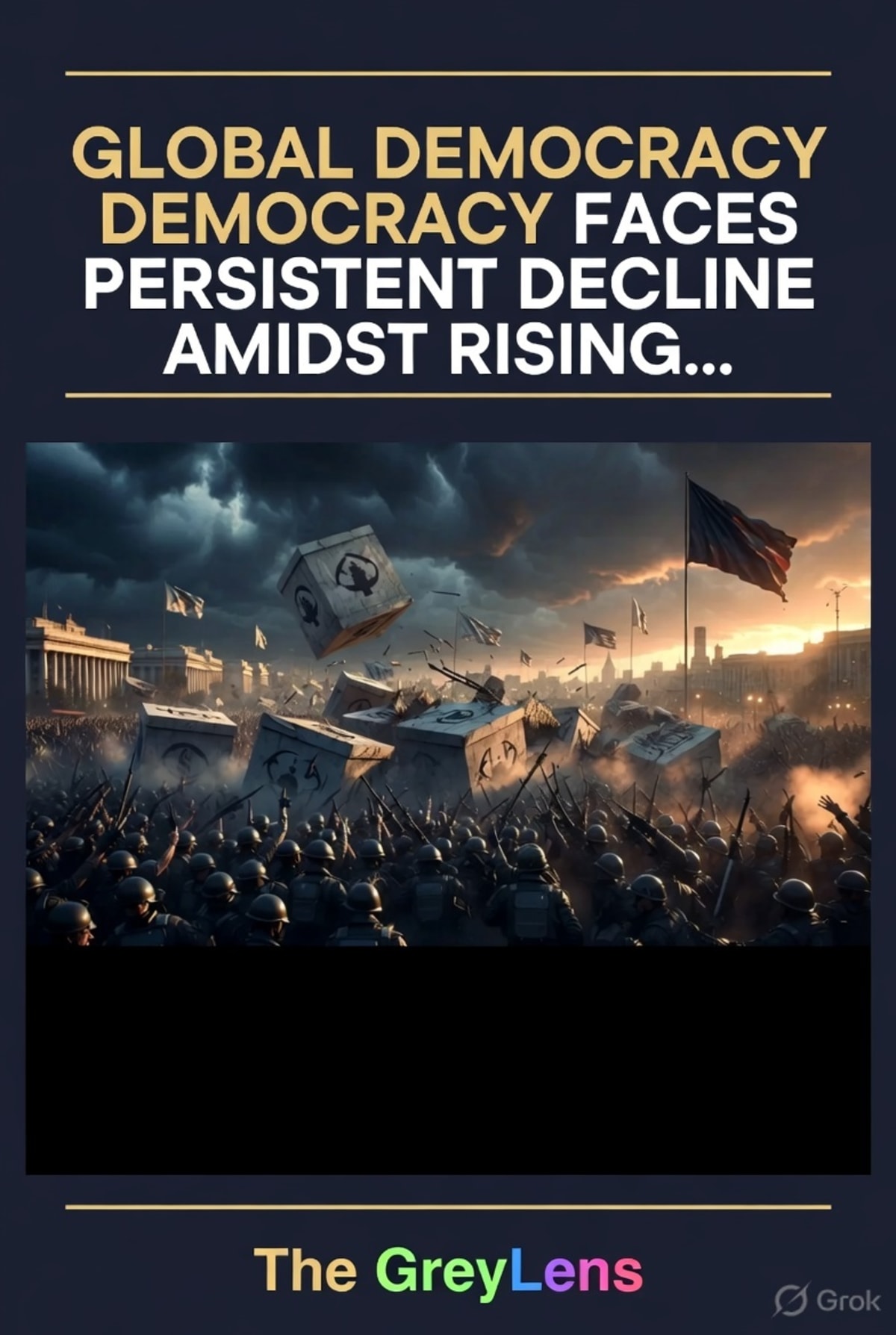
The global landscape in early 2026 is defined by a persistent tension between democratic governance and authoritarian consolidation, with political freedoms and civil liberties under increasing strain across many regions. Rather than a sudden collapse of democratic systems, a gradual and complex transformation of political regimes is evident. This gradual erosion, often occurring through subtle institutional adjustments rather than visible ruptures, challenges traditional understandings of authoritarianism as modern forms of political control increasingly operate within nominally democratic frameworks. The V-Dem Institute and Freedom House report a sustained decline in democratic quality over the past decade, with 54 countries experiencing deterioration in political rights and civil liberties in 2025 alone, while only 35 registered improvements, according to Freedom House. This trend is particularly concerning as populous and economically powerful countries, including the United States, are experiencing significant democratic backsliding, which could reshape international norms and trade.
This ongoing democratic backsliding has measurable economic consequences, weakening the institutional foundations of growth by undermining investor confidence and increasing economic uncertainty through declining judicial independence, reduced property rights protection, and increased corruption, as noted by International IDEA. The number of armed conflicts has also risen to its highest level since 1946, imposing a significant macroeconomic burden on the global economy. For young professionals, this environment translates to increased economic uncertainty and a potentially less stable global marketplace. Furthermore, the subtle nature of modern authoritarianism, which often operates within democratic frameworks, makes it harder to identify and counter, impacting everything from fair competition to personal freedoms.