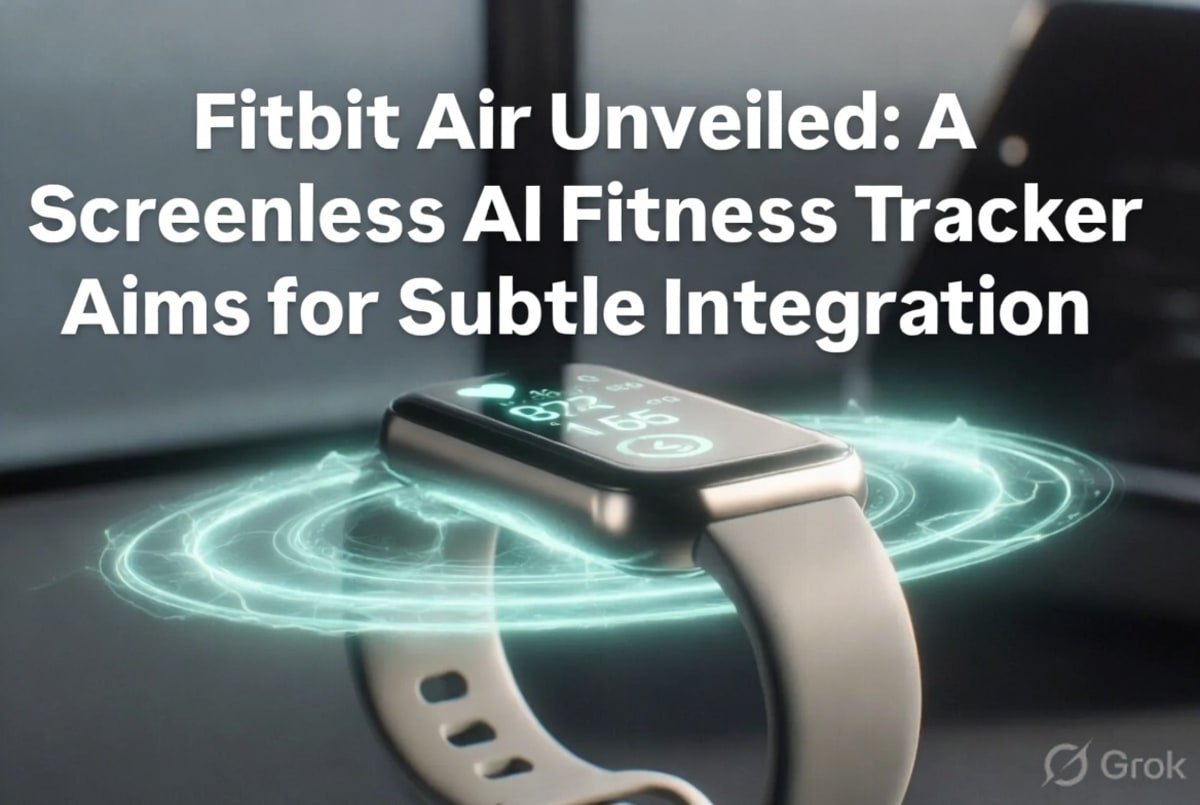
Google's Fitbit has introduced the Fitbit Air, a novel AI-driven fitness tracker that departs from conventional wearable design by eliminating a display screen altogether. This new device, available as of May 15, 2026, is designed for users seeking a less intrusive way to monitor their health and fitness, focusing on audio feedback and smart integrations rather than constant screen interaction.
A Stealthy Approach to Wellness
The Fitbit Air, priced at $99, is engineered to blend seamlessly into the user's daily life. Instead of relying on a visual display, the device leverages artificial intelligence to interpret biometric data and deliver personalized insights and coaching through audio prompts and detailed analysis within the Fitbit app. This screenless design aims to reduce the cognitive load often associated with constant data checking, promoting a more mindful approach to wellness.
Early impressions suggest the Fitbit Air offers a more subtle and less distracting experience compared to many of its competitors. The focus on audio cues means users can receive notifications about their activity levels, sleep patterns, and stress indicators without needing to glance at a device. This could be particularly appealing to individuals who find traditional smartwatches and fitness trackers to be overly demanding of their attention.
AI-Powered Insights and Personalized Guidance
At the core of the Fitbit Air's functionality is its advanced AI engine. This system processes data from a suite of sensors to provide a comprehensive overview of the user's health. The device is designed to learn user habits and preferences, offering tailored recommendations for exercise, sleep, and recovery. For instance, it can provide gentle nudges to encourage movement during sedentary periods or offer guided breathing exercises during moments of detected stress.
The companion Fitbit app will serve as the central hub for all data visualization and in-depth analysis. Users can access detailed reports on their fitness progress, sleep quality, and overall well-being, with the AI providing context and actionable advice. This integrated approach ensures that while the device itself is screenless, users still have access to the rich data they expect from a modern fitness tracker.
Market Positioning and Future Outlook
The launch of the Fitbit Air positions Google to capture a segment of the wearable market that prioritizes discretion and minimal digital distraction. By forgoing a screen, Fitbit is not only potentially reducing manufacturing costs but also offering a unique value proposition in a crowded marketplace. The device is also entering a landscape where AI integration in consumer electronics is rapidly expanding, with companies across the tech industry emphasizing smarter, more personalized user experiences.
While the Fitbit Air aims to be less intrusive, its success will likely depend on the effectiveness of its audio feedback system and the depth of insights provided through its companion app. The company's ability to deliver truly valuable, AI-driven guidance without a visual interface will be key to its adoption. As the wearable technology market continues to evolve, the Fitbit Air represents a bold step towards a future where health tracking is more integrated and less screen-dependent.