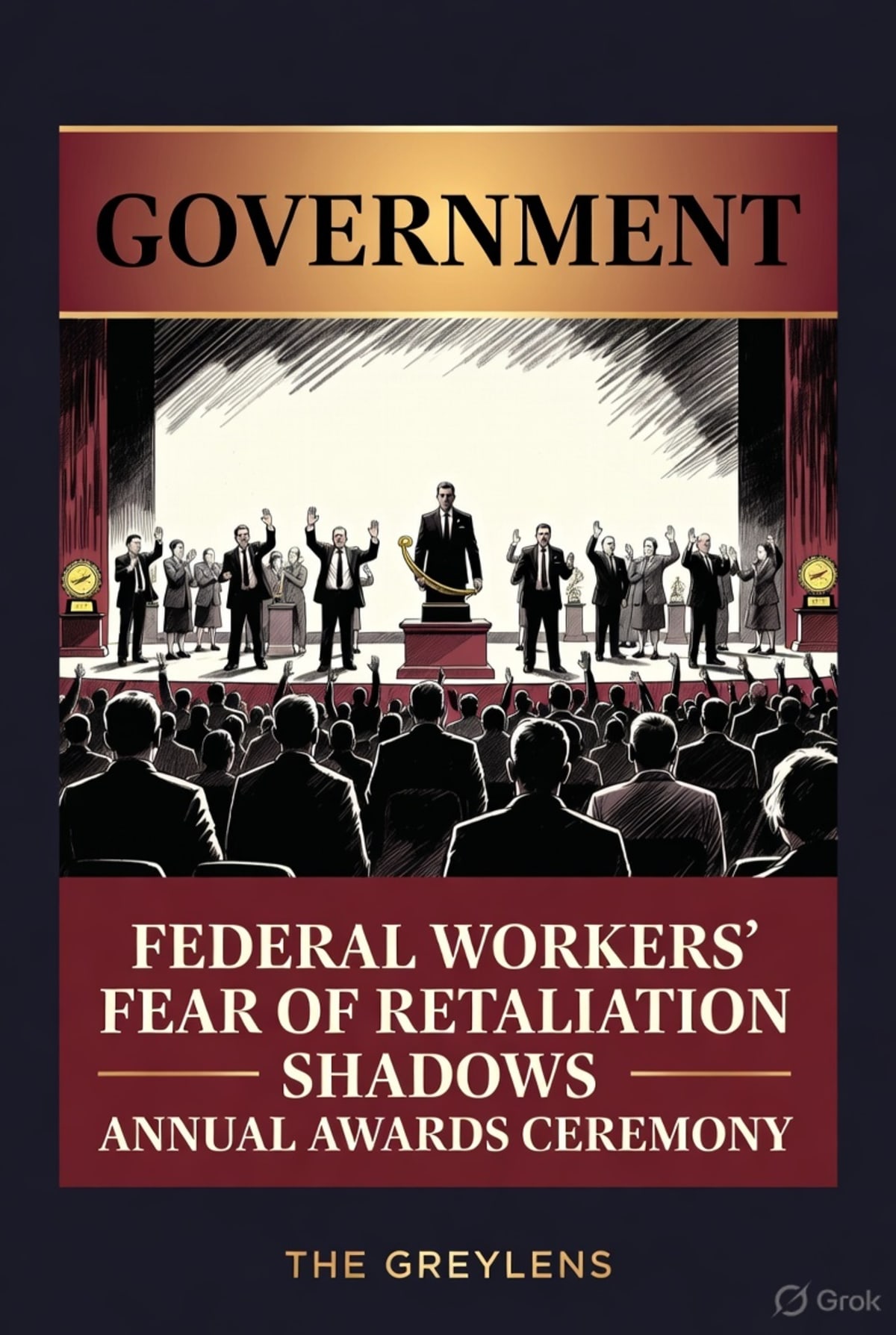
Shadow of Fear Overshadows Federal Service Awards
The nation's annual celebration of outstanding federal employees, known as the Samuel J. Heyman Service to America Medals (the "Sammies"), was notably subdued this year, with a stark decrease in both nominations and attendees. The ceremony, typically a highlight for recognizing exemplary public service, was overshadowed by a pervasive fear of retaliation among federal workers. This apprehension has led many to shy away from public recognition, contributing to a slimmer-than-usual gathering at the National Museum of the American Indian on May 7, 2026. Max Stier, chief executive of the Partnership for Public Service, which organizes the event, noted that the workforce remaining in government is worried about the potential repercussions of being recognized. "The workforce that remains has worried about what might happen to them if they're recognized," Stier stated in an interview prior to the ceremony.
The impact of this fear is evident in the numbers. The Partnership for Public Service received over 140 nominations across 39 federal agencies for the 2026 awards, a significant decline from more than 350 nominations spanning 65 agencies in the previous year. Some individuals who were nominated even requested that their names be withdrawn from consideration, though the Partnership for Public Service has declined to provide specific details on these instances. This chilling effect on recognition comes at a time when federal employees are grappling with significant workforce changes and a perceived adversarial relationship with the current administration.
Erosion of Trust and the Whistleblower's Dilemma
The diminished scale of the awards ceremony reflects a broader trend of declining morale and increased anxiety within the federal workforce. Reports indicate that since the Trump administration's actions, including a significant reduction in the civil service, employees have become more hesitant to draw attention to themselves. This atmosphere has been exacerbated by instances at various agencies, such as the Environmental Protection Agency and the National Institutes of Health, where employees who voiced dissent or spoke to the media faced disciplinary actions, including being placed on leave or termination.
Federal whistleblower protections, designed to safeguard employees who report waste, fraud, and abuse, are crucial in fostering an environment where concerns can be raised without fear of reprisal. However, recent legislative efforts aim to bolster these protections. Senator Chuck Grassley has introduced bills intended to expand coverage for federal employees whose primary duties involve investigating and reporting wrongdoing, arguing that current legal interpretations set too high a bar for proving retaliation. These measures seek to ensure that employees who speak up about government deficiencies are not penalized. The Office of Special Counsel (OSC) has also reported a significant increase in cases, with 9,820 new cases in Fiscal Year 2025, a 57 percent rise from the previous year, indicating a greater number of employees seeking assistance due to workplace issues.
A Call for Transparency and Protection Moving Forward
The current climate raises concerns about the long-term health of the federal civil service and its ability to attract and retain top talent. The decline in award nominations and participation suggests a workforce operating under a cloud of apprehension, potentially hindering innovation and proactive problem-solving. David Lebryk, a former top Treasury Department official, warned that the current environment, where fewer employees are raising their hands to report problems, could lead to small issues escalating into larger crises.
Looking ahead, there is a clear need to reinforce trust and transparency within federal agencies. The Partnership for Public Service continues to advocate for a stronger civil service and better recognition of its employees. Legislative actions to strengthen whistleblower protections, coupled with a renewed commitment from leadership to foster a culture of psychological safety, will be critical. The upcoming fiscal year is set to see the reinstatement of Presidential Rank Awards, which were paused in 2025, signaling a potential re-emphasis on recognizing high performance, though the underlying concerns about fear and retaliation will need to be addressed for these programs to be truly effective. The ability of federal employees to perform their duties without fear of reprisal is paramount to the effective functioning of government and the public trust it serves.