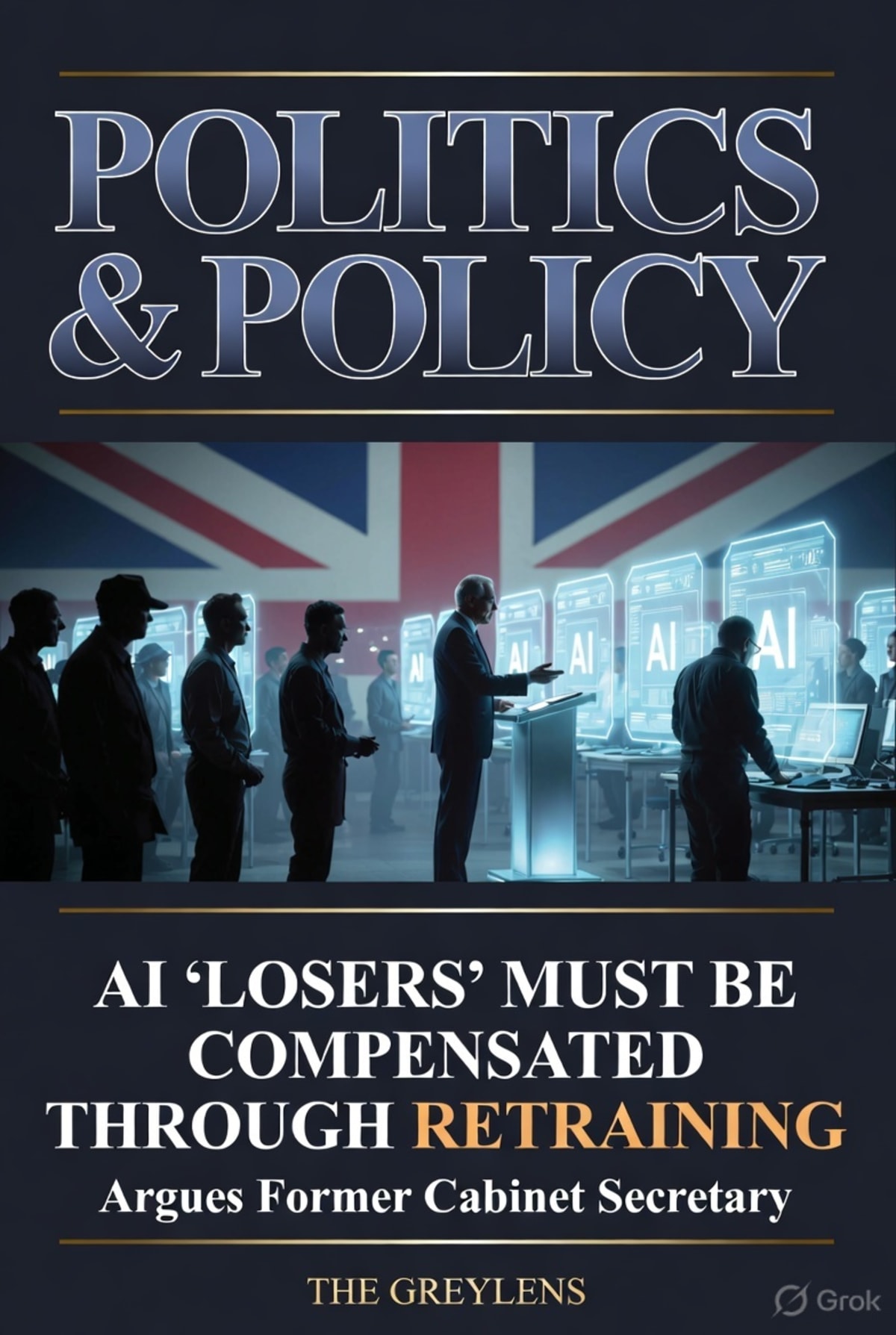
The Case for Compensating AI's "Losers"
Lord Gus O'Donnell, who served as the UK's top civil servant from 2005 to 2011, has put forth a compelling argument that the societal gains from AI must be shared equitably. Speaking at the inaugural lecture of Cambridge's Downing Battcock Institute, O'Donnell stated that the significant productivity boosts expected from AI, particularly in the public sector, will inevitably lead to job displacement. He emphasized that the 'winners' of this technological revolution – individuals and businesses that profit from AI – should be obligated to compensate the 'losers' through taxation. This revenue, he proposed, should be directed towards comprehensive retraining initiatives for those whose skills become obsolete. O'Donnell highlighted that while AI promises to enhance public services and reduce costs, the human cost of job losses cannot be ignored. "We need to show that a lot of the gains to GDP that come out of the productivity gains from using AI are used to help retrain people," he urged. The former permanent secretary at the Treasury acknowledged that the precise mechanisms for such taxation are still under discussion, but suggested that increased corporation tax and income tax from AI-driven profits could form the basis of this funding.
Digital Identity and the Future of Work
Beyond the crucial aspect of compensation, Lord O'Donnell also underscored the importance of a robust digital identity system in harnessing AI's full potential. He believes that a secure and widespread digital ID is "crucial" for realizing AI's productivity gains, particularly within government services. O'Donnell's vision involves using AI to streamline public services and improve efficiency, but this requires the ability to link data and services to individuals securely. He also critically remarked on the previous government's framing of digital ID initiatives, suggesting that focusing on issues like illegal immigration had "set back the argument" for technology's positive impact on citizens' lives. This perspective aligns with broader government efforts, such as the expansion of free AI training programs announced in January 2026, which aim to equip 10 million adults with basic AI skills by 2030. These programs focus on practical workplace applications, offering short, online courses to enhance AI literacy across the workforce.
The Growing Debate on AI and Employment in the UK
Lord O'Donnell's remarks come at a time of intensifying debate within the UK regarding the impact of AI on the labor market. While some studies suggest that widespread job losses due to AI have not yet materialized at scale, concerns persist about the potential for significant displacement, particularly in administrative and customer service roles. Research from Morgan Stanley indicated that the UK might be losing more jobs than it creates due to AI, and is being affected more severely than other major economies. In response to these anxieties, the UK government has committed to investing in retraining programs, with initiatives like the National Training Scheme being trialed. Discussions are also emerging around more radical solutions, such as Universal Basic Income (UBI), as a potential safety net for workers disrupted by AI, although this is not currently official government policy. The conversation highlights a growing recognition that proactive measures are needed to ensure that the benefits of AI are broadly shared and that individuals are not left behind by technological advancement.