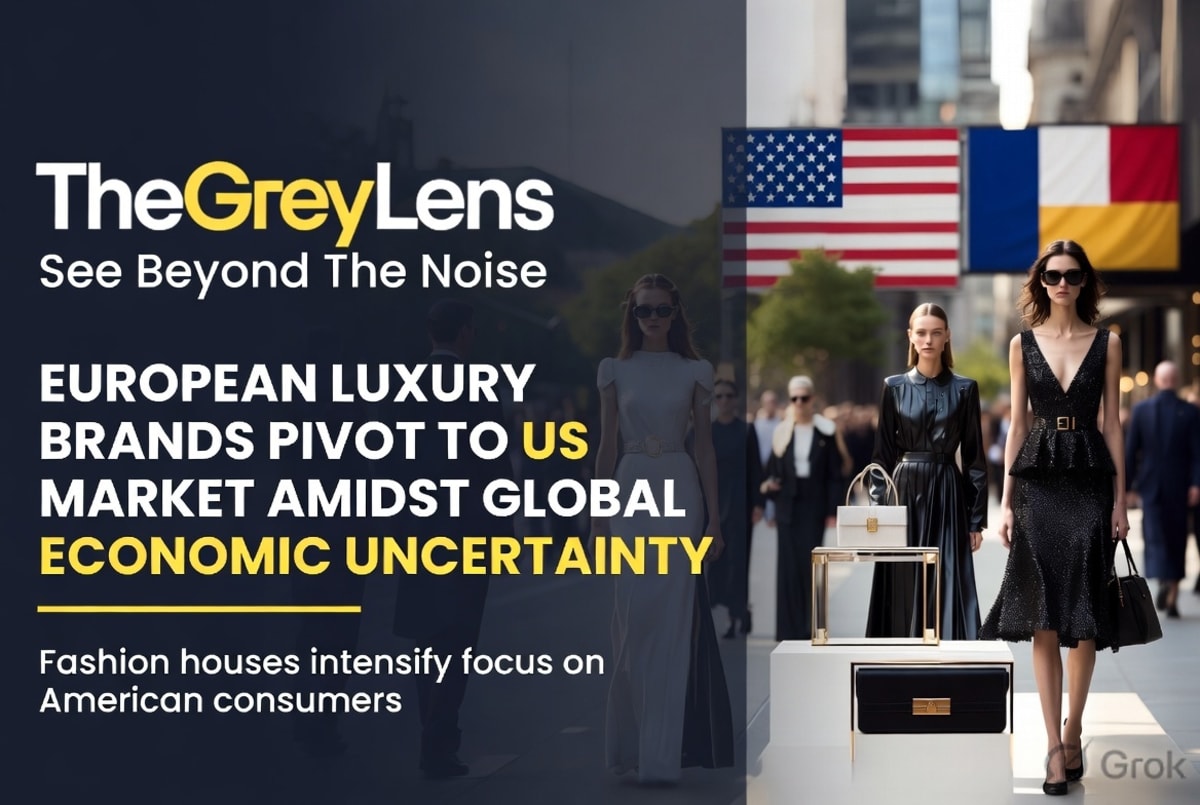
European luxury brands are sharpening their focus on the United States, with a surge of store openings and fashion shows designed to attract a new class of affluent shoppers enriched by the ongoing AI and tech boom. This strategic pivot is a direct response to a noticeable decline in consumer confidence across other global markets and the lingering economic headwinds affecting major sales regions, particularly China. The luxury goods sector, which experienced a contraction for two years, had begun to stabilize until the geopolitical disruptions, including the conflict in Iran that commenced in late February, impacted travel and dampened luxury spending far beyond the Middle East. With China, a traditional powerhouse for luxury sales growth, still grappling with deflation and the aftershocks of a property crisis, the reliance on the American high-end consumer has become paramount.
US Consumer Resilience a Beacon for Luxury Sector
The American high-end consumer has demonstrated a remarkable resilience compared to their counterparts elsewhere, especially in Europe. This sustained spending power is attributed to the continued rally in artificial intelligence stocks and robust wage growth, which have significantly boosted this demographic's purchasing capacity. As reported by Reuters on June 2, 2026, investment portfolio managers in London note this trend, highlighting the U.S. market's crucial role in the current economic landscape. Brands such as LVMH, Moncler, and Gucci have been swift to adapt, with Dior and Gucci showcasing their cruise collections in the U.S. last month. Italian brand Zegna is also set to present its Summer 2027 collection in Los Angeles on Friday, further underscoring the market's importance. This focus on North America has already seen it become the top market for luxury sales, a position solidified for the first time last year.
Navigating Global Economic Headwinds
The global economic climate presents a complex backdrop for the luxury fashion industry. The war in Iran, which began in late February, has had far-reaching consequences, disrupting international travel and impacting discretionary spending. China's economic situation, marked by deflationary pressures and the ongoing property crisis, continues to affect its role as a primary growth engine for luxury sales. In this environment, the robust performance of the U.S. market offers a vital counterbalance. Many European brands are therefore re-evaluating their market strategies, prioritizing regions with stronger consumer confidence and spending power. The concentration of investment in the U.S. reflects a broader trend of seeking stability and growth in markets less affected by recent global upheavals.
Strategic Moves and Future Outlook
In response to these market dynamics, luxury brands are not only increasing their physical presence in the U.S. through new store openings but are also leveraging exclusive fashion shows and events to connect with high-net-worth individuals. This approach aims to foster brand loyalty and drive sales among a demographic that continues to spend, even as global economic uncertainty persists. The strategy involves tailoring collections and marketing campaigns to resonate with American tastes and values, while also emphasizing the heritage and craftsmanship that define European luxury. Looking ahead, the continued strength of the U.S. consumer is expected to be a key determinant of success for the global luxury market. Brands that can effectively tap into this demographic while navigating the complexities of other international markets will be best positioned for sustained growth in the coming years. The industry's ability to adapt to evolving consumer behaviors and economic conditions will be critical in shaping its trajectory, with a pronounced emphasis on markets demonstrating resilience and growth potential.
As the global economy continues to present a mixed picture, the strategic importance of the U.S. market for European luxury brands cannot be overstated. The coming months will likely see further investment and innovation aimed at capturing this vital consumer base, even as brands remain vigilant to global economic shifts and potential new challenges. The industry's long-term success will hinge on its agility and its capacity to build strong, lasting relationships with consumers in key growth regions.