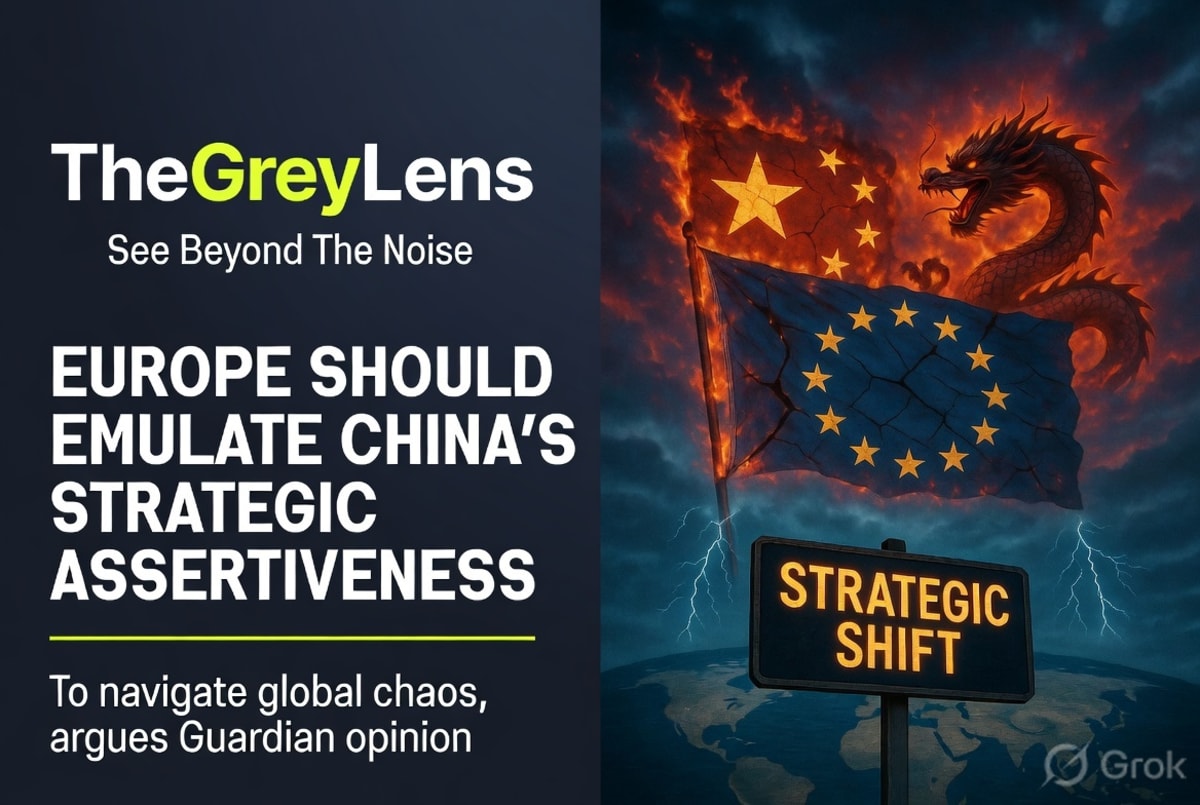
In an era defined by escalating global chaos and a rapidly shifting international order, Europe must consider adopting a more assertive and strategically independent approach, mirroring China's own methods. The analysis suggests that while European nations have been preoccupied with maintaining existing rules, China has been proactively positioning itself to thrive amidst this "un-order," a state where established norms are losing their relevance. This stark contrast in preparedness highlights a critical juncture for Europe, which faces significant economic and security challenges stemming from global volatility.
China's Proactive Strategy in an Age of 'Un-order'
China anticipated the current global landscape over a decade ago. While European powers outsourced their security to organizations like Nato, their trade regulations to the World Trade Organisation, and their energy supplies to external actors, Beijing was systematically building its resilience. This involved significant stockpiling of essential resources such as oil, food, and semiconductors, alongside cornering the global market for rare earths and critical future technologies. This proactive strategy has left China in a position of considerable self-confidence, even ahead of significant international summits. European leaders, in contrast, have been caught "like rabbits caught in the headlights" by crises such as the recent war in Iran and its subsequent impact on energy prices. China's approach to an "age of un-order"—where rules themselves have ceased to matter, distinct from mere disorder where rules are broken—has been far more effective than Europe's focus on preserving a system that is no longer functional.
Europe's Exposure and the Need for Agency
Europe faces significant exposure to China's growing dominance, particularly in crucial future industries. Despite the push for a clean energy transition, Europe's supply chains for batteries, electric vehicles, and solar panels are heavily reliant on Chinese firms. This dependence extends to other vital sectors, with China's industrial overcapacity and competitive exchange rates making European markets a prime target for exports. Without decisive action, Europe risks deindustrialization and increased vulnerability to coercion and blackmail. To counter this, Europe must develop its own agency, moving away from a reliance on external rules and instead selectively protecting its internal market and anticipating future global trends, much like China did. This strategic shift is essential to avoid a future where Europe is economically weakened and less capable of defending its interests.
A Call for Strategic Reciprocity
Europe may need to consider "giving Beijing a dose of its own medicine." This implies a move away from a purely rules-based approach that is becoming increasingly irrelevant and towards a more pragmatic, assertive stance. Rather than solely relying on established international frameworks, European nations must develop their own strategic tools and leverage their considerable market size. This could involve measures to protect key industries, secure critical supply chains, and more actively shape global economic and technological landscapes. The urgency is underscored by the rapidly closing window for European manufacturers to remain competitive against China's advancing industrial might. Europe must develop a more robust and independent strategy to navigate the complex and unpredictable global environment, ensuring its future prosperity and security.
The current global geopolitical climate, marked by the war in Iran and broader shifts in international power dynamics, is forcing a re-evaluation of Europe's strategic posture. As leaders grapple with these challenges, the call for a more assertive, China-esque approach to global affairs is likely to fuel further debate on the future direction of European foreign and economic policy. The coming months will be critical in determining whether Europe can successfully pivot towards greater strategic autonomy or continue to be outmaneuvered in an increasingly competitive world.