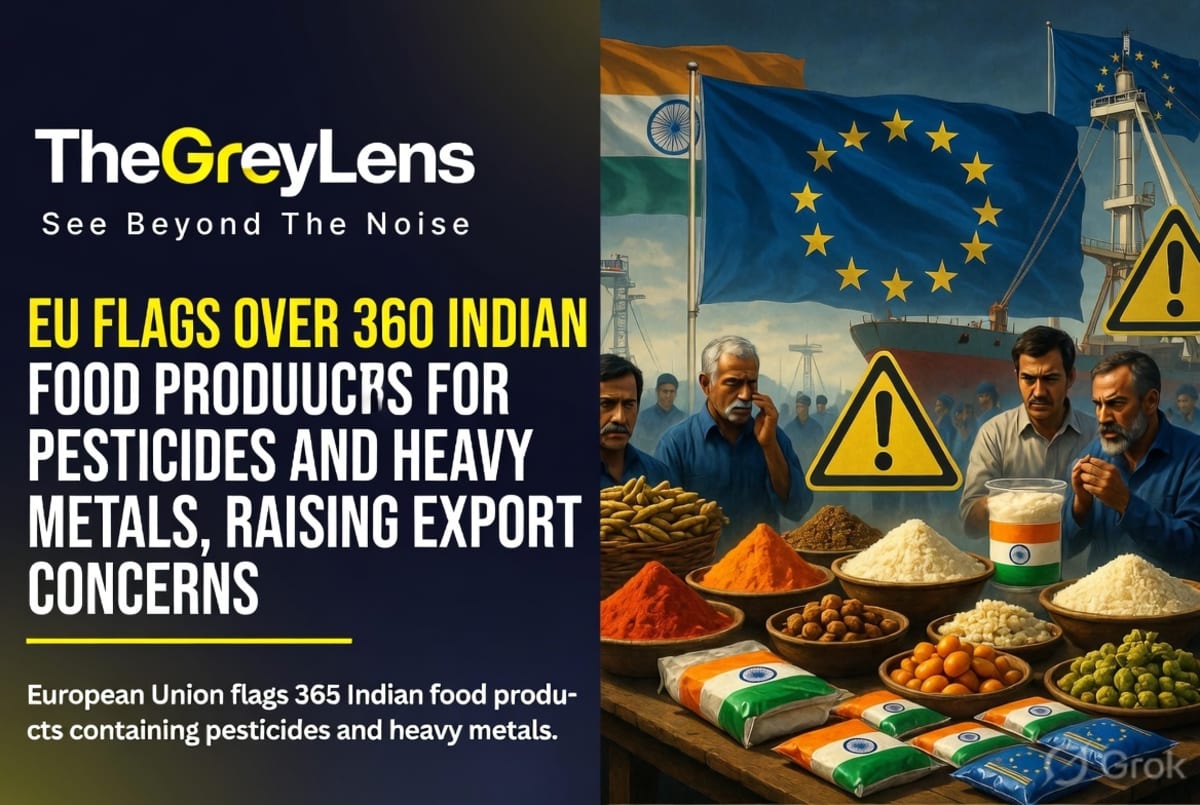
The European Union has issued a stark warning to India's food export sector, flagging 365 products for exceeding permissible limits of pesticides and heavy metals. This significant number, revealed in data obtained by DH News on June 5, 2026, underscores persistent challenges for Indian food manufacturers aiming to meet the stringent safety regulations of the EU's 27 member countries. The rejections, which span a period from May 1, 2024, to May 30, 2026, encompass a wide array of food categories, raising concerns about the efficacy of current quality control measures and regulatory oversight within India.
Widespread Contamination Across Product Categories
The majority of the flagged products fall into critical export categories, including herbs and spices, fruits and vegetables, nuts and nut products, cereals and bakery items, and dietary foods. This broad spectrum of contamination indicates systemic issues rather than isolated incidents. Among the most concerning findings is the presence of Chlorpyrifos, a pesticide banned in 44 countries due to its genotoxic, carcinogenic, and neurotoxic properties. This harmful chemical was detected in approximately 135 products. Additionally, ethylene oxide, a substance not even registered as a pesticide in India, was found in 40 products. The data also revealed the presence of heavy metals such as cadmium (in nine products), lead (in seven products), and mercury (in five products), all of which pose serious health risks.
Pathogens and Environmental Pollutants Also a Concern
Beyond pesticides and heavy metals, the EU has also rejected around 50 Indian products due to contamination by pathogens like Salmonella, Aflatoxin B1, and Ochratoxin A. These biological contaminants can lead to severe foodborne illnesses. Furthermore, several products were flagged for environmental pollution, including mineral oil contamination. The repeated nature of these rejections, with over 450 products flagged in total between May 2024 and May 2026, suggests a lack of substantial progress in addressing the root causes of these contamination issues. Despite previous reports highlighting similar concerns two years ago, the new data indicates that Indian authorities have not yet implemented sufficient measures to contain the use of carcinogenic pesticides and other harmful substances.
Impact on Exporters and Regulatory Landscape
These EU rejections have significant implications for India's food export industry, potentially leading to substantial financial losses, damage to reputation, and restricted market access. The Agricultural and Processed Food Products Export Development Authority (APEDA) and other regulatory bodies face the challenge of ensuring that exporters adhere to international standards. Recent regulatory updates in India, such as the FSSAI's revision of regulations on contaminants, toxins, and drug residues, effective from December 1, 2026, aim to address some of these concerns by setting maximum limits for various substances in food products. However, the effectiveness of these new regulations in preventing future rejections remains to be seen. The trend of Indian food products facing scrutiny in international markets, coupled with the ongoing efforts to digitize and streamline food safety approvals within India, highlights the critical need for enhanced vigilance and robust quality assurance systems across the entire food supply chain. The coming months will be crucial for Indian food exporters as they navigate these challenges and strive to regain the trust of international regulatory bodies and consumers.