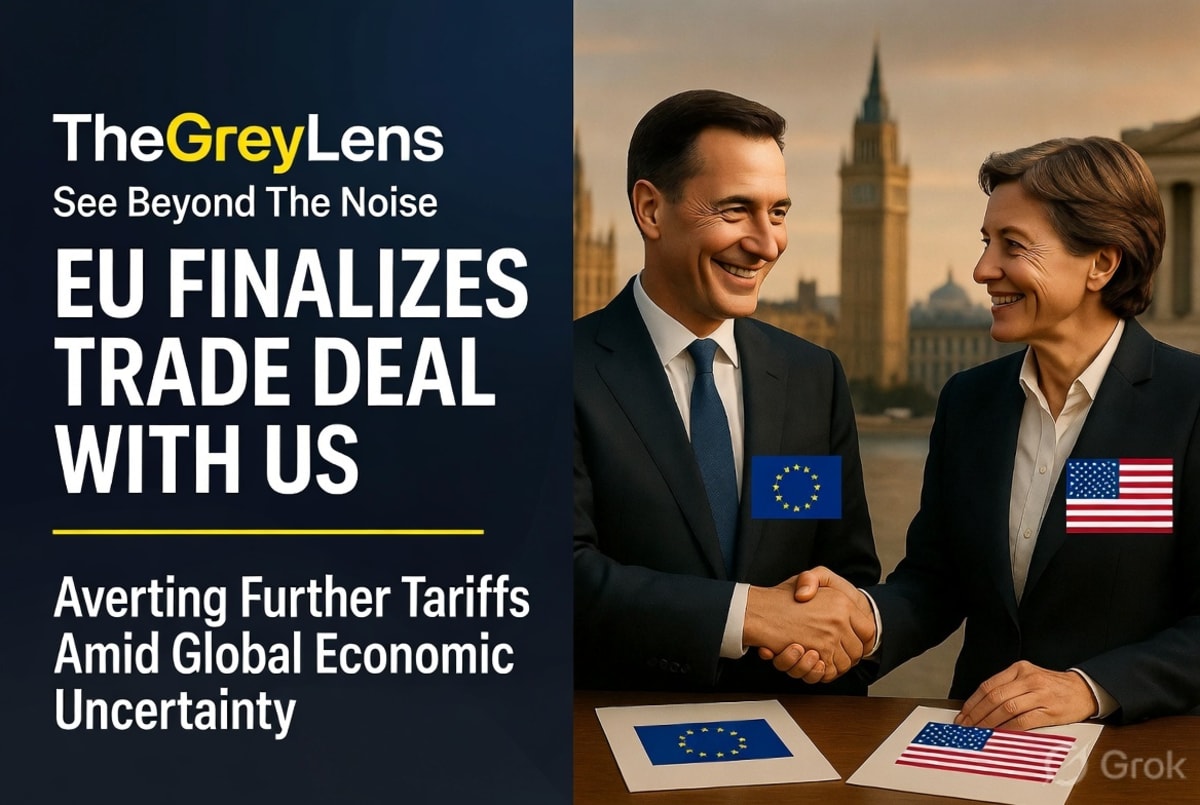
BRUSSELS – In a significant development for global commerce, the European Union has finalized its commitment to implement a comprehensive trade agreement with the United States. The decision, reached after intensive negotiations and announced on May 20, 2026, aims to de-escalate trade tensions and provide a much-needed boost of predictability for businesses on both sides of the Atlantic. This accord averts the threat of further tariffs, which had loomed as a consequence of ongoing trade disputes.
Stabilizing Transatlantic Trade Flows
The agreement, struck in principle last July and now set for full implementation, will see the removal of import duties on the majority of U.S. goods entering the EU. This reciprocal measure is a key component of the pact, which seeks to rebalance trade relations that have been characterized by a series of tariff impositions and counter-measures. European Commission President Ursula von der Leyen welcomed the decision, stating that it would ensure "stable, predictable, balanced and mutually beneficial transatlantic trade." The pact is on track to meet a July 4 deadline for ratification, a date set by the U.S. administration.
Concessions and Future Safeguards
Negotiations leading to the final agreement involved considerable compromise. Notably, the EU has granted the United States until the end of 2026 to reduce its tariffs on steel components. While the EU parliament had initially sought an immediate reduction, this concession was made to secure the overall deal. Furthermore, the agreement includes modified "sunrise" and "sunset" clauses. The "sunrise" clause, which would have linked the EU's implementation to U.S. actions, has been removed. The "sunset" clause, a provision for the deal's expiration unless renewed, has been extended to the end of 2029, providing a longer-term framework for the trade relationship. These clauses aim to offer safeguards for European stakeholders while acknowledging the need for a stable trading environment.
Navigating Global Economic Headwinds
The finalization of the EU-U.S. trade deal occurs against a backdrop of significant global economic challenges. Recent reports from the IMF and World Bank Spring Meetings in April highlighted deepening energy price and supply shocks, exacerbated by geopolitical conflicts. While there was tentative optimism regarding the potential reopening of the Strait of Hormuz, new attacks on shipping have since tempered these hopes. The IMF has projected a potential global growth rate of 2.5% for 2026, with warnings that a prolonged conflict could push the world economy into recession. The EU's move to solidify its trade relationship with the U.S. is seen as a critical step in building resilience against these broader economic uncertainties. The U.S. economy, while showing resilience driven by technology sectors, is also facing inflationary pressures and the impact of global supply chain disruptions. The agreement between two of the world's largest economies is thus a crucial element in fostering stability amidst this volatile international landscape.