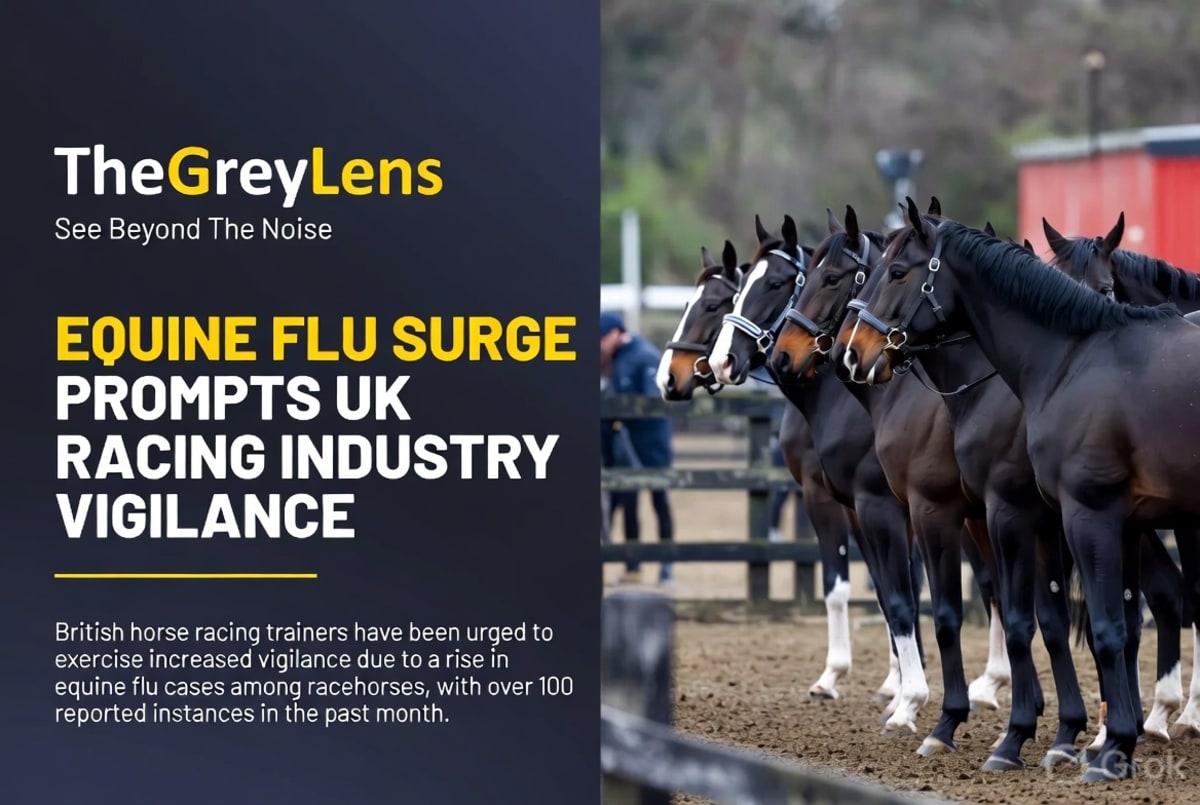
UK horse racing faces a heightened risk of disruption as a surge in equine flu cases prompts the British Horseracing Authority (BHA) to issue a call for increased vigilance among trainers. The BHA has directly communicated with all licensed trainers, underlining the critical need for stringent biosecurity measures to avert any possibility of racing being halted, a scenario that last occurred in February 2019.
That earlier outbreak led to a six-day suspension of racing, with a total of 23 meetings cancelled. This significant interruption was the most substantial since the foot-and-mouth disease crisis in 2001, which resulted in over 100 meetings being abandoned, including the prestigious Cheltenham Festival.
While the current rise in equine flu cases is being observed across a wider range of counties than in 2019, a crucial distinction is that no infections have been reported within active racing yards. The BHA's advisory stresses that the primary threat to thoroughbreds in training stems from exposure to infected horses or those shedding the virus. This risk is most pronounced when horses of unknown disease or vaccination status are in close proximity, such as during yard entries or at mixed-group events like shows and other equine gatherings.
Preventative Measures and Mandatory Vaccinations
To mitigate this threat, the BHA has underscored the essential requirement for all horses entering licensed yards to be vaccinated and undergo a mandatory 14-day isolation period, during which they must be monitored daily for any signs of infection. Vaccination against equine flu is already a compulsory measure for all thoroughbreds stabled in licensed yards, with booster injections required every six months.
The BHA has already taken proactive steps by cancelling the remainder of the current hunter-chase season. This includes the popular race card scheduled for Stratford next Friday, which traditionally marks the conclusion of the point-to-point season. This decision follows an earlier move to restrict racecourse access for horses originating from non-licensed yards where vaccination is not mandatory.
Broader Impact on the Equine Community
The heightened concern over equine flu extends beyond the professional racing circuit, impacting the wider equine community. Events such as the Devon County Show, running from May 21st to 23rd, are a vital showcase for rural heritage and livestock. While the show proceeds, the general increase in reported equine flu cases across various counties serves as a reminder of the ongoing vigilance required within the equine sector. British Equestrian has also noted a rise in reported equine influenza outbreaks in April, further emphasizing the need for caution.
The sport of eventing is also navigating these concerns, with news of Caitlin Padfield winning the HorseQuest Novice Masters at Belsay and Emma Carmichael showcasing new talent at Belsay Horse Trials, highlighting ongoing activity. However, the underlying risk of disease transmission remains a concern for all equine events.
Looking ahead, the British Horseracing Authority's proactive stance aims to safeguard the integrity and continuity of racing. By emphasizing vaccination, isolation protocols, and prompt reporting, the industry seeks to weather the current surge in equine flu and prevent a repeat of the costly disruptions experienced in previous years. The focus remains on maintaining a healthy racing population to ensure the season can proceed without further interruption.