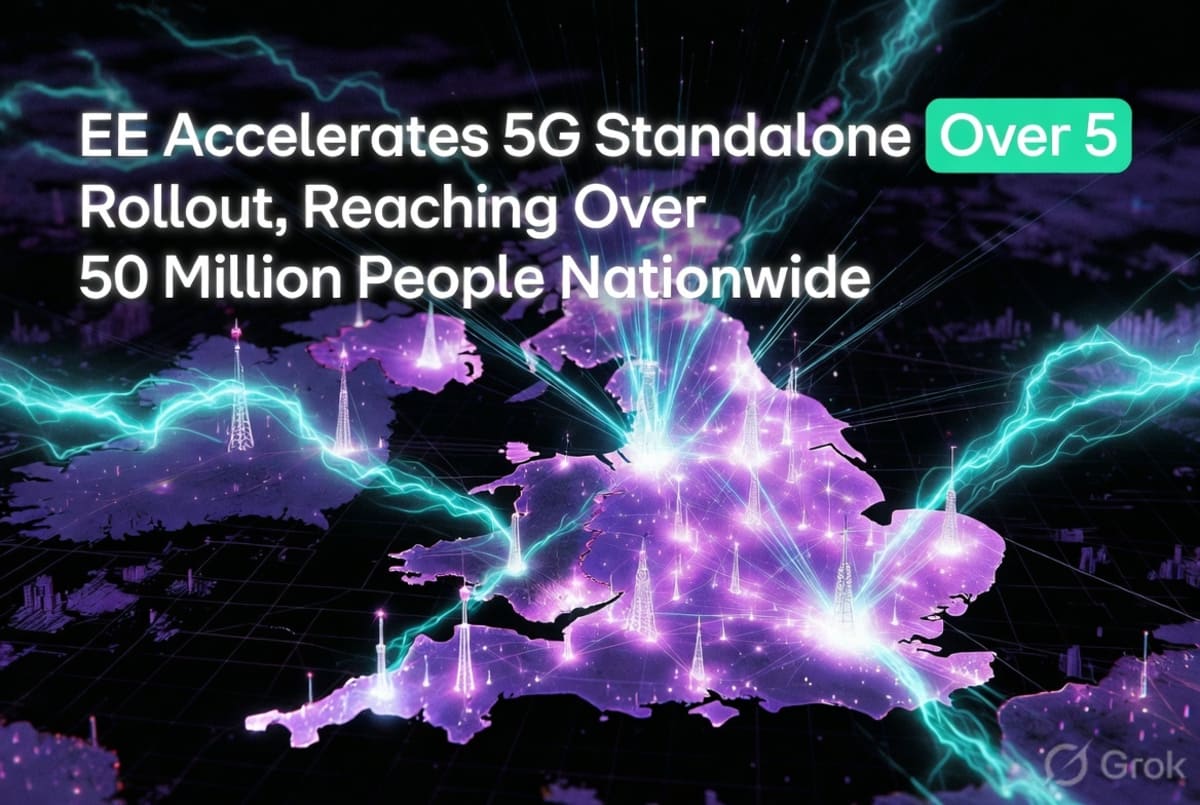
EE, the UK's leading mobile operator, has dramatically accelerated the deployment of its 5G Standalone (5G+) network, now providing advanced connectivity to over 50 million people across more than 61 towns and cities nationwide. This significant expansion represents a major stride in delivering the full capabilities of 5G technology to a wider audience.
Expanding the 5G Frontier
Initially launched in September 2024 across 15 major cities, EE's 5G+ service has seen rapid growth. Recent updates indicate that the network has surpassed its initial target of reaching 41 million people by spring 2026, showcasing the company's commitment to rapid network development. The expansion includes numerous new locations, with EE aiming to make 5G Standalone widely available across the UK.
5G Standalone technology, often referred to as 5G+, operates on a network built exclusively for 5G, differentiating it from earlier non-standalone versions that relied partially on 4G infrastructure. This dedicated architecture allows for enhanced performance, including significantly higher speeds, reduced latency, and increased network capacity.
Technological Advancements Driving Performance
Beyond the broad rollout, EE is also pioneering new technologies to optimize its network. The company has introduced Advanced RAN Coordination (ARC), a world-first innovation that allows nearby mobile sites to pair remotely and share capacity. This technology is particularly beneficial in densely populated areas such as train stations, high streets, and city centres, where network demand is highest. ARC has already been deployed in cities like Manchester and Edinburgh and is being rolled out to London, Leeds, Glasgow, Liverpool, and other major urban centres by the end of May 2026.
EE claims that ARC technology can deliver up to 20% faster download speeds, smoother video streaming, and more reliable connections during peak usage times. The network's architecture is also designed to support future AI applications, utilizing automation and machine learning to improve reliability and reduce energy consumption.
Impact on Consumers and Future Outlook
The expansion of EE's 5G Standalone network means that millions of customers can now benefit from faster, more reliable mobile connectivity. This upgrade is crucial for making the most of next-generation smartphones and the increasing demand for data-intensive applications. All new and upgrading EE customers on handset plans now receive 5G Standalone as standard.
Looking ahead, EE plans to continue its network expansion, with a long-term ambition to bring 5G Standalone to 99% of the UK population by 2030. This ongoing investment underscores the UK's commitment to advancing its digital infrastructure and ensuring competitiveness in the global technology landscape. The government's own strategy aims for widespread standalone 5G by 2030, recognizing its role as critical national infrastructure.
The rollout of 5G Standalone is a key component in the UK's broader mobile strategy, alongside initiatives like the Shared Rural Network (SRN) which aims to improve 4G coverage across the country. As of January 2026, geographic mobile coverage from all four operators extended to 84% of the UK landmass, with coverage from at least one operator exceeding 96%.
This continuous evolution in mobile network technology promises to unlock new possibilities for consumers and businesses, driving innovation and enhancing digital experiences across the United Kingdom.