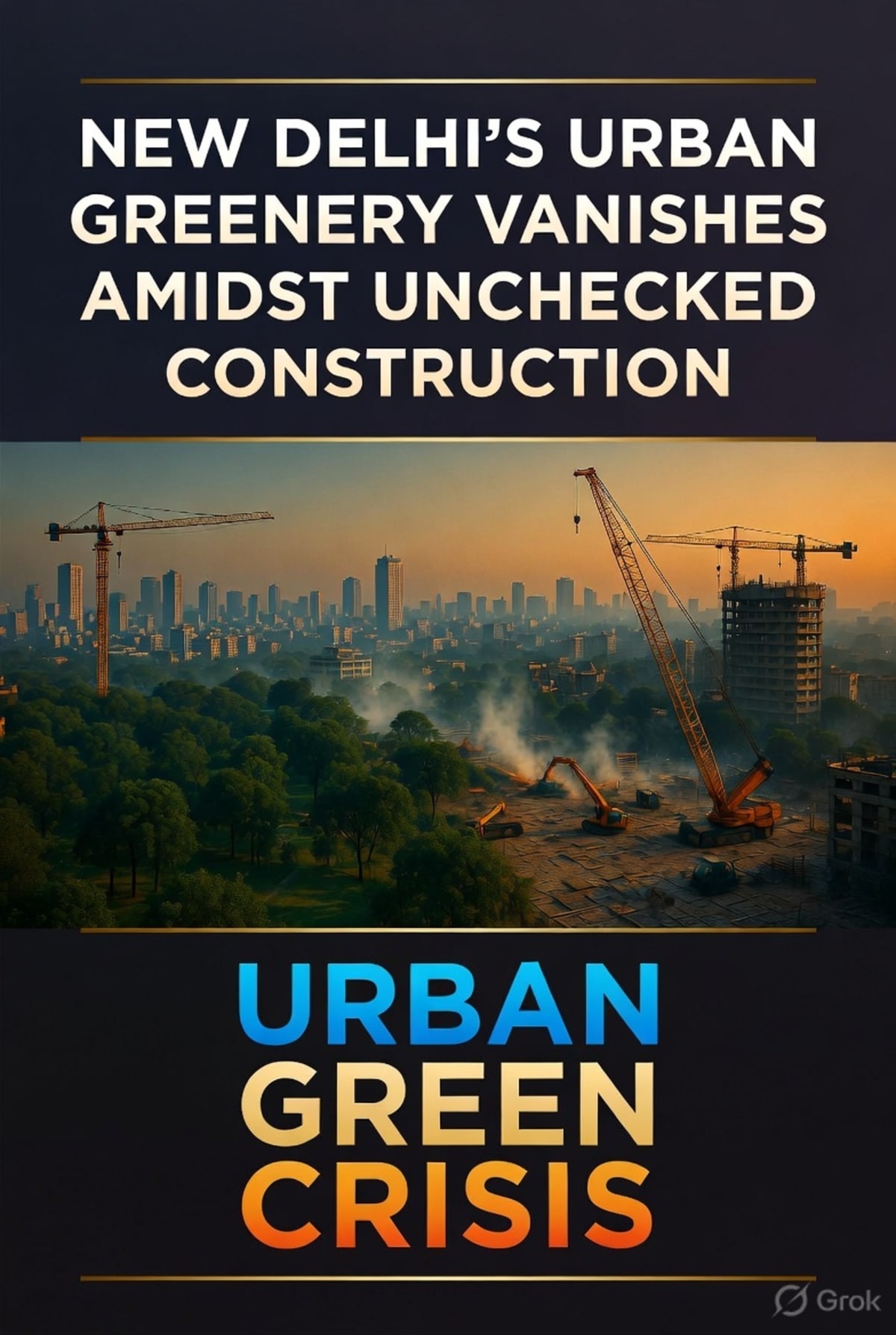
New Delhi: The relentless pace of urban development in the Indian capital is leading to a significant erosion of its green cover, raising concerns about the city's environmental health and livability. As construction projects continue to proliferate, the dwindling green spaces are increasingly under threat, contributing to rising temperatures and air pollution.
Ambitious Green Initiatives to Counteract Development
In a bid to mitigate these effects, the Delhi government has unveiled a series of comprehensive initiatives aimed at bolstering the city's green infrastructure. A key component of this strategy is the Green Action Plan for 2026-27, which targets the planting of over 70 lakh trees, shrubs, and bamboo hedges across the capital. This large-scale afforestation drive involves 22 government departments and agencies, signifying a coordinated effort to enhance green cover and combat pollution. Environment Minister Manjinder Singh Sirsa emphasized the plan's focus on increasing green spaces as part of a broader strategy to improve air quality and ecological balance. The plan includes the development of 15 new urban forests and 2 Miyawaki forests, the latter utilizing a Japanese technique for high-density, rapid growth. Furthermore, a significant push is being made to increase funding for the maintenance and development of existing parks and gardens. Under proposed changes, annual maintenance assistance could rise from Rs 2.55 lakh per acre to Rs 3.8 lakh per acre, with a potential shift to 100% government funding for eligible projects undertaken by Resident Welfare Associations (RWAs), NGOs, and registered societies. One-time assistance for creating new parks is also set to increase substantially, from Rs 1 lakh per acre to Rs 2.9 lakh per acre. These measures are designed to encourage greater community involvement and improve the quality and sustainability of green spaces, particularly in newly developed and densely populated neighborhoods.
Construction's Footprint on Delhi's Green Spaces
The expansion of urban greenery is taking place against a backdrop of continuous construction. Delhi's rapid growth has made construction a significant, yet often under-scrutinized, source of pollution. Data from the Commission for Air Quality Management and the Central Pollution Control Board (CPCB) consistently identify construction activities as major contributors to particulate matter pollution (PM2.5 and PM10). The sheer volume of construction and demolition (C&D) waste generated daily further exacerbates the environmental challenge. In response to the pervasive dust pollution from these sites, the Delhi government has mandated the installation of green nets with a minimum thickness of 100 gram per square metre (GSM) at all construction and demolition sites. This directive aims to improve the containment of debris and reduce the spread of dust into the environment. The loss of green cover, coupled with increased concretization and infrastructure development, is directly contributing to the intensification of the Urban Heat Island effect, making summers hotter and prolonging heatwaves.
A Greener Future Through Integrated Planning
Chief Minister Rekha Gupta has stated that strengthening Delhi's green cover is a key government priority, emphasizing that parks and green spaces are vital for public health, environmental conditions, and overall livability. The city is also planning a "Green Budget" for 2026-27, integrating environmental priorities with development across sectors like renewable energy, electric mobility, and waste management. This holistic approach acknowledges that sustainable growth requires balancing infrastructure development with environmental conservation. The Delhi government's commitment extends to initiatives like developing themed forests to enhance biodiversity and create climate buffers. As the city grapples with the dual pressures of rapid urbanization and environmental degradation, these multifaceted strategies aim to create a more resilient and sustainable urban ecosystem.
The coming months will be crucial in observing the implementation and effectiveness of these extensive greening plans. The success of the ambitious plantation targets and the increased financial support for parks will be key indicators of Delhi's progress in reclaiming its green cover amidst ongoing development.