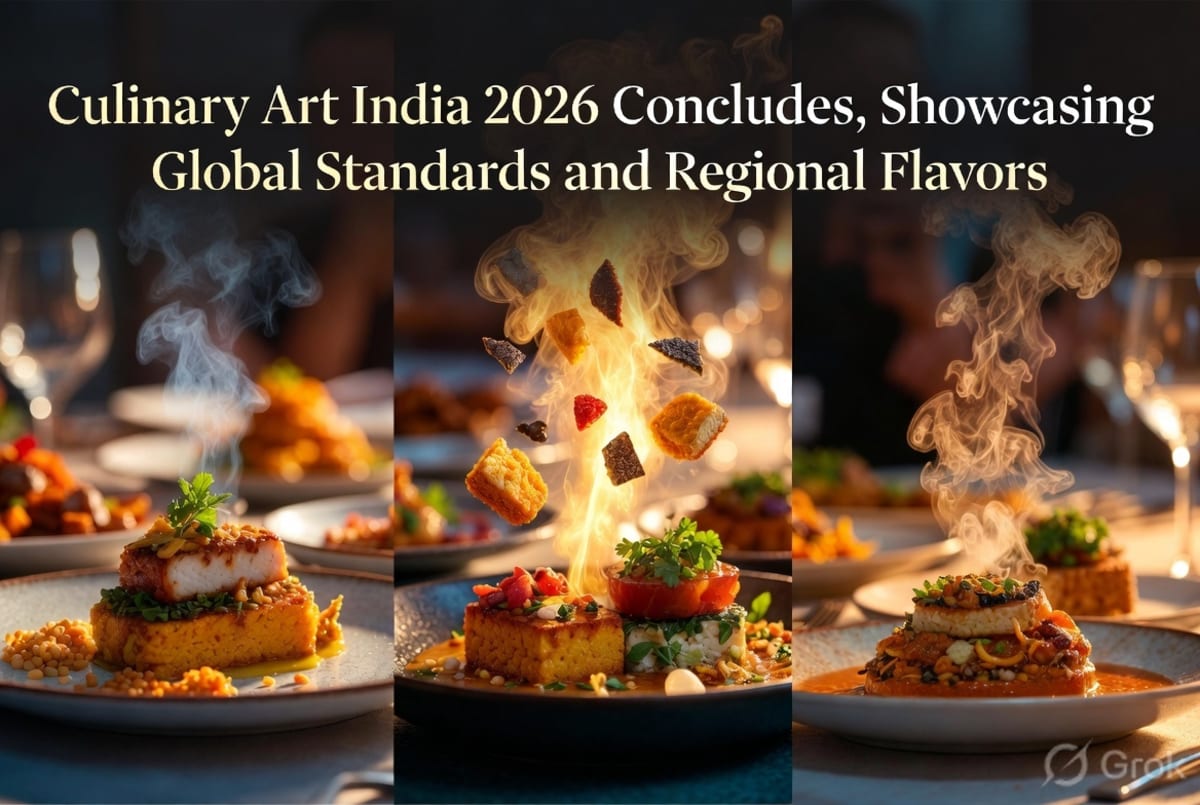
New Delhi, India – The 18th edition of Culinary Art India (CAI) 2026, a premier national platform for culinary professionals, concluded its five-day run on March 14, 2026, at Pragati Maidan. The event, held concurrently with the 40th AAHAR – The International Food & Hospitality Fair, saw over 700 chefs, apprentices, and culinary students from across India showcase their skills. This year's competition held particular significance as it was endorsed by the World Association of Chefs' Societies (WACS), ensuring adherence to globally recognized culinary competition standards.
International Collaboration and Diverse Competitions
The Culinary Art India 2026 competition was organized by the Indian Culinary Forum (ICF) in collaboration with the India Trade Promotion Organisation (ITPO) and Hospitality First. The event also featured international participation from countries such as Nepal, Thailand, and the United States, underscoring its growing global relevance. Chefs competed across 18 diverse categories, ranging from traditional disciplines like 'Authentic Indian Regional Cuisine' and '3-Tier Wedding Cake' to contemporary challenges such as 'Contemporary Sushi Platter' and 'Artistic Pastry Showpiece'. A key development this year was the signing of a Memorandum of Understanding (MoU) between the Indian Culinary Forum and the Youth Chefs Club of Ceylon, Sri Lanka, aimed at fostering culinary exchange programs and collaborative competitions between the two nations.
Emerging Trends: Regional Flavors and Experiential Dining
Beyond the competitive arena, the broader Indian food industry in 2026 is reflecting a dynamic shift towards both hyper-local ingredients and immersive dining experiences. Experts predict a growing consumer interest in regional Indian cuisines, moving beyond mainstream offerings to explore lesser-known tribal ingredients and hyper-local street foods, reinterpreted for contemporary palates. This aligns with a broader trend where dining out is increasingly viewed as an experience, with consumers seeking interactive elements like open kitchens, live entertainment, and themed nights.
Furthermore, the culinary landscape is embracing wellness and sustainability. Diners are showing a keen interest in ingredient sourcing, nutritional value, and eco-friendly practices, leading menus to feature more plant-forward dishes, keto and vegan options, and Ayurveda-inspired items. The rise of casual and quick-service formats continues, catering to the demand for convenience, while social media plays a crucial role in food discovery and restaurant choice, emphasizing the importance of visually appealing presentations.
Culinary Innovation and Future Outlook
The year 2026 also highlights a growing focus on the role of chefs as cultural curators, deeply rooted in context and tradition, while leveraging technology for precision and sustainability. This is evident in the evolving dessert scene, where chefs are creating cleaner, less sweet options with complex flavors derived from bitterness, acidity, and texture, alongside smaller portion sizes. The rise of culinary pop-ups and one-night-only regional feasts across major Indian cities like Mumbai, Bengaluru, and Delhi further exemplifies the demand for unique, experiential food events that go beyond traditional restaurant menus.
The success of Culinary Art India 2026, with its emphasis on international standards and its role as a platform for showcasing emerging talent and trends, sets a strong precedent for the future of India's vibrant and evolving food industry. The continued focus on regional authenticity, coupled with global culinary benchmarks, promises an exciting future for Indian cuisine both domestically and on the international stage.