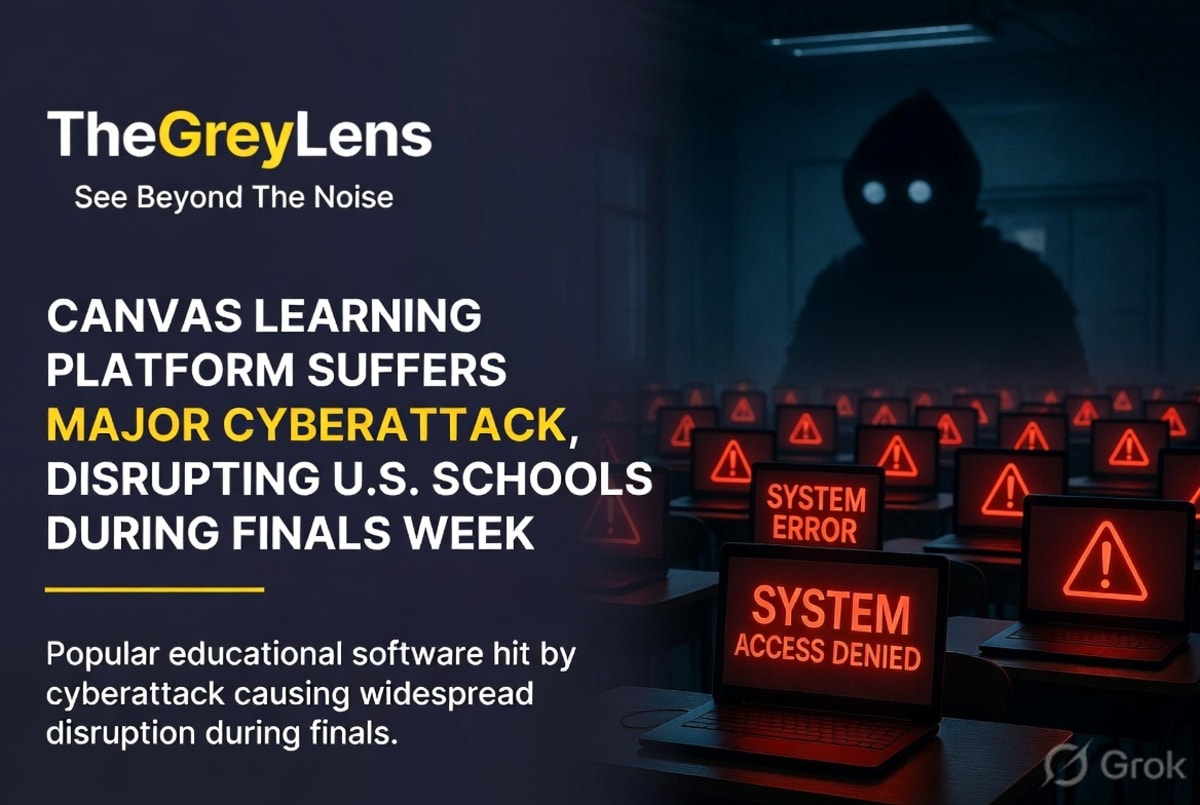
The widely-used educational platform Canvas was targeted by a major cyberattack this week, causing significant disruptions for students and educators across the United States. The incident, which began on May 7, 2026, led to widespread outages of the learning management system, impacting nearly 9,000 schools and universities nationwide. The timing of the attack, coinciding with the critical finals examination period for many institutions, exacerbated the chaos, forcing some universities to cancel or postpone tests and extend assignment deadlines.
ShinyHunters Claims Responsibility Amidst Widespread Disruption
The hacking group ShinyHunters has claimed responsibility for the cyberattack on Instructure, the parent company of Canvas. This group is known for targeting large organizations and has previously been linked to breaches at companies like Ticketmaster and Amtrak. According to threat analysts, ShinyHunters demanded a settlement from Instructure, threatening to leak compromised data if their demands were not met by May 12, 2026. The group reportedly exploited an issue related to Canvas's "Free-For-Teacher" accounts, leading Instructure to temporarily shut down these services to address the vulnerability. While Instructure announced that the platform was back online for most users by May 8, some institutions opted to maintain temporary blocks on Canvas access as a precautionary measure while further investigations continued.
Impact on Educational Institutions and Student Data Concerns
The cyberattack on Canvas has raised serious concerns about the security of student data and the increasing reliance of educational institutions on third-party technology providers. The breach potentially exposed the names, email addresses, student ID numbers, and private messages of millions of users. However, Instructure has stated that there is no evidence of passwords, dates of birth, government identification, or financial information being compromised. Despite these assurances, cybersecurity experts are advising students and educators to remain vigilant against potential phishing attacks that might exploit the aftermath of the breach. The incident highlights the vulnerability of centralized educational technology platforms, where a single breach can affect a vast number of schools and individuals simultaneously. Experts emphasize that the concentration of data within single providers creates high-value targets for cybercriminals.
Broader Implications for Cybersecurity in Education
This incident is part of a growing trend of sophisticated cyberattacks targeting the education sector. Reports indicate a significant surge in ransomware attacks against educational institutions in recent years. The Canvas breach echoes previous high-profile attacks, such as the 2024 breach of PowerSchool, another widely used learning management system. These events underscore the challenges educational institutions face in bolstering their cybersecurity defenses amidst limited budgets and staffing. The reliance on single, centralized technology vendors, while offering efficiency, also presents a concentrated risk. As cybercriminals become more sophisticated, leveraging advancements in areas like artificial intelligence, educational institutions must prioritize robust security measures, incident response preparedness, and ongoing employee training to safeguard sensitive student and faculty data. The ongoing investigation by Instructure, in coordination with law enforcement agencies including the FBI and the U.S. Cybersecurity and Infrastructure Security Agency, aims to fully understand the scope of the breach and prevent future occurrences.