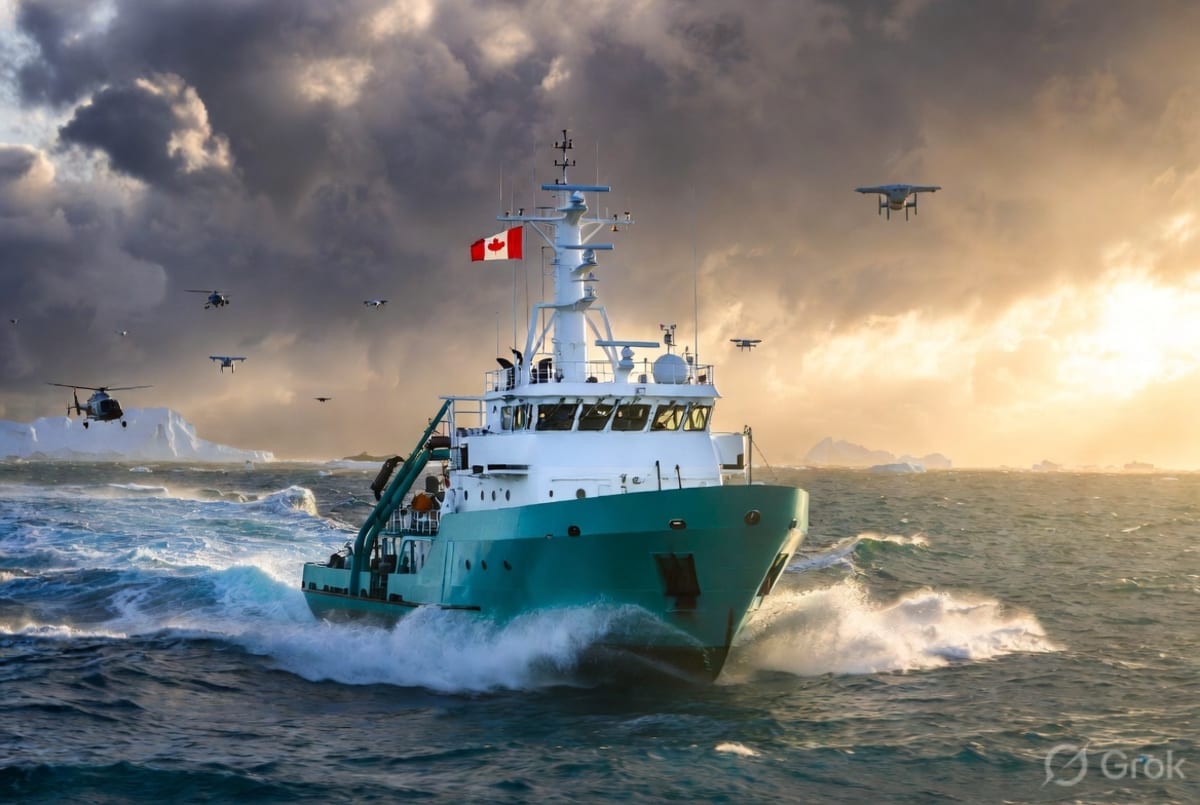
The Canadian Coast Guard has expanded its operational capacity with the recent addition of the CCGS Naalak Nappaaluk to its fleet. The vessel, welcomed at the Bedford Institute of Oceanography in Dartmouth, Nova Scotia, is the largest science ship to join the Government of Canada's fleet, marking a significant advancement in the nation's ability to conduct critical ocean research and environmental monitoring.
Built in Canada by Seaspan's Vancouver Shipyards, the CCGS Naalak Nappaaluk is designed to support extensive oceanographic science missions along Canada's Atlantic coast. Its capabilities include a large working deck suitable for various modular payloads, an expansive ocean sampling room, multiple advanced laboratories, and modern technology for studying and monitoring marine ecosystems. This vessel will be instrumental in collecting vital data and samples, contributing to Canada's domestic and international commitments towards the sustainable management of its oceans.
Bolstering Research and Rescue Efforts
The CCGS Naalak Nappaaluk is not solely dedicated to scientific endeavors. It is also equipped to provide robust support for search and rescue missions and environmental response efforts when needed. This dual capability ensures that the vessel can respond effectively to emergencies at sea, complementing the existing resources of the Canadian Coast Guard. The vessel's deployment is a key component of the National Shipbuilding Strategy, a government initiative aimed at renewing federal fleets and revitalizing Canada's marine industry.
The ship is named in honor of Naalak Nappaaluk (1928-2010), a respected Nunavik elder renowned for his profound knowledge of the natural world, including animals, weather patterns, the sea, and the night sky. His legacy of knowledge and dedication to Inuit culture is reflected in the vessel's mission to deepen Canada's understanding of its oceans.
Operational Capacity and Future Outlook
With the capacity to accommodate up to 34 crew members and 26 scientists, the CCGS Naalak Nappaaluk is poised to serve as the primary east coast ocean science research vessel for the next 30 years and beyond. Its operational base at the Bedford Institute of Oceanography in Dartmouth will facilitate its extensive research activities. The integration of this vessel into the fleet underscores the Canadian government's commitment to advancing ocean science and ensuring maritime safety and security.
The addition of the CCGS Naalak Nappaaluk signifies a substantial investment in Canada's marine research infrastructure. It will enable scientists to gather more comprehensive data, leading to a better understanding of oceanographic changes, the impacts of climate change, and the health of marine biodiversity. Furthermore, its readiness to assist in search and rescue operations enhances the overall safety net for mariners and coastal communities.