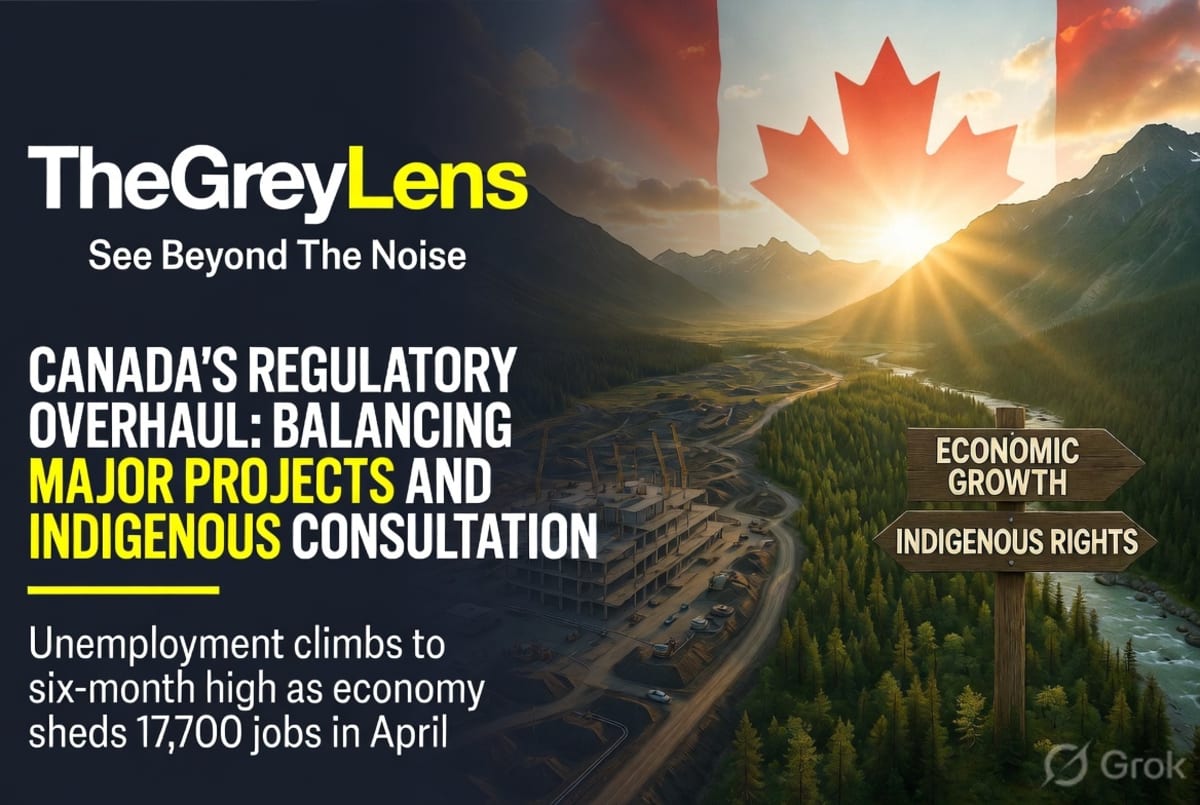
Canada Unveils Sweeping Overhaul of Major Project Regulations, Balancing Economic Growth with Indigenous Rights
Ottawa, ON – May 8, 2026 – The Canadian government today announced a significant overhaul of its regulatory framework for major projects, aiming to accelerate development while reaffirming its commitment to environmental protection and Indigenous consultation. The proposed changes, detailed in a government discussion paper released this morning, include a one-year limit for federal reviews and decision-making, the establishment of a "Crown Consultation Hub" to streamline engagement with Indigenous communities, and a shift in responsibility for pipeline reviews to the Canada Energy Regulator. This initiative seeks to reduce red tape and attract investment by creating a more predictable and efficient process for nation-building infrastructure, including ports, railways, energy corridors, and critical mineral developments.
The proposed reforms come at a time when Canada is striving to enhance its global competitiveness and economic independence. Prime Minister Mark Carney's administration is emphasizing the need to build infrastructure faster to strengthen trade, grow the economy, and create jobs. The government has faced criticism from various industries for lengthy approval processes, which have been seen as a barrier to significant investment. The proposed changes are intended to provide greater certainty for investors and project proponents, fostering sustained economic growth across the country.
Streamlining Assessments and Consultation
A cornerstone of the proposed overhaul is the implementation of a one-year cap on federal reviews and decision-making for major projects, commencing once all necessary information has been submitted by the project proponent. This ambitious timeline aims to significantly reduce the delays previously associated with project assessments. To facilitate this, the government plans to enable concurrent permitting, allowing assessment and permitting processes to occur simultaneously.
Furthermore, the introduction of a "Crown Consultation Hub" within the Impact Assessment Agency of Canada is designed to address concerns about consultation fatigue among Indigenous groups. This hub will centralize and coordinate consultation processes, ensuring a more consistent and efficient engagement experience for each affected Indigenous community. While the government states that these deadlines will not alter the fundamental duty to consult Indigenous communities or fulfill obligations under modern treaties, Indigenous organizations such as the Assembly of First Nations and the Assembly of Manitoba Chiefs have expressed concerns. They argue that the proposed reforms could centralize decision-making, reduce independent oversight, and potentially allow projects to advance before Indigenous nations have had a meaningful opportunity to exercise their jurisdiction or provide Free, Prior, and Informed Consent.
Shifting Responsibilities and Addressing Concerns
Under the proposed changes, the review of pipelines, transmission lines, and offshore renewable energy projects would be transferred from the Impact Assessment Agency to the Canada Energy Regulator (CER). For pipelines specifically, the Governor in Council would determine their public interest early in the process, before the CER completes its detailed review. This move aims to reduce risks and costs for investors by providing an upfront decision on project viability.
Environmental groups have voiced strong opposition to the proposed reforms, characterizing them as detrimental to environmental review and Indigenous rights. Elizabeth May, Leader of the Green Party of Canada, has called the proposals "wrecking balls, not reforms," arguing that strong environmental assessments and proper Indigenous consultation are essential safeguards, not obstacles. Critics like Tim Gray, executive director at Environmental Defence Canada, contend that the changes could lead to a more dangerous and destructive era for the environment. Concerns have also been raised about the potential for these reforms to undermine existing environmental laws and constitutional protections for Indigenous Peoples, with historical parallels drawn to the impact of previous legislative changes on environmental assessments.
The Path Forward: Consultation and Legislation
The federal government has initiated a 30-day public consultation period on these proposed changes, engaging with Indigenous Peoples, provinces, territories, and the broader Canadian public. Following this engagement period, the government intends to move swiftly to introduce legislation. The success of these reforms hinges on striking a delicate balance: accelerating economic development and infrastructure projects while rigorously upholding environmental standards and respecting the inherent rights and consultation obligations owed to Indigenous Peoples. The coming weeks will be crucial as various stakeholders provide their input, shaping the final legislative proposals and determining the future of major project regulation in Canada.