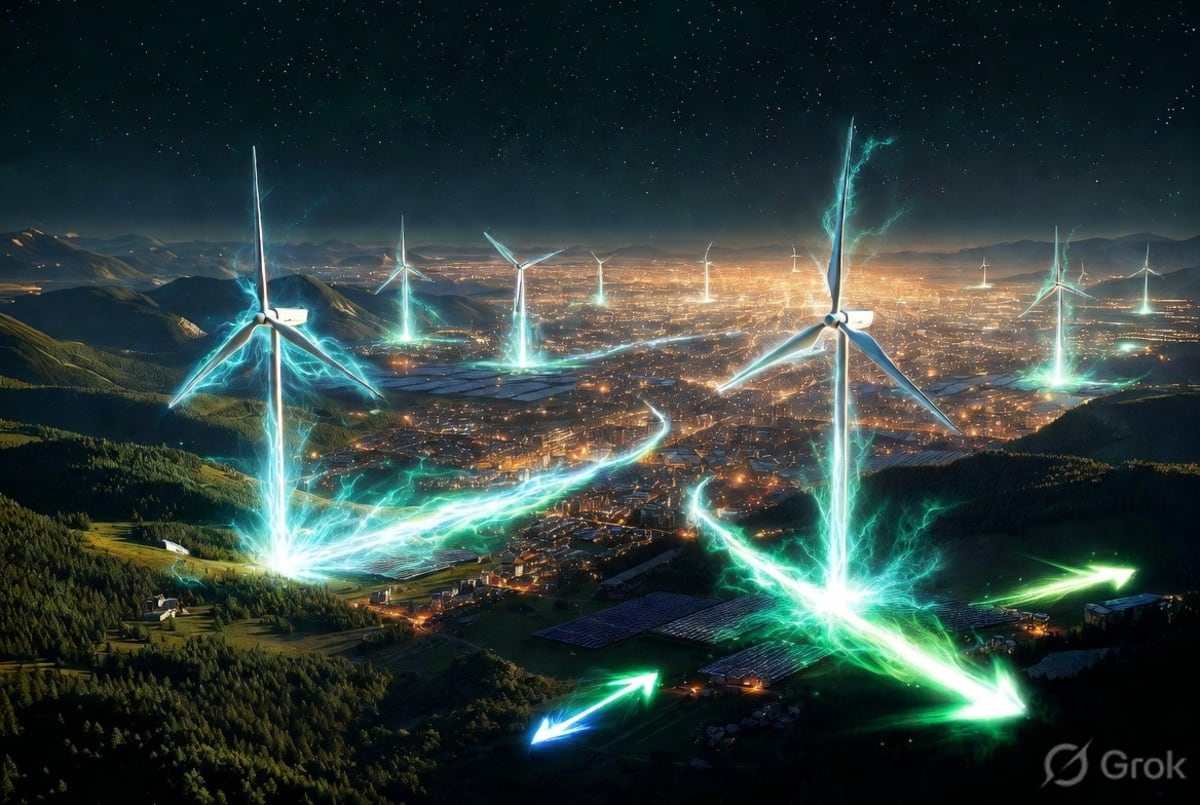
OTTAWA – Prime Minister Mark Carney is poised to unveil a comprehensive national clean electricity strategy today, May 14, 2026, a move anticipated to reshape Canada's energy landscape. The federal government's ambitious plan signals an intent to double the nation's power grid capacity by 2050, a directive driven by a surge in electricity demand from burgeoning sectors such as electric vehicles, data centers, and defense industrial production.
Addressing Soaring Energy Needs
The announcement comes after months of deliberation and consultation, including the release of a \"discussion paper\" in late April to gather input from provinces and territories on modernizing the grid. The strategy is expected to outline a roadmap for achieving this ambitious capacity increase, addressing the growing need for reliable and clean energy across the country. Prime Minister Carney had previously indicated in March that an announcement was imminent, underscoring the government's commitment to tackling this critical issue.
The escalating demand for electricity presents both a challenge and an opportunity for Canada. The transition to electric vehicles alone is projected to significantly increase the strain on the existing power infrastructure. Similarly, the rapid expansion of data centers, crucial for the digital economy, requires substantial and consistent energy supplies. Furthermore, increased defense industrial production adds another layer to the demand equation, necessitating a robust and adaptable power grid.
Pathways to a Greener Grid
Key components of the strategy are anticipated to include a focus on renewable energy sources and potentially an expansion of nuclear power capabilities. The federal government has previously expressed a commitment to working with provinces, particularly Alberta, to develop strategies for integrating nuclear power into the national grid by 2050. This aligns with a broader goal of reducing reliance on fossil fuels and achieving climate targets. For remote communities, which still depend heavily on diesel generation, the strategy may offer solutions for transitioning to more sustainable and reliable power sources, potentially through microgrids or expanded transmission infrastructure.
The government's vision for a modernized grid also involves a move towards greater energy efficiency and the development of smart grid technologies. These advancements are expected to improve the reliability and resilience of the power supply, while also enabling better integration of intermittent renewable sources like wind and solar. The strategy will likely detail investments in grid modernization projects, research and development for new energy technologies, and incentives for both businesses and consumers to adopt cleaner energy practices.
Looking Ahead: Implementation and Impact
The successful implementation of this clean electricity strategy will require significant collaboration between federal, provincial, and territorial governments, as well as private sector stakeholders. The coming months will be crucial for detailed planning and securing the necessary investments to bring the outlined goals to fruition. The government's commitment to consulting with provinces and territories suggests an effort to ensure a coordinated approach, recognizing the diverse energy landscapes across Canada.
As Canada navigates the complexities of energy transition, the announcement today marks a pivotal moment. The success of this strategy will not only determine the nation's ability to meet its climate objectives but also its capacity to power a growing economy and ensure energy security for all Canadians in the decades to come. The focus on doubling grid capacity by 2050 indicates a long-term vision, setting the stage for substantial infrastructure development and technological innovation in the years ahead.