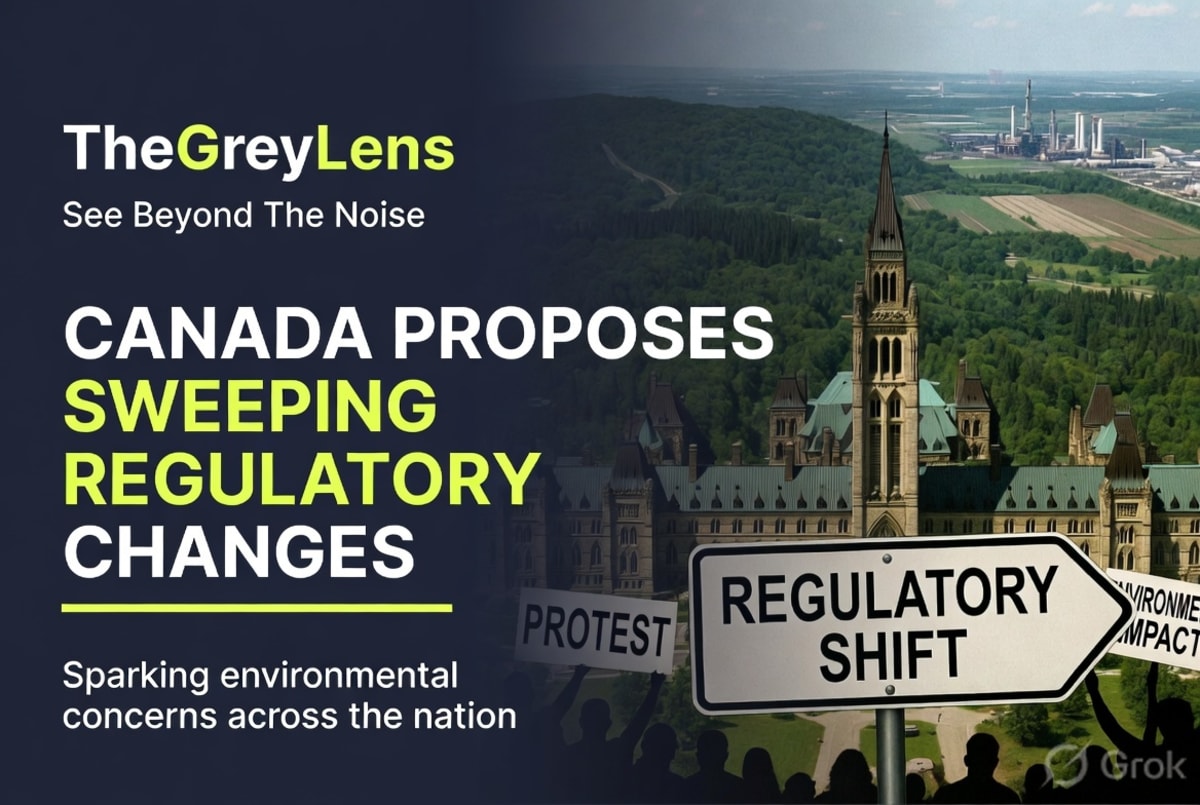
Ottawa, ON – In a move that has ignited fierce debate, the Canadian federal government unveiled a suite of proposed regulatory reforms on Friday, May 8, 2026, designed to expedite the approval of major projects across the country. The government, led by Prime Minister Mark Carney, asserts that these changes are crucial for bolstering Canada's economy amidst global uncertainty, aiming to streamline processes that have historically been criticized as lengthy and cumbersome. However, the proposals have been met with significant backlash from environmental organizations and Indigenous leaders who argue they fundamentally undermine essential safeguards.
Accelerating Approvals, Easing Environmental Scrutiny
The proposed reforms, announced by Minister Dominic LeBlanc and Minister Steven MacKinnon, include capping federal reviews at one year and consolidating decision-making into a single comprehensive federal authorization. A key element of the plan involves the potential creation of "Federal Economic Zones" where project reviews would be significantly reduced or eliminated. Furthermore, the proposals suggest modifications to the Impact Assessment Act and the Species at Risk Act, including exemptions for certain projects from rigorous environmental review requirements and the jeopardy test designed to protect endangered species. The government has indicated that a 30-day public consultation period will be initiated for these proposed changes.
Environmental groups, including the David Suzuki Foundation and Environmental Defence, have voiced strong opposition. Rachel Plotkin, boreal project manager at the David Suzuki Foundation, stated that these proposed changes are part of a trend of dismantling environmental protections during Prime Minister Carney's tenure, undermining commitments to nature. Tim Gray, Executive Director at Environmental Defence, expressed concern that the proposals would risk Canada's environment, waters, and species by bulldozing projects without proper process, potentially taking the country back to a "more dangerous, toxic and destructive time."
Indigenous Rights and Consultation Under Threat?
Beyond environmental concerns, the proposed reforms also raise alarms regarding Indigenous consultation. The government's plan to replace "nation-to-nation" consultation with a more consolidated "one Indigenous consultation process, per community, per project" has been heavily criticized. Critics, such as Green Party Leader Elizabeth May, have labelled these changes as "wrecking balls, not reforms," emphasizing that robust environmental assessment and proper consultation with Indigenous Peoples are not "red tape" but essential components of protecting communities and ecosystems.
Concerns have been raised that the proposed legislation, which may include Henry VIII clauses allowing cabinet to exempt projects from regulations, could grant the Prime Minister and cabinet broad powers to bypass existing laws. This has led to fears that projects, including pipelines and other resource developments, could be approved with minimal regulatory oversight, potentially leading to lasting environmental damage and impacting public safety. Critics point to historical examples, such as the challenges faced by the Kinder Morgan Trans Mountain pipeline expansion, where inadequate environmental reviews and Indigenous consultation led to judicial challenges, as cautionary tales.
Economic Imperatives Versus Environmental Stewardship
Government officials, however, maintain that the proposed changes are necessary to attract investment and foster economic growth. They argue that the current regulatory framework is a significant barrier to developing critical infrastructure, such as ports, railways, and clean energy projects, which are vital for Canada's competitiveness. The government has highlighted the role of the Major Projects Office (MPO) in supporting job creation and investment, and views these new proposals as a necessary evolution to further streamline the process. Minister Steven MacKinnon acknowledged that environmental groups might not be pleased with the changes but stressed the importance of moving forward to build a stronger, more resilient Canadian economy.
The coming weeks will be critical as Canadians engage in the 30-day consultation period. The government's commitment to balancing economic development with environmental protection and Indigenous rights will be under intense scrutiny. The outcome of this consultation could significantly reshape Canada's regulatory landscape for major projects for years to come.