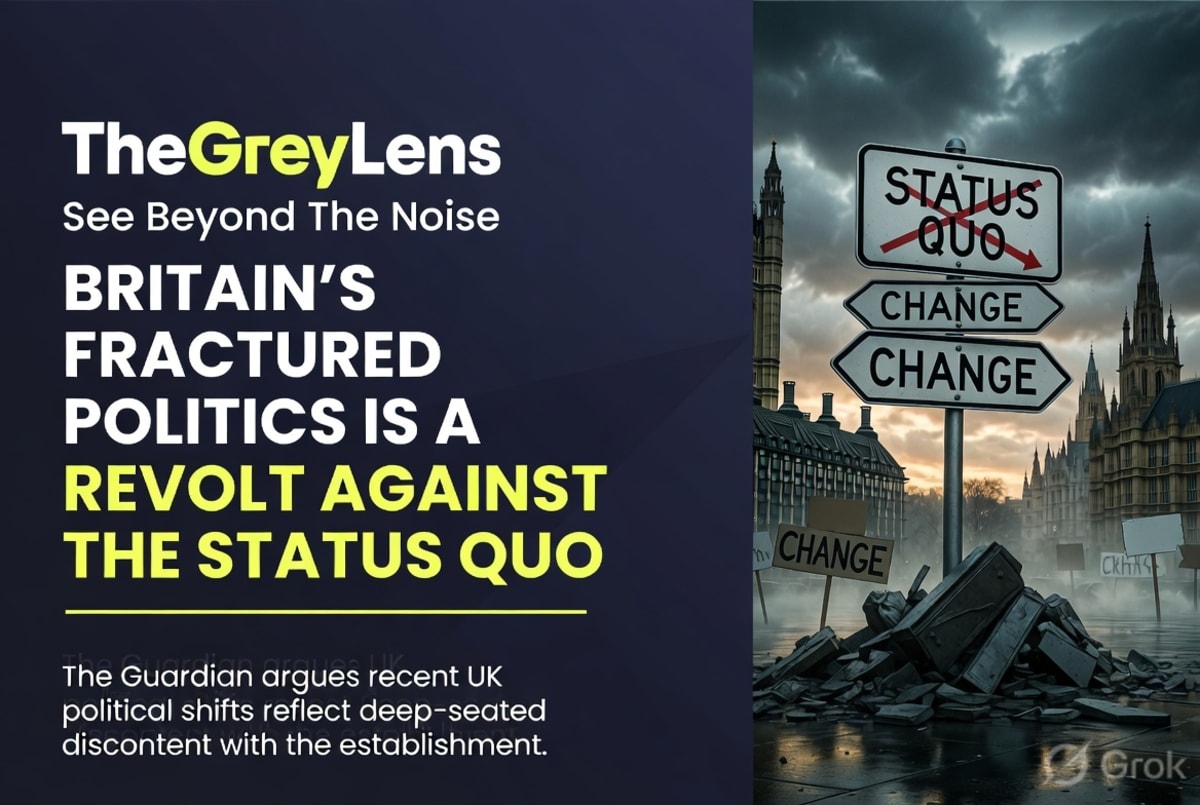
The Electoral Earthquake
Recent local and devolved elections across England, Scotland, and Wales have delivered a stark message to the established political parties. The Labour Party, in particular, has experienced heavy losses, ceding ground to both the left and the right. In England, Reform UK and the Green Party have made significant inroads, with Reform UK gaining over 1,400 council seats and the Greens securing 587. Labour lost approximately 1,500 seats and control of around 40 local councils, including traditional strongholds. The Conservative Party also suffered considerable losses, shedding 563 councillors. In Wales, Plaid Cymru emerged as the largest party, routing Labour in the Senedd, while Reform UK also made substantial gains, surpassing Welsh Labour in seats. Scotland saw the Scottish National Party (SNP) retain power but fall short of a majority, with Reform UK making notable advances alongside Scottish Labour. These results represent a significant departure from the historical dominance of Labour and the Conservatives, indicating a fragmentation of the political system.
Voter Disillusionment and the Demand for Change
The electoral outcomes point to a deep-seated voter disillusionment with the current political establishment. Prime Minister Keir Starmer faces a crisis of authority, with many voters feeling that the Labour Party has failed to deliver the tangible change they promised. Starmer's acknowledgment that "the change that we promised isn't being delivered in a way they can feel" risks being perceived as patronizing and fuels cynicism. Voters appear to be alienated not just from the government or the opposition, but from the political system itself, seeking alternatives that offer a break from the status quo. Reform UK, led by Nigel Farage, has successfully tapped into this sentiment, making significant inroads in traditional Labour "red wall" areas by capitalizing on narratives around immigration and a perceived weakness of mainstream parties. Simultaneously, the Green Party has gained traction in urban areas, attracting voters disillusioned with both major parties. This fragmentation suggests a electorate demanding more than incremental adjustments, but fundamental shifts that the established parties are perceived as unable to provide.
Economic Ripples and Political Instability
The political upheaval following the elections is already having repercussions in financial markets. Investor jitters have increased, with yields on UK government bonds, known as gilts, rising. The uncertainty surrounding Keir Starmer's leadership and the prospect of political instability are contributing to these market concerns, alongside broader global economic pressures such as inflation and geopolitical tensions in the Middle East. Bond markets are reportedly wary of potential fiscal loosening if political pressure intensifies, demanding higher returns as a result. The pound has also weakened against the US dollar, reflecting these anxieties. The economic implications underscore the interconnectedness of political stability and market confidence, with investors seeking clarity and discipline from the government amidst the current fragmentation.
The coming months will be critical for Keir Starmer and the Labour Party as they attempt to navigate this fractured political landscape and regain public trust. The rise of Reform UK and the Green Party presents a significant challenge to the traditional two-party system, and their continued growth will likely shape the future direction of British politics. The economic consequences of this instability will also need to be closely monitored as the UK grapples with these profound political shifts.